Tuesday, July 17, 2012
Man of steel, suit of rubber
I just don't like this poster at all. It does nothing to make me want to see the movie. I hate the washed-out colors (I really wish this era of dull color schemes in movies would come to an end), and I really dislike the weird rubber-material appearance of the costume itself. I know, I know, I'm one of those people -- but Ye Gods, the first Superman movie is one of the iconic superhero movies ever made, and in that one, Superman wore a suit made of...cloth. Now, no, this doesn't mean that the movie itself will stink. If it's good and the script is good and it's shot and acted well and the score doesn't stink (which is, frankly, six to five and pick 'em, what with Hans Zimmer composing it), something little like a costume isn't going to stop me from seeing it and enjoying it. But I'm not complaining about the movie, just a poster.
And as a poster, this does spectacularly little for me. All this does is remind me that there's a Superman movie coming out at some point. Here, on the other hand, is a fan-made tribute image for the original Superman movie:
This (via) makes me want to drop what I'm doing and watch that movie again right now.
Monday, July 16, 2012
When I am Lord of the Planet, this fellow shall be my Science Advisor.
A few weeks ago, Kevin Drum had a post (yes, I am too lazy to track down the link) in which he indicated that he just doesn't think the evolution-versus-creationism "debate" is that big a deal, and his reasons basically boiled down to the notion that the only place this 'debate' takes place is in elementary schools; nobody is challenging the teaching of evolution in colleges or in the use of evolutionary theory in medical research and so on. This strikes me as tragically wrong-headed, because in a society that is only going to become more and more scientifically dependent, the current American retreat from science can really only be counteracted on a generational basis. If we don't make it a priority to teach our kids the right science, then we're going into the future societally hobbled.
This is a point that comes up repeatedly in Neil DeGrasse Tyson's new book, Space Chronicles: Facing the Ultimate Frontier. The book is a collection of many short pieces Tyson has written over the years, from magazine articles to op-eds to speeches and even a few poems. As such, the themes of the book can get a bit repetitive, but Tyson may well be the most engaging science writer since Carl Sagan (although Timothy Ferris is not to be discounted). As a collection, the book covers a fairly wide range of topics, almost all of which deal with science in general or space exploration in the particular. Tyson's writing on these subjects is less poetic than Sagan's, but Tyson makes up for it with infectious enthusiasm.
Here is an excerpt from an interview Tyson gave Calvin Sims:
CS: Some studies have shown that only about 20 to 25 percent of the adult population can be considered scientifically literate. And one study found that one American adult in five thinks that the Sun revolves around the Earth, a notion that was abandoned in the sixteenth century. Does that surprise you?
NDT: Didn't you just ask me whether we're in a crisis? Yes, we are. And yes, it concerns me deeply. There's fundamental knowledge about the physical world that the general public is oblivious to. And by the way, science literacy is not simply how many chemical formulas you can recite, nor whether you know how your microwave oven works. Science literacy is being plugged into the forces that power the Universe. There is no excuse for thinking that the Sun, which is a million times the size of Earth, orbits Earth.
CS: This is particularly troubling because so much political debate has a basis in science: global warming, stem cell research. What do we do about this?
NDT: I can only tell you what I do about it. I hate to say this, but I've given up on adults. They've formed their ways; they're the product of whatever happened in their lives; I can't do anything for them. But I can have some influence on people who are still in school. That's where I, as a scientist and an educator, can do something to help teach them how to think, how to evaluate a claim., how to judge what one person says versus what another says, how to establish a level of skepticism. Skepticism is healthy. It's not a bad thing; it's a good thing. So I'm working on the next generation as they come up. I don't know what to do with the rest. That 80 percent of the adults, I can't help you there.
This strikes me as terribly sad, but also terribly true. Throughout the book, Tyson repeatedly sounds the alarm about where we are headed as a nation. Here's another excerpt, this from a speech:
Recently I gave a talk in St. Petersburg, Florida. The last question of the night – I don't know if this person was particularly worried about the upcoming election – was, "What would you do if, a year from now, all the money for science and engineering research was cut to zero, yet Congress allowed you to pick one project you could do? What would that project be?" I promptly replied, "I would take that money, build a ship, and sail to some other country that values investment in science. And in my rearview mirror would be all of America moving back into the caves, because that's what happens when you don't invest in science and engineering."
There was a day when Americans would construct the tallest buildings, the longest suspension bridges, the longest tunnels, the biggest dams. You might say, "Well, those are just bragging rights." Yes, they were bragging rights. But more important, they embodied a mission statement about working on the frontier – the technological frontier, the engineering frontier, the intellectual frontier – about going places that had not been visited the day before. When that stops, your infrastructure crumbles.
There's a lot of talk about China these days. So let's talk more about it. We keep hearing about ancient Chinese remedies and ancient Chinese inventions. But when do you hear about modern Chinese inventions? Here are some of the things that the Chinese achieved between the late sixth and late fifteenth centuries AD: They discovered the solar wind and magnetic declination. They invented matches, chess, and playing cards. They figured out that you can diagnose diabetes by analyzing urine. They invented the first mechanical clock, movable type, paper money, and the segmented-arch bridge. They basically invented the compass and showed that magnetic north is not the same as geographic north – a good thing to know when you're trying to navigate. They invented phosphorescent paint, gunpowder, flares, and fireworks. They even invented grenades. They were hugely active in international trade over that period, discovering new lands and new peoples.
And then, in the late 1400s, China turned insular. It stopped looking beyond its shores. It stopped exploring beyond its then-current state of knowledge. And the entire enterprise of creativity stopped. That's why you don't hear people saying, "Here's a modern Chinese answer to that problem." Instead they're talking about ancient Chinese remedies. There's a cost when you stop innovating and stop investing and stop exploring. That cost is severe. And it worries me deeply, because if you don't explore, you recede into irrelevance as other nations figure out the value of exploration.
What else do we know about China? It has nearly 1.5 billion people – one-fifth of the world's population. Do you know hoe big a billion is? In China it means that if you're one in a million, there are 1,500 other people just like you.
Not only that, the upper quartile of China – the smartest 25 percent – outnumbers the entire population of the United States. Lose sleep over that one. You've seen the numbers: China graduates about half a million scientists and engineers a year; we graduate about seventy thousand – much less than the ratio of our populations would indicate. A talk-show host in Salt Lake City recently asked me about those numbers, and I said, "Well, we graduate half a million of something a year: lawyers." So the guy asked me what that says about America, and I said, "It tells me we are going into the future fully prepared to litigate over the crumbling of our infrastructure." That's what the future of America will be.
Ouch. Really, truly, ouch. But the flip side of Tyson's grim picture of the state of affairs in America as regards to science and engineering is that the fix is pretty obvious: reinvest in those things, reinvest in those things now, and reinvest in those things heavily. It'll take a lot of investment and a lot of time – probably a couple of decades as new students come all the way through the educational systems and enter the workforce – but it's the only thing that can guarantee our continued position as one of the leaders of the world. Nothing else is going to get it done: not deregulating every business sector known to exist, not squashing every labor union, not eliminating every tax, not scratching every libertarian itch. Humanity is going to need to depend more and more and more and more on science and engineering, and if we willingly abdicate our leadership and mortgage our futures therein, well, all the tax cuts and military expenditures in the world won't be enough to keep America from becoming just one more name on the UN roster.
I don't want to depict Tyson's book as relentlessly pessimistic, because it's not. Reading between his lines, I think that I can say that while Tyson is not terribly optimistic about America right now, he's more optimistic about the human species. And his sense of wonder, still intact after years of being an astrophysicist, comes shining through. The passages I quote, though, are the ones that stick with me, because they're issues that I continue to think about a lot and I frankly wish would come up once in a while over the course of our political campaigns. Anyway, Neil DeGrasse Tyson is emerging as one of our country's most valuable voices.
(By the way, a neat feature of the book is that it includes a selection, scattered throughout, of Tyson's postings to Twitter. For example: "First mammals to achieve orbit, in order: Dog, Guinea pig, Mouse, Russian Human, Chimpanzee, American Human".)
Sentential Links
:: It has been easy for a lot of people (mostly non-drummers) to take Ringo's gifts for granted through the years because he was pretty happy to sit back there on his riser (no one had ever done that before), contributing his steady, reliable backbeat. He has always been the most overlooked Beatle. A lot of people have described him as a "meat and potatoes" drummer, but I beg to differ. (Me too. There are some moments in "A Day in the Life" when Ringo fills in a silence with something interesting on the drums -- something interesting that lasts all of a second and a half. But that's what drummers do. They're the ultimate in music's temporal, 'in the moment and now the moment's over' nature.)
:: I guess he figured that if I knew who Ryan was I knew everything I needed to know and if I didn’t know who Ryan was then I also knew all I needed to know or at least all it was my business to know. (My parents once told me a story about a time they were driving out west, as they used to do every summer, and stay in campgrounds. They would stay up late, sitting by a fire, and sipping beer. Well, at one campground, apparently a bunch of bikers pulled into the campsite next to theirs, and one of them, a big burly lad all in leather, came over to ask: "Are you folks gonna stay up late and make a lot of noise? 'Cause we're really tired and we got a long way to ride tomorrow." I love that.)
:: It might be different in other cities but you know, Buffalo is in Western New York. It, really as far as the layout, the landscape and the area was kind of like the South, in New York. It’s not anything like the city. It’s real laid back in the country, but the people are horrible. As far as getting in trouble in Buffalo or socially, there’s nothing to do. (That's a quote from former Buffalo Bills receiver Josh Reed, who decided to leave town as a free agent a few years ago and seek his fortune elsewhere, after two contracts here with the Bills. He was drafted in the second round way back in 2002, which means that in his time here he never played for a single playoff team, and in all honesty, despite some flashes here and there, Reed never rose much above the level of 'guy who's nice to have on your team but he'll never make the big clutch play for you'. Now, over the last bunch of years we've seen a lot of such players leave the team and badmouth the city afterwards -- Rob Johnson, Willis McGahee, now Reed -- and hey, if you didn't like it here, fine. But then, you didn't really contribute much to a team that wasn't very good, so what do you expect? It's telling that none of Reed's attempts to catch on someplace else have succeeded; he signed with the Chargers after his last season here but was cut in training camp.
What also interests me is when these young athletes complain that their particular brand of fun isn't to be found in Buffalo. That's entirely possible, as this is neither a particularly big city nor a particularly rich one. But here's the thing: these guys make a ton of money. If it bothers them that the kind of club they like to hang out in doesn't exist here, well -- real estate's cheap in Buffalo and these guys are getting paid a ton of money. Why not open your own place and create the kind of scene you wish existed here? Why the sense of entitlement? I don't get this. Anyway, enjoy your post-NFL days, Josh. Oddly, while you were never a great player, I never disliked you...until now.)
:: My life is now one where campfire stories are becoming another word for Tuesday - to which I mean adventures are the new normal.
:: I've used it before on several novels, notably ones where the plot got so gnarly and tangled up that I badly needed a tool for refactoring plot strands, but the novel I've finished, "Neptune's Brood", is the first one that was written from start to finish in Scrivener, because I have a long-standing prejudice against entrusting all my data to a proprietary application, however good it might be. That Scrivener was good enough to drag me reluctantly in is probably newsworthy in and of itself. (I read this post all the way through, and I barely understood it. I'm generally fascinated by matters of writerly process, but now I'm wondering if I'm doing it wrong now, by just writing my books in OpenOffice.)
:: Apparently some people read "getting a PhD in English" as "getting a PhD in creative writing." I find this hilarious because it demonstrates a profound ignorance of what studying English entails.
:: Le Guin's argument appears to be that all human societies are prone to dysfunction and corruption, no matter how well-meaning people are. (I read this book when I was in seventh grade. I did not understand it, and I definitely should read it again. I've heard it cited a lot as an SF classic in the years since I read it. Come to that, I've read a pathetically small amount of Ursula Le Guin.)
:: When you consider the amount of time spent making this film and the amount of people who were involved in it, it is really quite baffling. Someone had to write the script (namely Akiva Goldsman). That script undoubtedly had to be approved by the higher ups at Warner Bros. Then actors had to be cast, costumes and sets had to be designed, an entire production crew assembled and at no point did anyone stop and say, “Are we really making this movie? This movie?”
More next week!
Sunday, July 15, 2012
Sunday Burst of Weird and Awesome!
:: One thing that gets made fun of a lot about Star Wars Episode III: Revenge of the Sith is the long, anguished cry of "Nooooooooo!" that Darth Vader gives when he learns that after all his Dark Side stuff, Padme is dead. This seems to me a great pity, because after all, people giving long, anguished cries of "Nooooooooo!" is a long and proud tradition from the movies.
:: Overquoted movies. I agree on some of these -- the insatiable need some folks feel to endlessly recite the same couple of quotes from Monty Python and the Holy Grail at the Renaissance Faire is a longtime source of irritation of mine, but generally...I like it when people quote movies. I do try to go for more obscure quotes, though -- when quoting The Princess Bride, for example, it's fun to list a long list of things I have to do, and then wrap it up with, "I have a wife to murder and Guilder to frame for it. I'm swamped." Or, when someone questions whether I can do something, to grin and say, "Ahh, but I am not left-handed!"
All for this week!
Friday, July 13, 2012
Film Quote Friday
Anyhow....
I love this silly, raunchy, hilarious ode to how a few men in a rustbelt city will scheme to make a few bucks. The rustbelt town is Sheffield, England, and our heroes are out of work steelmill employees, who concoct an odd plan, led by Gaz (Robert Carlyle), to put on a strip-tease show for pay. Of course, these guys aren't the best looking examples of the male species, so Gaz decides to go one better: he promises that his group of strippers will do "the full monty" -- meaning, they'll go all the way. Complete nudity.
What always gets me about this movie is its sheer warmth. Everybody in it is really likable, everybody in it has problems that seem real, and it just doesn't seem that outlandish for these guys to pull this scheme together. Even at the end, during the final strip dance, the guys are making eyes to the ladies and laughing while they do it. They're in on the joke, and they're fine with it. Because they're going all the way, see...the full monty.
Anyway, the movie's first big laugh for me comes when Gaz and his chubby friend Dave are out jogging, and they come upon a motorist whose car won't start. The motorist sits in the car morosely as Dave diagnoses the problem and gets the car running again and cheerfully jogs away, only belatedly realizing that this sad sack motorist has a hose running from his tailpipe to the inside of his car. Dave runs back and drags him out of the exhaust-filled car, saving his life -- and when the guy complains, Dave grabs him and stuffs him back in the car, until the guy relents. Then comes this delightfully absurd scene where Gaz, Dave, and Lomper (our suicidal friend) are comparing notes about ways to off oneself.
EXTERIOR: Hillside.
GAZ and LOMPER sit in the grass; DAVE is lying on his back looking at the clouds. An air of failure hangs over LOMPER at his failure to end it all.
DAVE: You could shoot yourself.
GAZ: Where's he gonna find a gun from around here? You might wanna find yourself a big bridge here, then.
DAVE: Yeah...like one of them bungee jumps, only without the bungee bit.
LOMPER: I can't stand heights, me.
A moment of silence....
DAVE: Drownin'. Now there's a way to go.
LOMPER: Can't swim.
GAZ: You don't have to fucking swim, ya divvy, that's the whole point! God, you're not very keen, are you?
LOMPER: Sorry.
DAVE: I know. You could stand in middle of road and get a mate run smack into you right fast.
LOMPER: Haven't got any mates.
GAZ: Listen, you, we just saved your fucking life so don't tell us we're not your mates, all right?
LOMPER: Really?
GAZ: Yeah.
DAVE: Yeah, me and all, I'd run ya down as soon as look at ya.
LOMPER: Oh aye? Cheers.
Lomper starts to grin at the turn of luck from attempting suicide to finding two mates.
LOMPER: Thanks a lot.
I love well-done gallows humor, and this scene always tickles me. You can watch the whole scene here.
Thursday, July 12, 2012
DIE BAD WRITING DIE DIE DIE!!!!!
The time has come at last: it's editing time. Hoo-boy. I didn't wait quite three months, but I got more than two and a half, and I've at last started digging through Princesses In SPACE!!! (not the actual title). I'm hoping that this process will be done by Labor Day, but as in all things, we shall see. This process is, as you might guess, fairly time-consuming.
And for anyone who might worry about whether or not I am sufficiently steel-willed to drag my literary darlings out of their coops in the middle of the night and chop their bloody heads off, well -- witness the amount of red ink of corrections on those two pages! I'm about ten pages in thus far, and only one page doesn't look like that. That's page one. Because it starts halfway down the page (in keeping with proper manuscript format). Yes, folks -- I can rip other people's writing when the spirit moves me, but when it comes to my own, I'm utterly medieval.
Onward and upward!
Something for Thursday
Wednesday, July 11, 2012
Why is she so hung up on Ryan, anyway? He's such a douche!
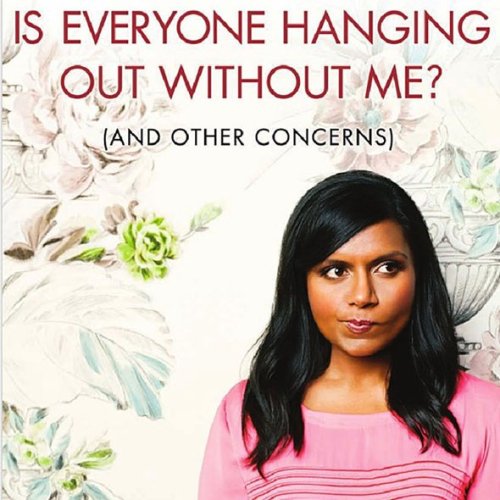
If you watch The Office without paying attention to the credits, you might assume that Mindy Kaling's sole purpose on the show is to play Kelly Kapoor, the materialistic 'office girl' who is more interested in appearance and various superficialities than in professional accomplishment. But if you do pay attention to the credits, you quickly discover that Mindy Kaling is the complete opposite of Kelly Kapoor. As a writer, occasional director, and listed producer, Kaling is one of the main creative contributors to The Office. And now she has a new book, called Is Everyone Hanging Out Without Me? (And Other Concerns).
This delightful book is part autobiography, part musing on the current state of entertainment, part musings on romance and dating here in the 21st century, and...well, the book reads simply like the conversational thoughts of a person who leads an interesting life and has interesting things to say without having led so interesting a life as to be completely intimidating. Is Mindy Kaling the 'girl next door'? Sure...if the girl next door is a hard-working, smart, and pretty woman who has a number of impressive talents.
Here is Kaling describing some of the types of characters you will find in a typical romantic comedy these days:
THE KLUTZ
When a beautiful actress is in a movie, executives wrack their brains to find some kind of flaw in her that still allows her to be palatable. She can't be overweight or not perfect-looking, because who would want to see that? A not 100-percent-perfect-looking-in-every-way female? You might as well film a dead squid decaying on a beach somewhere for two hours.
So they make her a Klutz.
The 100-percent-perfect-in-every-way female is perfect in every way, except that she constantly falls down. She bonks her head on things. She trips and falls and spills soup on her affable date. (Josh Lucas. Is that his name? I know it's two first names. Josh George? Brad Mike? Fred Tom? Yes, it's Fred Tom.) Our Klutz clangs into Stop signs while riding a bike, and knocks over giant displays of expensive fine china. Despite being five foot nine and weighing 110 pounds, she is basically like a drunk buffalo who has never been a part of human society. But Fred Tom loves her anyway.
THE ETHEREAL WEIRDO
The smart and funny writer Nathan Rabin coined the term Manic Pixie Dream Girl to describe a version of this achetype after seeing Kirsten Dunst in the movie Elizabethtown. This girl can't be pinned down and may or may not show up when you make concrete plans. She wears gauzy blouses and braids. She decides to dance in the rain and weeps uncontrollably if she sees a sign for a missing dog or cat. She spins a globe, places her finger on a random spot, and decides to move there. The ethereal weirdo abounds in movies, but nowhere else. If she were from real life, people would think she was a homeless woman and would cross the street to avoid her, but she is essential to the male fantasy that even if a guy is boring, he deserves a woman who will find him fascinating and pull him out of himself by forcing him to go skinny-dipping in a stranger's pool.
And thanks to Mindy Kaling, I now desperately want to see the movie Darling, which has not been made yet, but would tell the story of Peter Pan from the viewpoint of the Darling family's alcoholic father. That movie needs to happen, dammit!
A Random Wednesday Conversation Starter
Tuesday, July 10, 2012
A very public thank you....
It came from the freezer case, vol. 1
Frozen pizza makes me happy. Always has. Now, I won't maintain that frozen pizza is ever as high-quality a product as the best freshly-made pizza, but I absolutely will maintain that there are frozen pizzas out there that are frankly preferable to quite a few places that do the fresh thing. I mean, we have to be realistic here, don't we? Not all pizzerias are wonderful. Many are. Many more are not, and many only manage to keep churning out their disappointing pizza by being cheap and/or conveniently located near a population of people predisposed to value cheap and convenient pizza (such as, say, college students).
I am no 'expert' on pizza, but I do love it and I think I have a fairly decent handle on whether something tastes good or whether it's (as some frozen pizzas really are) crap-on-toast. And since I tend to have frozen pizza for dinner a couple times a month at least (hey, it's an indulgence), why not blog about it?
I grew up eating frozen pizza. Not all the time, but my parents would keep a few in the freezer on a regular basis, so that I might have something quick and easy to feed myself in the event that Mom didn't much feel like having any kind of real answer to the question "Whatsferdinner?" (Especially when I asked this question as soon as she walked in the door after work without so much as a "Hi Mom!" first, and I couldn't get away with running it all together so it came out as "Himomwhatsferdinner?" either.)
During the 1980s, there were, as far as I recall, only two or three brands of frozen pizza available. My preferred brand back then was Totino's, which came in a red box and which was called a 'party pizza'. The pepperoni was not in discs, but tiny cubes all over the thing. I haven't seen one of those in years. I think that Tony's was the other one; Tony's is still going strong, actually. And then there was a generic, store brand. These were pretty disappointing, generally. And that was about it. (Actually, not quite: late in the 80s a new brand showed up, called "Mr. K's". This was some kind of higher-quality item which came with its own metal baking dish in the box. I recall these being pretty good, but from what I can tell, the brand has not existed in years.)
Of course, frozen pizza has exploded over the last couple of decades. There's DiGiorno, obviously, and a whole bunch of other brands. Paul Newman's is now on the scene, and the store brands tend to be a lot higher quality these days than when I was a kid. The frozen pizza section at any grocery store is now significantly larger than it used to be, which is pretty cool. It used to be a couple shelves in one door. Now it's four or five doors...or more.
So, time to get to tasting. First, on method: I will prepare all pizzas I write about in these posts according to the directions on the box. It's tempting to figure that what works for one frozen pizza likely works for all of 'em, but that's just not the case. I discovered this the hard way a number of times; I would get used to baking one brand at 400 for fifteen minutes and then not realize that the next brand called for ten minutes at 425. Some pizzas instruct you to preheat the oven; others specifically say not to. Ignoring these directions results in disappointing pizza. So, I'll be following directions to the letter.
Second, on brands I'll try: I'm up for nearly anything, but because of obvious conflicts of interest, I won't be writing about any of the frozen pizzas currently produced (or produced in the future) under the label of The Store. (I will offer up a blanket statement that I do like our brand frozen pizza.)
Third, a couple of general statements: Look, we're talking frozen pizza here. I'm not trying to compare each pizza to something made by a skilled pizzeria cook or deepdish pizza baker. I hope we're clear that I'm not claiming any high standards of food quality here. Frozen pizza tends to be very different in terms of texture from what you get from a pizzeria, no matter where; cheese in a frozen state behaves differently than freshly-sliced or grated cheese, for one thing, so frozen pizzas will rarely give you that 'cheese pull' that's familiar to lovers of fresh pizza. Also, frozen pizzas are frozen food, and frozen food tends to be higher in sodium. Some of these pies can end up tasting very salty indeed. I'll make note of it when it happens, but in general, saltiness is to be expected from frozen pizza.
I think that's about it for preliminaries. Time to talk about the first pizza!
Although I've come to like fewer and fewer toppings on my pizza over the years – no more than three toppings, usually – I rarely go the whole way and just have a pizza with nothing but sauce and cheese. But this one seemed like a good place to start.
'Cheese Lover's', huh? According to the box, this pizza sports a blend of cheeses as follows: "Mozzarella, White Cheddar, Provolone, Parmesan, Romano cheeses." OK. That sounds promising, actually. I can't differentiate all the various cheese flavors in any cheese blend on a pizza, but a blend is still desirable because a cheese's characteristics tend to change a lot when melted, so a blend of cheeses gives a balance to flavor that is hard to achieve with a single cheese. Other than the cheese blend, this pizza is very basic. Here's what it looks like out of the box:
Yup. Basic indeed: just a thin circle of dough with sauce and cheese on it. And yes, this thing is thin. Palermo has a whole line of these ultra-thin crust pizzas. Super-thin crust doesn't tend to be my favorite, but if done well, I like it quite a bit, if not really loving it. Thin crust can turn out too brittle and crispy, and I don't like a great deal of crisp to my pizza. So what would happen? It's been my experience that thin crust frozen pizzas tend to get overdone at the edges.
Anyway, into the oven: 450 degrees for 8 to 10 minutes. I checked at 8 minutes and decided that it wasn't quite done, so I left it in the full 10. (Frozen pizza manufacturers always give a time range in their directions, to accommodate people's differently-performing ovens.) When I took it out, it looked like this:
Yeah, a little but too crispy around the edge – but not horribly so. And the cheese all melted into a pretty attractive top, with brown spots and little visual evidence of the cheese's former dry and frozen state. This one came out of the oven looking really tasty, though. And here's the bottom of the crust:
That impresses me, to be honest. At that high a temperature, that low in the oven, I feared a burned crust. Instead, no burning – just too done around the edges. But what about the taste?
Well, this pizza was actually pretty good. It had the frozen-pizza saltiness, but it wasn't overwhelming and I didn't feel as though I needed to down several swigs of water every other bite. The crust here really does turn out to be really thin...but not as thin as, say, the Thin-and-Crispy at Pizza Hut. (Horrible dough to work with, by the way. Just horrible.) It's just thin enough to give you a stiff slice of pizza and a definite crunch when you bite into it, but just thick enough to give that crunching bite some body. Again, aside from the outer rim (which was overdone), the crust was fine.
The tomato sauce? Very nice, actually – just enough so you know it's there by taste, but not overwhelming, either. The sauce is more tangy than sweet, and it works very well with the cheese blend. And as for that: the cheese is probably the best thing about this pizza. Frozen pizzas generally won't give you that elastic quality to the cheese, like fresh pizza will – generally when you bite into a slice of frozen pizza, you don't get long tendrils of molten cheese dangling between you and threatening to detach and flop onto your own chin. Frozen pizza cheese tends to stay where it is.
And yes, the cheese here does just that: stays where it is. Within reason. I had a couple of 'stretching cheese' moments whilst eating this one, and the cheese really did start to trail away from the slice. It snapped back, but still, that was a nice thing to see in a frozen pizza. And while I did notice the saltiness of the pizza, the main flavor here was of cheese, not salt. I appreciate that.
So, I give this one a fairly high grade. Nice job by the Palermo folks on this one!
Monday, July 09, 2012
Scratching my political itch
Sentential Links
:: In my personal life, I have an eight-year-old, and that dictates a lot of my life. In the world, there are things (war, environmental catastrophes) being done, sometimes in my name, and it appears than I have absolutely nothing to do about it. (Roger answers the same questions that I answered a few days ago.)
:: I honestly don't even think about money anymore. Well, that's not entirely accurate. I don't think about being able to spend it. (So does SamuraiFrog.)
:: So c'mon -- gimme all your hot monkey love! (Oh, you have got to click through on this one. Trust me...especially if you had any love for the X-Men back in the day....)
:: Whenever I sit back to take a closer look at a series like Star Trek: The Original Series, a series that helped define who I am, I get an almost fuzzy feeling. I'm probably the wrong person to look at this series objectively. It can rarely do wrong and when it does, like your child, you are forgiving and still love it unconditionally. But more often than not it succeeds as it does here. (This is why I've long-since stopped believing in 'looking at something objectively'. It's a fool's quest, seeking a target that simply does not exist.)
:: The thing about biographical movies is that for the actors playing people who were actual Real People In History, and particularly for recent Real People, there is a fine line you have to walk between “this is who that person sounded like” and “this is who that person actually was.” People become famous for their verbal tics and how they generally hold themselves, but that’s not who they were, not when you get right down to it. Any person is infinitely more complex than their public persona, and a good actor works to capture the person’s interior life (as best they are able) and use that to bring out the public side of things. (Interesting post about the Oliver Stone movie Nixon, which I blogged about myself a while back.
:: The whole notion of State's Rights, and the necessity of state representation in Congress has caused a great deal of mischief, and I think the time has come to start rethinking it. (I tend to agree...but I'm not at all sure what to do about it.)
:: It's not cool to like The Patriot, especially these days after the Fall of Mel Gibson, but even back in the day it had a bad reputation as the American Braveheart. That's not fair. (As I pointed out in comments, I was liking this movie just fine up until the extremely gratuitous, 'let's ratchet the bad guy's evil all the way up to 11' torching-the-church scene....)
:: Whether you're a reader or a writer, reading poorly-written dialogue is the same as being a musician and listening to music being played off-key. There's only so much of that you can take before it becomes almost painful -- and I think that's why so often bad dialogue is a book killer. (This is what makes me most nervous about re-reading my own stuff...I'm afraid that my dialog is shit. We'll see...editing starts [gulp] tomorrow....)
More next week! (or not. You can never tell, with me.)
Sunday, July 08, 2012
Ernest
I honestly don't recall ever seeing Borgnine in anything in which I didn't like him, unless he was playing a villain, in which case I disliked him in exactly the right way. His was an utterly unmistakable face, between the roundness of his head, the slight bulging quality of his eyes, and the gap between his two front teeth -- but he was also one of those actors who was able to look the same and yet make you think of nothing else other than the character he was playing at any one time. (I consider Steve Carell to be another actor of this type.) Borgnine was able to put just the right look in his eyes to convey exactly what he wanted to convey about any character he played.
I assume that I first saw Borgnine in a guest-starring role on some show in the 1970s or so, maybe The Love Boat (which, yes, he was on -- but then, so was everybody). The first thing I really remember him in was an episode of Little House on the Prairie that I've mentioned before in this space. It's a two-parter called "The Lord Is My Shepherd", and it's one of the tear-jerkingest things I've ever seen. In Part 1, Charles and Caroline have a baby boy, whom Laura resents and (if memory serves) she actually wishes to die. Sadly, as infants sometimes did back then, little Baby Charles actually did die, and Laura became racked with guilt -- so much so that, in part 2, she runs away from home to seek God and petition him to take her instead of Baby Charles. Quite logically for a child, Laura recognizes that her best bet of being heard by God is to seek high ground, so she goes atop a craggy mountain (we won't ask what this mountain is doing there, in the middle of 'the prairie'), where she meets a wise old man named Jonathan, played by Borgnine.
Here's the entire episode of part 2:
Now, this episode can really only stand or fall based on what Borgnine does, and he conveys a pitch-perfect combination of warmth, wisdom, and mystery that suggests who or what he must be, well before a final reveal (of sorts) happens at the end. This episode made a mark on me years ago when I saw it as a kid, when Little House was an after-school re-run. Little did I ever suspect that this particular story would one day turn out to have some fairly uncomfortable parallels to events in my own life.
For a totally different side of Ernest Borgnine, there is his malevolent stockade administrator in From Here to Eternity. He's a mean and sadistic bully, but Borgnine knows to portray a bit of the cowardice that lies at the heart of most bullies. Here he's forced to stand down, but he knows that he'll have his chance again, one day.
Thanks for the memories, Mr. Borgnine. About the only good thing about the passing of fine actors is that their memories are enshrined forever on film.
Sunday Burst of Weird and Awesome
:: Roger Ebert linked this on Facebook, and it's pretty great, actually: the 50 greatest matte paintings of all time. For non-film geeks in the audience, a matte painting is how filmmakers used to create vistas onscreen that were too expensive or fantastic to actually build as sets. One of the most iconic ones -- and featured in the article -- is the crate-filled warehouse at the end of Raiders of the Lost Ark.
Matte painting -- the actual painting of a sheet of glass for superimposition of the filmed images -- has largely gone the wayside in the era of digital composition, and while I've never been one to lament the passing of special-effects-by-hand in favor of CGI (having seen lots of bad FX-by-hand in my day), but there is something nifty about knowing that an artist was literally painting a piece of glass to make the movie magic happen.
:: This is an amazing video comprising all of the launches of the space shuttle. Yes, including that one -- but you can't really show them all and leave off the one that ended poorly. And once again, I'm reminded that while the shuttle's day was overdue to end, it's a sad thing that it ended with no new ship to have its day afterward....
:: As of this writing, the Pittsburgh Pirates are ten games over .500, in first place in the NL Central, and they are assured of entering the All-Star Break with at least a share of first place. Their record right now is 47-37, and after a really slow start at the plate, their hitters have produced nicely the last month or so (not that they couldn't add another bat for the stretch run, and given how they've stocked the farm system that last few years, they could do so without mortgaging their future the way they did in 1990 when they traded Moises Alou for Zane Smith). Go Bucs!
More next week!
Thursday, July 05, 2012
Fixing the Prequels: Revenge of the Sith (part four)
two
three
Aaaaand again, it's been ridiculously long for an installment of this series, for which, again, my apologies. But this time the reason is different, aside from the fact that time, as always,, continues to occasionally get away from me. No, this time I've genuinely been vexed with how to fix the part of Revenge of the Sith we're now entering.
This part of the film – the political part – is the most problematic. After a slam-bang first forty minutes or so, the film has to spend half an hour or so going set-up for the last hour, which will include, as we well know going into this one, all manner of grim stuff happening. As a well-established lover of all things Star Wars, I don't dislike this part of the movie, but I do have to admit that structurally, this is the weakest part of Sith. It's mostly a lot of talking, and I've really had trouble figuring out what to do here.
So part of what I did was reconnect myself with the entirety of the Star Wars saga by rewatching, over the course of six consecutive Sundays, all six movies (in their proper order: ANH, TESB, RotJ, TPM, AotC, Sith). And while I'm on that subject, I highly recommend doing precisely this! When watched in fairly close quarters like that, the emotional beats of the entire story become a lot more clear. And as fas as this blog series goes, the rewatch more than served its purpose, because it crystallized for me a few things about this movie:
1. There are times when George Lucas chooses to linger when he should move.
2. Conversely, there are times when Lucas moves when he should linger a bit!
3. The film doesn't contain quite enough politics.
4. The film doesn't quite connect the dots strongly enough with regard to Anakin's temptation.
Again, these observations are meant more mildly than they might sound. I think that Sith is a fantastic experience, but it could have been even better had the Problem Portion worked just a bit better. The problem here, I think lies in the talky nature of the material and the fact that a lot of the talk is, well, rather stilted and expository in nature. So, what to do?
Well, there are two possible ways we can go. We can add more action in order to give the impression of plot movement by having things explode. I didn't want to do that because you have to justify action, and I don't see how to do that and retain what we need of the political material without resulting in a hugely bloated movie, so I'm prepared to stick with the action in the film that exists. That leaves the other option, which is to make all that talking more interesting in itself.
And how do we do that? Well...and given some of my recent postings, I can't believe I'm saying this...but we need to take a lesson here from Aaron Sorkin.
I may have spent lots of time ripping the guy recently, and for what I feel are entirely justifiable reasons, but if there's one thing we can learn from the fairly consistent success of Aaron Sorkin's scripted films and shows, it's that lots of talking need not be boring. At his best, Sorkin was able to make the corridors of politics a deeply fascinating place. That's what needs to happen with Sith...maybe not in Sorkin's style, obviously. I don't want characters answering every yes/no question affirmatively with "Yeah"; I don't want people referring to "the thing" or "this thing" or saying "I've gotta go do a thing"; I don't want Anakin complaining to Obi Wan that the Jedi Council has just "screwed me with my pants on". But more dynamic conversation, more quickly applied, is certainly called for.
So! When we left off, Anakin had started having nightmares about Padme's death in childbirth, and in an act of total responsibility that I find pretty impressive (especially as no one seems to notice it), Anakin took his problem to Yoda, who then helpfully told him basically, "Death happens. Let it and don't be sad when it does." Yoda's advice is, shall we say, not all that useful.
So now we start getting into some politics. What is the aim here? Well, we have to show Anakin's increasing ties to the Chancellor eroding his confidence in the Jedi. We also need to establish that the Chancellor is slowly but surely acquiring enormous amounts of power, to the alarm of the Jedi. This story isn't just the fall of Anakin Skywalker, it's about the seizure of power by the Sith and the fall of the Jedi order. Now, in the original script and in some deleted scenes, the seeds of what will eventually be the Rebel Alliance are sown, but none of this made it into the finished film, on the basis that those scenes slow things down too much (and this is not a point without merit). Finally, it seems to me that at least a bit of light needs to be shone upon the exact relationship of the Jedi to the Chancellor and Senate, and on the public in the Galaxy's view of the Jedi. How to do all this? Read on!
Just after Anakin's scene with Yoda, he runs to get to a war briefing by Obi Wan, and he gets there late. I would add a little bit, in blue, and what didn't make the film in red:
INT. CORUSCANT-JEDI TEMPLE-BRIEFING ROOM-DAY
ANAKIN rushes into the Briefing Room. By the time he reaches the Chamber, the last of the Jedi are leaving. Only OBI-WAN remains at the front of the lecture hall. He is shutting off some holograms and electronic charts and maps.
OBI-WAN: You missed the report on the Outer Rim sieges.
ANAKIN: I'm sorry, I was held up. I have no excuse.
OBI-WAN: In short, they are going very well. Saleucami has fallen, and Master Vos has moved his troops to Boz Pity.
ANAKIN: What's wrong then?
OBI-WAN: The Senate is expected to vote more executive powers to the Chancellor today.
ANAKIN: What powers?
OBI-WAN: The Chancellor wishes the authority to commission more clones from Kamino, and to appoint regional governors to directly control Republic affairs in their territories.
ANAKIN: Well, that can only mean less deliberating and more action. Is that bad? It will make it easier for us to end this war.
OBI-WAN: Anakin, be careful of your friend Palpatine.
ANAKIN: Be careful of what?
OBI-WAN: He has requested your presence.
ANAKIN: What for?
OBI-WAN: He would not say.
ANAKIN: He didn't inform the Jedi Council? That's unusual, isn't it?
OBI-WAN: All of this is unusual, and it's making me feel uneasy. You're probably aware that relations between the Council and the Chancellor are stressed.
ANAKIN: I know the Council has grown wary of the Chancellor's power, mine also for that matter. Aren't we all working together to save the Republic? Why all this distrust?
OBI-WAN: The Force grows dark, Anakin, and we are all affected by it. Be wary of your feelings. The Council isn't concerned about your power, Anakin. But they are concerned about how close you are to Palpatine.
I add the little bit enumerating the specific powers being voted upon because I generally think it's best to be more specific when you can.
Now, in the movie, we cut right to Palpatine's office, and Anakin and Palpatine are slowly walking around the enormous room, having a discussion. Only about half of it shows up in the film, though:
INT. CORUSCANT-CHANCELLOR'S OFFICE-DAY
ANAKIN stands with PALPATINE at his window overlooking the vastness of Coruscant. Several buildings have been destroyed. A brown haze hangs over the landscape.
PALPATINE: Anakin, this afternoon the Senate is going to call on me to take direct control of the Jedi Council.
ANAKIN: The Jedi will no longer report to the Senate?
PALPATINE: They will report to me . . . personally. The Senate is too unfocused to conduct a war. This will bring a quick end to things.
ANAKIN: I agree, but the Jedi Council may not see it that way.
PALPATINE: There are times when we must all endure adjustments to the constitution in the name of security.
ANAKIN: With all due respect, sir, the Council is in no mood for more constitutional amendments.
PALPATINE: Thank you, my friend, but in this case I have no choice . . . this war must be won.
ANAKIN: Everyone will agree on that.
PALPATINE: Anakin, I've known you since you were a small boy. I have advised you over the years when I could ... I am very proud of your accomplishments. You have won many battles the Jedi Council thought were lost . . . and you saved my life. I hope you trust me, Anakin.
ANAKIN: Of course.
PALPATINE: I need your help, son.
ANAKIN: What do you mean?
PALPATINE: I fear the Jedi. The Council keeps pushing for more control. They're shrouded in secrecy and obsessed with maintaining their autonomy . . . ideals. I find simply incomprehensible in a democracy.
ANAKIN: I can assure you that the Jedi are dedicated to the values of the Republic, sir.
PALPATINE: Nevertheless, their actions will speak more loudly than their words. I'm depending on you.
ANAKIN: For what? I don't understand.
PALPATINE: To be the eyes, ears, and voice of the Republic . . .
ANAKIN thinks about this.
PALPATINE: (continuing) Anakin . . . I'm appointing you to be my personal representative on the Jedi Council.
ANAKIN: Me? A Master? I am overwhelmed, sir, but the Council elects its own members. They will never accept this.
PALPATINE: I think they will . . . they need you more than you know.
As I watched all six movies, I noticed that George Lucas – even in TESB and RotJ, the ones he didn't direct – likes to join scenes with conversations already in progress (good example: in ANH, after Ben rescues Luke from the Sandpeople, we cut to Ben's home and Luke is saying, "No, my father didn't fight in the wars, he was a navigator on a spice freighter."). A lot of the time it works, but there are a couple of times – most notably the fireplace scene in AotC -- where it doesn't. This is another such example. I suspect that the scene was cut as is to keep it short and simple, but sometimes short and sweet isn't so great. Interestingly, this scene as written openly addresses something I wondered about while rewatching the PT: the relation between the Jedi and the Republic. This scene strongly indicates that the Jedi are virtually an independent body, and very rigid in guarding their independence. And that, frankly, seems a tad important to me.
I'd like to establish all this, but I wouldn't do it this way, with a simple Anakin-and-Palpatine in the office thing. Instead I would replace this whole scene with a longer sequence:
EXTERIOR: Coruscant – Senate building – dusk.
The sun is setting behind the great Senate building.
INTERIOR: Senate chamber.
The Galactic Senate is in session, with PALPATINE presiding from his center rostrum. A SENATOR FROM MALASTARE has the floor.
MALASTARE SENATOR: We have heard the reports from the Jedi that their offensive is pushing back the Separatist armies, but if that were true, how could General Grievous have launched such a devastating attack against the very heart of the Republic? How can we trust the Jedi reports of success when they just barely avoided utter failure in our own skies? Malastare moves that an immediate investigation into this affair be undertaken!
PADME: This is outrageous!
The Senate pod from Naboo floats out into the debate space, bearing PADME and JAR JAR BINKS.
PALPATINE: The Senator from Naboo.
PADME: The Jedi have served the Republic with honor for a thousand generations! If we question them now--
MALASTARE SENATOR: This failure was theirs. The Force did not warn them of the attack, did it? This war grinds on and on, and now, look about you! A third of this body is vacant, and a third of these Pods stand empty because their systems have joined the Separatists! The Jedi are failing us. Chancellor, I serve official notice that Malastare is introducing an amendment to place the Jedi Council under the direct authority of the Chancellor and the Senate!
PADME: No! You can't--
She is drowned out by the shouts from every Senator in the building as the entire place erupts with fierce debate.
MAS AMEDDA: Order! Order in the Senate! Order!
Through all this, PALPATINE shows almost no reaction, even when he meets PADME's gaze.
INTERIOR: Senate building – Shuttle bay.
PALPATINE is walking toward his personal shuttle, with MAS AMEDDA and his councilors behind him.
MAS AMEDDA: Will you schedule a vote on the Malastare amendment?
PALPATINE: I shall hold that off as long as I can, but eventually the Senate will force the issue...ah, Anakin!
ANAKIN rises from his seat outside the shuttle.
ANAKIN: Chancellor. I was told you wished to see me.
PALPATINE: I do. Come.
He takes ANAKIN aboard the shuttle.
INTERIOR: Chancellor's shuttle – continuous.
PALPATINE and ANAKIN sit down inside the shuttle as it departs for the Chancellor's office building.
PALPATINE: These Senate sessions become harder and harder to control. Odd, with fewer and fewer Senators.
ANAKIN: I watched it on the screen. The Jedi Council will not easily submit to being placed under Senate control, no matter what law they pass.
PALPATINE: I agree, which is why I wished to speak with you. I'd heard that Malastare was planning to propose that amendment, but I'd hoped those rumors were false. Perhaps what I have in mind will ease the Senate's concerns somewhat.
ANAKIN: Sir?
PALPATINE: I need your help, son. I need you to become the eyes and ears of the Republic.
ANAKIN: I don't follow--
PALPATINE: The Republic has faced times like these before, Anakin. The Jedi Council's independence was not always taken for granted. I have decided to invoke a very old statute and make a direct appointment to the Jedi Council.
It starts to dawn on ANAKIN....
PALPATINE: I wish you to be my personal representative to the Jedi. They will resist, but I have the right. Of course, by their own by-laws, this will force them to do what they should have done years ago, and make you a full Jedi Master.
ANAKIN: A Master?! Sir...I am...I don't know what to say....
PALPATINE: You need not say anything. In fact, if the Council's reaction is what I expect, you may not even wish to thank me. But the Republic needs you, Anakin. More than you know.
EXTERIOR: Sky above Coruscant.
The Shuttle arcs toward the Capital building.
INTERIOR: Senate building – corridor.
PADME is walking with several other SENATORS.
PADME: We have to start working to assemble a coalition that will back the Jedi Council. We can't have these divisions in the middle of a war--
A young SENATE PAGE approaches, bows, and hands PADME a slip of paper, which she unfolds and reads.
PADME: Thank you.
The PAGE runs off.
SENATOR: We will not vote to obstruct the Jedi.
PADME: Thank you. If you'll excuse me, I'm late for a meeting....
She nods a farewell and then heads off down another corridor.
INTERIOR: Senate building – Observation room.
The observation room is near the top of the Senate building itself, overlooking the mighty expanse of the Coruscant city. PADME enters and is greeted by SENATOR BAIL ORGANA and several other SENATORS, including a tall and regal-looking WOMAN.
PADME: Senator Organa? Why are we up here instead of one of our offices?
BAIL ORGANA: Greetings, Senator Amidala. I believe you know the others.
PADME: Yes, good to see you all. (to the WOMAN) You're newly elected?
WOMAN: Just last month. I am Mon Mothma.
PADME: Oh yes. Of Chandrila. A pleasure, and my apologies – I usually get around to welcoming new Senators more quickly. But why are we up here?
BAIL ORGANA: These observation rooms are informal locations.
PADME: And not subject to Senate guidelines for official business. I think I understand.
MON MOTHMA: Those of us here have concerns about some things that are happening in the Republic, and we think that you may share some of those concerns.
PADME glances from face to face in the room. Something about this seems harmless, and yet deeply significant. She knows that a line is about to be crossed....
PADME: Go on.
The point here is to show a number of things: that the Jedi are facing opposition not just from the Chancellor but from the Senate as well, to get the bit in there about Palpatine intruding upon the functions of the Jedi Council while seeming reasonable about doing so, and to show what is probably the moment when the Rebel Alliance is born.
It really struck me how skillfully Palpatine played the Jedi Council and Anakin and everyone else, when I rewatched the films. He just doesn't seem all that unreasonable in doing some of the things he does, before he unmasks himself. Of course, a part of that is the amazing performance of Ian McDiarmid, whose performances as Palpatine in the Prequels are, to my mind, criminally underrated. He gives Palpatine a kind of fatherly gravitas that is utterly convincing and all the more chilling when it starts to become clear what he's up to.
And that's where we'll stop. The galactic politics continues next time! Excelsior!
Something for Thursday
Wednesday, July 04, 2012
When in the course of human events (repost)
Here's a really weird story. It's so weird, I'm not sure the historians didn't make it up out of whole cloth. It seems that around 235 years ago or so, some folks living in a place under the rule of a King decided that they didn't much like the way that King was ruling them. At all. They pretty much decided, en masse, that their King was behaving, to use a current term, like a douche.
Now, over the many centuries before these folks came along, lots of other folks in other lands have decided that their Kings and Queens were being douchey, so they came up with ways to replace them. They'd organize revolts, usually behind the banner of some obscure relative of the monarch's so they could say that their person has a better claim to the throne, and off they'd go. So you'd expect that the folks we're talking about here would have just said, "You know what? Our King is a douche. Let's replace him with a new King."
But these folks didn't say that. What they said was, "Not only does our King suck, but he sucks so much that we're now thinking maybe we won't even have any more Kings. We'll do it all ourselves."
Over a year or so, there were some battles and skirmishes between these folks and the troops sent by the King to put down the pesky rebels, but it didn't work, and that notion -- "No more Kings and Queens!" -- took hold. It became a really popular idea, so finally, these folks appointed some representatives to gather in one of their cities and talk these issues over. The conversation went like this:
GUY #1: So, we're all agreed then? Kings suck?
GUY #2: Yes, Verily, they suck.
GUY #1: OK, so what do we do?
GUY #3: Well, we're already fighting, so we just keep fighting. But we should probably tell the King that we're being serious and we're not just a bunch of rabble-rousers here.
GUY #1: Right! How do we do that?
GUY #4: How 'bout a letter? I've got some nice parchment, quills, and a new bottle of ink.
GUY #2: Good idea! But you're about as eloquent as my cow. You'll just write "Hey King, sod off" and be done with it. We should be a bit more poetic about it.
GUY #4: How about Tom? He's pretty poetic.
GUY #1: Good idea! Let Tom do it. Now where's that Adams guy with the beer?
So a guy named Tom wrote the King a sternly-worded letter. It was pretty wordy, given the standards of the time, so here's a paraphrase:
Dear King,
We the undersigned, being representatives of the people of your colonies, have collectively decided that you are a douche and we don't want to live under your rule anymore. Furthermore, we're going to come up with a government of our own that won't even have a King. Now, we've just called you a douche, so you're probably thinking that we should be kind enough to at least tell you all the reasons we have for thinking you're a douche, so there's a list of those reasons later on. For now, suffice it to say that we believe in Life, Liberty and the Pursuit of Happiness. And you don't. And since we like the whole Life and Liberty thing a lot more than we like you, we're gonna take those and let you do whatever it is you do with your time in that Palace of yours.
So, here's the list of ways you've pissed us off. Note how long it is. You don't have to be a douche, you know.
...
See? Really, dude. There's no reason for some of that stuff, right? So anyway, have a good life and all. You've still got your island, and Canada seems pretty happy with you for some reason (but really, they're weird folks to begin with, what with that odd game they like to play on ice). But we're out of here.
Signed,
All the guys present
PS: Could you make sure your soldiers always wear those bright red coats? It makes it really easy to see 'em in the forests. KTHXBAI.
And so it came to pass that after some years of war, and some further years of cruddy government, they all got together again and figured out how they wanted to set up their new, "No Kings!" government. Their notion was to spread power out amongst a bunch of folks who were accountable to the people, and to further make sure that their government was required to respect certain rights that couldn't be taken away. It was a really weird idea...and yet, these folks worked hard to make it work, and their children kept working hard to make it work, and their children kept at it, and so on and so on and son on, until today.
Does it still work? Sometimes yes, sometimes not so much. But we're still here, and we're still working at it.
So Happy Birthday, United States of America! You're a wonderful, weird, beautiful, maddening, and awesome country.
(Hey! Uncle George is in there!)
Tuesday, July 03, 2012
O for a can of floral-scented air spray....
If I may be droll, allow me to recommend to my fellow science fiction and fantasy novelists that they become Catholic merely to increase their chance of writing a novel of lasting worth, power, and beauty, on the grounds that we Catholics see the cosmos as a sacramental temple whose stained glasses are lit with supernal light streaming in from beyond, and where the many-colored light touches, enchantment, magic, wonder and all the sacred things which give life richness spring up like elfin flowers, like the moly herb that wipes the lies of the eyes away, or like trees whose leaves are for the healing of nations: and like a wind in the stars we hear, far above the mystic horns of elfland blowing, the deeper magic ring in choirs of angelic song whose breath is the breath of life.
I just...I have zero idea what to say to this. None. My gob has been given so thorough a smacking by the awfulness of this sentence as to leave me cognitively inert. Thus I shall just sit here, twitching gelatinously in a puddle of my own drool....
FIRST!!!
Monday, July 02, 2012
A Quiz thing
Q: If something is forbidden, do you want it less or more?
I think that one thing that differentiates 'adulthood', or 'maturity', or whatever you want to call it, is the ability to understand why things are sometimes forbidden. Forbidden things tend to have less of the quality of, say, me at six years old being 'forbidden' to go into my sister's room -- you bet your ass that made me want to go in there at every opportunity!
But nowadays, when I'm told "You are forbidden to attempt to fix this piece of equipment!" (just to make up an example), I know that it's generally because (a) I'm not qualified and (b) there's a million volts going through it.
Q: Is there an area of your life where you feel out of control? Especially in control?
I have control of my writing. I don't have control over whether it goes anywhere, but the words themselves, the ones that I choose to depict what happens to my characters? That's all me!
As for being out of control? The economy at large, I suppose. The environment. The state of the world. I have precious little control over any of that, so I try not to worry about it.
Q: If you unexpectedly had a completely free afternoon, what would you do with that time?
When's the afternoon? Mid-summer? Fall? Winter? Is there a movie just out that I want to see? Or do I want to get some coffee and do some writing? Or go walk in the woods and take pictures?
Q: Are you comfortable or uncomfortable in a disorderly environment?
A mix of both, I suppose. I know, weak answer...but I think that order is generally agreeable because it makes life easier. I get uncomfortable when order becomes a goal in itself, though.
Q: How much time do you spend looking for things you can’t find?
Again, depends on what it is. Wallet? Car keys? Glasses? Those I look for a lot. A certain book that I know I own? I'll look a bit, and then figure it'll turn up later on. (Or I'll remember that I don't even own it. Yes, that's happened.)
Q: Are you motivated by competition?
Not that much, except for playing games or whatnot. Competition in life annoys me, and I hate approaching life that way or assuming that I need to. Again it goes back to things I can control, and really, the only thing I can control is my own efforts. I tend to think that the only competition I'm generally in is with myself.
Q: Do you find it easier to do things for other people than to do things for yourself?
Oh, yes. Yes indeed.
Q: Do you work constantly? or think you should be working?
Yes to the second. I live in constant fear that I'm not getting enough done. I look at my writing-tracking spreadsheet and I see that I'm consistently clearing my own quota, and I wonder if I shouldn't double it. But I don't want to set the goal so high that I'm spending time worrying about making that goal and not about other goals, like spending time interacting with the Family Unit.
Q: Do you embrace rules or flout rules?
It goes back to my answer to the 'forbidden things' question: if I know why the rule exists, I'm much more likely to follow it than if it just seems to be a rule created because that's the way someone at a desk decided that things should be done.
But what about 'writing' rules? Most of those tend to be guidelines more than rules, but some that I think are really important to my personal productivity: Show, don't tell; only rarely use anything other than 'said' as my verb of dialog attribution; adverbs are The Devil; and most importantly, Nulla dies sine linea: "Never a day without lines".
Q: Do you work well under pressure?
Sometimes. Once I get the job going, I'm fine...but I do have a tendency to start trying to work a little too fast and then bad things happen. If I force myself to take my time and do the job I know how to do, I'm fine.
Q: What would your perfect day look like?
I'd get some writing done. I'd go for a walk. I'd drink some coffee in the morning and some rum in the evening. I'd talk to The Wife. I'd read. I'd wear overalls and I'd take a brief nap at some point.
Q: How much TV do you watch in a week (include computer time spent watching videos, movies, YouTube)?
Three hours a day? Maybe? It varies, and I tend to do some stuff while those shows are on, anyway. And you know what? I'm fine with that. I pick good stuff to watch, and there's a LOT of good stuff to watch these days. I don't feel that the time I do spend watching something is time I'm wasting.
Q: Are you a morning person or a night person?
Heh! My standard answer here is that I'm by temperament a night person who has been forced by certain aspects of life (such as the day job's start time) to become a morning person. I tend to not get enough sleep during the week because of this. That may be my most unhealthy habit, actually.
Q: What’s more satisfying to you: saving time or saving money?
Again, it depends! But I tend to bias toward time. I know folks who rigorously sift through coupons and grocery store ads to determine which local store is cheapest any given week on various items they plan to buy, and then they'll spend a day going to three or more stores to buy it all. That would drive me crazy. I'd much rather shop in one place, maybe spend ten more bucks than I would otherwise, and have my shopping done in an hour.
Q: Do you like to be in the spotlight?
I do, but I don't like to seek it much. This blog (and other social networking mechanisms) are as extroverted as I tend to get. Now, if someone shines a spotlight on me, I'm not recoiling in horror. But I don't knock myself out to get it.
Q: Is your life “on hold” in any aspect? Until you finish your thesis, get married, lose weight?
Not 'on hold', but...well, let's just say that apartment living is losing its cachet....
Q: What would you do if you had more energy?
More of what I already do. In fact, my main hang-up isn't energy; for me, it's time. I don't feel I have enough to devote to the things I truly love doing already!
Q: If you suddenly had an extra room in your house, what would you do with it?
Fill it with books? Or set up a woodworking/carpentry shop? Hmmmm....
Q: What people and activities energize you? Make you feel depleted?
Going to new places, new cities; walking museums and used bookstores. Walking outside. Depleted? I hate it when I'm forced into social situations where I'm 'required' to get to know people. I'm not terribly extroverted, until I get to know people.
Q: Is it hard for you to get rid of things that you no longer need or want?
Sometimes, if I can come up with a sentimental reason for it. But I'm gradually becoming more hard-nosed about stuff like this. My problem is getting motivated to go through and get rid of stuff to begin with.
(The exception here, of course, is books. I have the hardest time getting rid of books!)
Q: Do you get frustrated easily?
Yeah, I do. Not something I like about myself! I hate it when I know I'm doing something right and it's still not coming out right.
Q: On a typical night, what time do you go to bed? How many hours of sleep do you get?
Usually midnight or so. Weekdays I'm up at 6:00 am, unless I'm not working, in which case I'm either sleeping in or I'm up when The Daughter gets up (not much later than that, sad to say). If I have an early morning job to do, I'll get up shortly before 4:00 am. Currently I use the 6:00 to 7:00 hour to do a little online reading and such and then for writing. Writing every day really keeps the pump primed, and having a dedicated time each day when I write is really a good idea.
Q: If at the end of the year, you had accomplished one thing, what is the one accomplishment that would make the biggest difference to your happiness?
I'd love to sell a manuscript! But as I'm going to be starting editing this week, I'd like to at least have it submitted somewhere by year's end. I'd also like to have the first draft done on Lighthouse Boy (not the actual title), but I'm not sure I'll make it, as I'm not entirely sure how long this one's going to be. I'm not sure if I should try to stick to my 180000 word goal, or allow myself more than that. As I currently have no idea where the story is going...I'm leaving this up in the air.
Q: And here’s another question for you. What questions would you add to this list, to help other people know themselves better? It’s so important, and so elusive.
Like Lynn: no book questions! I'm a firm believer that looking at someone's bookshelf tells me a great deal about them. And maybe questions about vocations and the choosing thereof...not all of us get to choose our vocations, but are chosen for them, and of the latter group, a lucky bunch do find some value in them after all. If that makes sense.
Anyway...there's the quiz!
Sentential Links
:: In fact, it could be said that if you cannot afford the things on this list, then you should not be having children. (Interesting list. I'd dispute, in part, the bit about a bucket of screws, bolts, and nuts -- not that you shouldn't have one, but I would disagree that you will use them. In my experience, hardware multiplies like rabbits -- and eventually you reach the critical mass of the Jar O'Random Fasteners, which is when you know there's probably a screw of the size you need in there but you're damned if you're gonna spend the time to search through the jar for it so you'd just might as well go to Home Depot and buy however many screws of that size you need, which is also preferable because, Hey, trip to Home Depot!)
:: There was a time in my life when Doug McClure was the biggest action adventure hero in the movies. He seemed to always be in pictures set on some mysterious island or at the center of the Earth.
:: Today is Canada Day. What's so great about Canada? (Canada is all sorts of nifty, I have to admit. But then, I'm in Buffalo. We stare wistfully at Canada and think, "If not for a couple of battles two hundred years ago...."*)
:: Alright ladies! I’ve never said this before, but let’s be friends. I’ll buy you a fruit drink and listen to your cat stories if you don’t mind if I tell you a funny story about how you should never ask a stripper how much a Blumpkin costs. Hell, I can even show you how to tie a proper knot to a head board, after you tell me how to fix my goddamn hair already. Maybe we can finally understand each other now.
:: I feel very blessed, very grateful, I haven’t slept a wink, and I’m still floating in outer space. I love my friends, my family, my acquaintances, and am so grateful for all of them showing up last night. (Sheila wrote a play, and has had it read several times in different cities, and each time, apparently it goes even better. Where next? Maybe a small, rust-belt city on one of the Great Lakes that has an unusually vibrant theater scene for a city its size...one can only hope!)
:: I think I've learned one of the basic wisdoms of writing. That is, it's always a good idea to take a few steps away from a story before you venture into a major rewrite. It's even better to do this before you publish. More importantly, I'm falling out of love.
:: My mother had a stack of 45 rpm records that were several years older than me. Of course, when I was a kid that was really old old, antique, ancient, not like we, as adults think of songs from the previous decade. I was fascinated with these records. I liked the idea of listening to something from “so long ago” and I actually liked quite a few of the songs.
:: Vin Scully is in his 63rd season of calling Dodger baseball. The probation period is almost up.
But seriously, he is the Mozart of baseball broadcasters and I can’t imagine another announcer ever being as good.
And he’s always been there. Night after night, summer after summer. (By the way: as I write this, the Pirates are more than halfway to win #82, and less than halfway to loss #82! Go Bucs!!!)
More next week!
* No, we don't really think that. But we here in Buffalo do love us some Canada! Especially when they have a day off up there, stream across the borders, and spend money in our local emporia. Huzzah for Canada!
Sunday, July 01, 2012
Sunday Burst of Weird and Awesome!
:: Seen on Facebook:
In my case, they wouldn't dig up too much scandalous stuff. I think. I didn't spend that much of that decade in a drunken stupor. But then again, I doubt the country is ready for a President who would wear overalls to deliver the State of the Union, challenge Republicans to pie fights, and spend ridiculous amounts of time arguing online about whether John Williams is better than Jerry Goldsmith.
:: I'm pretty sure I've highlighted her work here before, but there's a photographer I follow on Flickr (going by the name Ar'alani) whose work I invariably find absolutely gorgeous. Here's an example:
She makes the Pacific Northwest look even more beautiful than it already is, and that's quite an accomplishment, because the Pacific Northwest is sufficiently beautiful that a drunken gorilla with a two-megapixel camera could take gorgeous photos of that region.
:: Julian Barnes on a life of bibliomania:
I am more optimistic, both about reading and about books. There will always be non-readers, bad readers, lazy readers – there always were. Reading is a majority skill but a minority art. Yet nothing can replace the exact, complicated, subtle communion between absent author and entranced, present reader. Nor do I think the e-reader will ever completely supplant the physical book – even if it does so numerically. Every book feels and looks different in your hands; every Kindle download feels and looks exactly the same (though perhaps the e-reader will one day contain a "smell" function, which you will click to make your electronic Dickens novel suddenly reek of damp paper, fox marks and nicotine).
Books will have to earn their keep – and so will bookshops. Books will have to become more desirable: not luxury goods, but well-designed, attractive, making us want to pick them up, buy them, give them as presents, keep them, think about rereading them, and remember in later years that this was the edition in which we first encountered what lay inside. I have no luddite prejudice against new technology; it's just that books look as if they contain knowledge, while e-readers look as if they contain information. My father's school prizes are nowadays on my shelves, 90 years after he first won them. I'd rather read Goldsmith's poems in this form than online.
More next week!