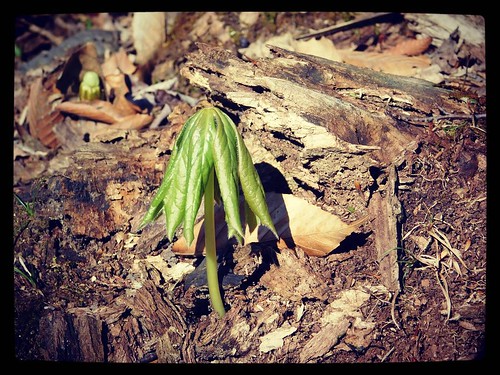
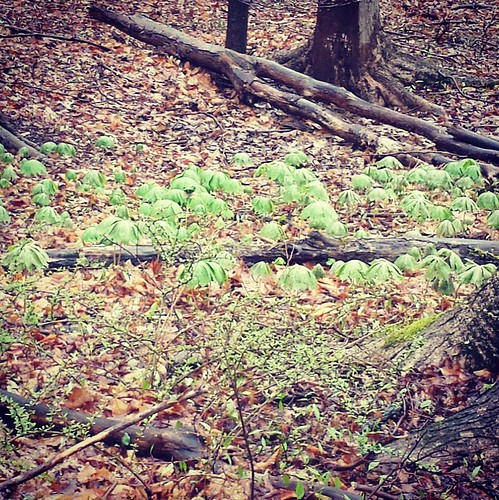
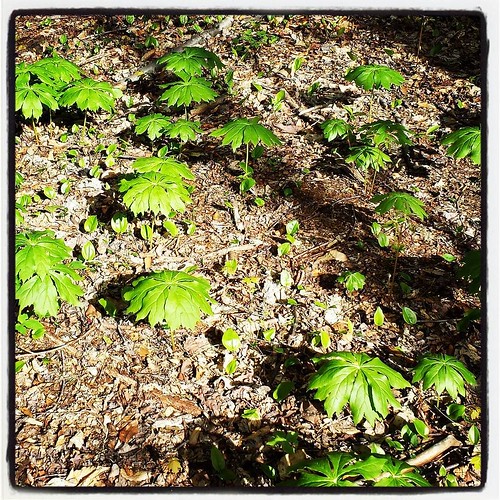
A week ago....





The personal blog of author Kelly Sedinger, chronicling the adventures of one overalls-clad wanderer.
I've long been of the belief that as delightful as three of the four seasons in Buffalo Niagara are, the last one is usually just annoying. It might surprise you to learn that the one I don't like is not winter, but rather, spring. I stand by this! Spring in these parts is not a welcome return to warmth, but rather it is generally a two-month affair of temperatures remaining stubbornly in the mid-to-upper 40s. Spring in Buffalo Niagara is usually a pretty gray affair, as the clouds maintain their stranglehold over the sun until mid-May at the earliest. It takes forever for trees and bushes and everything else to come back to life, to the point that green isn't the dominant color here until Memorial Day at the earliest. The snowpiles in parking lots and at the ends of streets endure, in their dirty grayness, and it seems like mud is everywhere.
And yes, it usually snows in April around here. Last year it even snowed not near Mothers Day, but actually on Mothers Day.
But we do once in a while get to enjoy a day like today in springtime around here, a day when it is warm and sunny out, when we get to open windows and switch out the stuffy indoor air for fresh outdoor air, when we can walk the dogs multiple times, and when the sun shines from sunrise to sunset.
Geology and astronomy may be in agreement that it is spring here, but it's just not. Not yet. Not in a way that feels real.
That's not stopping nature from looking like it's embracing the early wake-up call....

That's Chestnut Ridge park, just this morning. It's one of my favorite places, where The Dee-oh-gee and I visit often on our weekly Sunday morning nature walks. That particular stream is a combination of two streams that tumble from the upper reaches of the park; this is at the park's northern, and lower, end. Here it tumbles down through what's left of a deep ravine, and under a steel-deck bridge before it flows on, winding its way toward Lake Erie before it finally empties into Eighteen Mile Creek, which then flows on to Lake Erie. A lot of that water will eventually flow out of Lake Erie, down the Niagara River, over the Falls, and out to Lake Ontario...and on and on, eventually to the sea.
There's still snow up there (Chestnut Ridge is in what the weather people call "the upper elevations" when they are threatening snowfall for some of us), and as of now there hasn't been enough warmth to cause the grass to really start greening or for dormant trees and bushes to start budding. But it's tempting to look for those things.
Spring in Buffalo Niagara. It's here...kind of.

 |
I remember watching that exciting footage from the summit of Mt. St. Helens with my classmates, although we were all thinking the same thing, having seen so many movies of volcano eruptions from places like Hawaii: "Where's the lava?" Over the next few weeks we heard about more earthquakes and bulges and things called lava domes. Maybe there'd be lava eventually!

Scientists seemed more and more convinced that a major eruption was likely, and an unlikely local folk hero turned up in the news in the form of an old guy who owned a lodge on the very slopes of the mountain. His name was Harry R. Truman, and he refused to leave his beloved mountain. He was staying right where he was, with his cats. I honestly don't recall if Truman genuinely believed that the mountain wouldn't kill him, or if he couldn't bear leaving it. Given what the mountain looked like for him and what it would look like very soon, I almost can't blame him.
The big blast that everyone was awaiting finally came, forty years ago today, on May 18, 1980. There was no lava, just an enormous earthquake followed by a landslide that took away one entire side of the mountain. And then? Ash and steam and smoke, in a cloud miles high. More than fifty people were killed in that blast, including Harry R. Truman, whose lodge was buried under hundreds of feet of mud and ash and rock and debris.
The scale of destruction is astonishing for me to contemplate to this day. On May 18, the winds were out of the west, so we in the Portland area were spared large amounts of ash-fall. Not so later follow-up eruptions; I remember hosing an inch of ash off our driveway one morning. It was a fine, heavy, gray powder that covered everything. I also remember one day when some friends and I were playing outside and someone's father told us that Mt. St. Helens was erupting again. We rushed to the best vantage point in the housing development, just beyond a stand of trees at the eastern end, and there we saw something that looked very much like this (in fact, it may well have been this):
 |