Over on Reflections in d minor, Lynn has a nice article about the first musical instrument: the human voice.
(What follows involves a lot of simplification and glossing-over of technical points. So, if any of my readers happens to be a professional musician or has a Ph.D. in Composition or Performance or some such thing, don't lock-and-load with both barrels. Please oh please.)
There is a sense in which all instrumental music consists of attempts to simulate the human voice, and the terminology really drives the point home: instrumentalists are often said to be "singing" through their instruments, and young instrumentalists are constantly being advised (if their teachers are any good, that is) to listen to good singers and study the way they use their voices to shape and shade their music. The simple truth is, you can't be musically aware if you're not well-versed on the working of the human voice. That's a point that I didn't really understand until I attended a summer music camp late in my high school career. I had already been practicing my instrument (the trumpet) for years, but it wasn't until that camp that I was required to participate in a choir. The change of focus was exhilarating. Singing honed my musical ear, both in terms of intonation (a basic requirement of any musician) and in terms of phrasing (what, in large part, differentiates between a competent musician and a good one).
What is "phrasing"? Well, music -- in large part -- deals with melodies. But melodies aren't mere collections of notes so as to produce an appealing tune; a good melody will actually consist of several distinct phrases, and phrasing is simply learning how to tell one musical phrase from another, and being able to make clear in the course of performance where one phrase ends and another begins. This isn't as easy as it sounds.
Take a famous melody -- the great chorale theme of Beethoven's Ninth Symphony, for instance. As you hum it to yourself, you'll probably find yourself taking a natural breath between the fourth and fifth bars. Not a full, deep breath, but a short snatch of air. You'll do this for two reasons: (a) you probably can't hold enough of a breath to sing all eight bars, and (b) given that, the natural place to breath is at the midpoint. Now, the "natural place" for that break won't be in the exact middle of every melody, and this is partly why it gets harder to perform more modern works of music: the phrasing is less obvious. But it should be clear that the origins of phrasing lie in the demands of the human voice, and simply in breathing while singing.
Sir Georg Solti, who is probably my favorite conductor of all time, made this exact point in his Memoirs when he wrote about how, since he had learned conducting in the opera world, that when he came to symphonic conducting he still approached entirely-instrumental works from the standpoint of singing, looking for those natural breaks. It's those "breathing spots" that allow music to take life. Music performed without such "breaks" in the melody tends to sound very unconvincing and mechanical. (This is the case of a lot of Baroque music, because the focus in those times was not on melody per se but on counterpoint and line, which is part of the reason why Baroque music is difficult for modern ears: we are accustomed to Classical and Romantic norms of phrasing. This is also true of improvisational jazz, where the phrasing can resemble a "stream of consciousness" type of thing, which in a sense it is.)
It's odd that the sense of phrasing, which is intimately connected with breathing, is almost never to be found in young musicians. It has to be cultivated, and it's harder to develop a fine sense of phrasing than it is to develop mere technical proficiency. That's why young wunderkind virtuosos are fairly common, but young great musicians are not. It takes time, years of exposure to great musicians, before the sense of phrasing starts to develop. From my own experience as a wind instrument player, I remember comparing lung capacity with my fellow band members. We'd brag about how we could get through an entire strain of a Karl King march, with both repeats, on a single breath. And we had the most supreme admiration for those freaks-of-nature who could circular breathe. (That's the ability to continue to play a wind instrument while taking more air in, at the same time. It wasn't until I got to college that I realized that circular breathing wasn't some mystical ability but a skill one could learn, and a nearly useless one, too.) We never realized that doing so shackled the music. A dance isn't just motion; it's a blend of motion and non-motion. Likewise, music isn't just tones arranged artfully: it's a blend of tone and silence, of exhaling and inhaling.
Now, composers have their own ways of helping with the phrasing: they can employ rests and fermati, for instance. But in large part, the responsibility of phrasing falls on the shoulders of the performers. They have to figure out where and how the music should "breathe". This applies not just to soloists, like a pianist, but to entire orchestras. And then the difficulty of conducting becomes clear, because it's much harder to find the correct phrasing when you have eighty or ninety musicians all playing at once. Hell, sometimes it's hard just finding the melody in the first place, much less worrying about how to phrase it.
So that's why the human voice is so important to the course of musical history: because all instrumental music relies not just on the voice's sound, but on the voice's necessity for breath.
The personal blog of author Kelly Sedinger, chronicling the adventures of one overalls-clad wanderer.
Tuesday, July 15, 2003

Rush Limbaugh will be doing NFL commentary on ESPN this fall. Well, OK. I'd get worked up about it, but I don't really have a problem with it, especially since I don't have cable and thus don't watch ESPN anyway. I do recall that, years ago when I worked as an office temp in a college admissions office under a supervisor who insisted on listening to him every day, he'd occasionally break off his political stuff to talk a little bit about football, and I recall thinking, "I'd probably like this guy if he'd do sports and nothing else." So, fine. Give him a shot. Doesn't bother me.
And once I was watching his abortion of a TV show -- you know, the one where he said "There's a White House dog too" and held up a picture of Chelsea Clinton -- and he did one football-related humor bit that I found funny. (Yes, just one.) This was when the main charge against President Clinton was that he was a waffler who constantly spoke from both sides of his mouth. Limbaugh held up a list of the week's NFL games, with what he said were Clinton's picks for the week circled. Every team was circled. I thought that was funny.
(Yeah, Limbaugh is almost never funny. But as Ian Fleming once wrote, "You cannot sow a million seeds without reaping one potato.")
And once I was watching his abortion of a TV show -- you know, the one where he said "There's a White House dog too" and held up a picture of Chelsea Clinton -- and he did one football-related humor bit that I found funny. (Yes, just one.) This was when the main charge against President Clinton was that he was a waffler who constantly spoke from both sides of his mouth. Limbaugh held up a list of the week's NFL games, with what he said were Clinton's picks for the week circled. Every team was circled. I thought that was funny.
(Yeah, Limbaugh is almost never funny. But as Ian Fleming once wrote, "You cannot sow a million seeds without reaping one potato.")
Take that, you stupid manuscript! And that!! And another!!
I am now one chapter and the Epilogue away from being done with the current edit of The Promised King Book One: The Welcomer. Interestingly, I'm finding a lot less flab in these late chapters, as it's pretty much all action and battle as opposed to dull backstory that's not "back" enough and endless ruminations on what thoughts are flitting about inside the craniums of my characters. (Hmmm...."craniums"....I wonder if that should be "crania"....ach, who cares.) My average number of words cut per chapter right now is just over 800, but the last three chapters have been significantly below that. As for my target of 18700 words cut, I'm about a thousand short of that. I should be able to squeeze that much out of the remaining material.
So I'm finishing this in the next couple of days, and then it's "portion and outline" time -- followed by the typing of Book Two: The Finest Deed, which I'm both looking forward to and dreading in a way. I haven't revisited that story since I wrote the longhand draft three years ago, and I know that there will be parts that I like a lot and other parts where I'll scratch my head and say, "Jeebus, what were you thinking?!" Anyway, I figure it will take roughly a year to get Book Two up to speed. Prolific, I ain't.
ADDENDUM: Since the request has been made in the comments, any of my readers wishing to peruse the manuscript are willing to subject themselves to my incredibly rigorous screening process (which basically consists of me checking for a pulse).
I am now one chapter and the Epilogue away from being done with the current edit of The Promised King Book One: The Welcomer. Interestingly, I'm finding a lot less flab in these late chapters, as it's pretty much all action and battle as opposed to dull backstory that's not "back" enough and endless ruminations on what thoughts are flitting about inside the craniums of my characters. (Hmmm...."craniums"....I wonder if that should be "crania"....ach, who cares.) My average number of words cut per chapter right now is just over 800, but the last three chapters have been significantly below that. As for my target of 18700 words cut, I'm about a thousand short of that. I should be able to squeeze that much out of the remaining material.
So I'm finishing this in the next couple of days, and then it's "portion and outline" time -- followed by the typing of Book Two: The Finest Deed, which I'm both looking forward to and dreading in a way. I haven't revisited that story since I wrote the longhand draft three years ago, and I know that there will be parts that I like a lot and other parts where I'll scratch my head and say, "Jeebus, what were you thinking?!" Anyway, I figure it will take roughly a year to get Book Two up to speed. Prolific, I ain't.
ADDENDUM: Since the request has been made in the comments, any of my readers wishing to peruse the manuscript are willing to subject themselves to my incredibly rigorous screening process (which basically consists of me checking for a pulse).
Monday, July 14, 2003

For a really nifty collection of SF art, check out SFW's galleries. I read SFW each week, and yet I'd never explored the galleries much. Coolness awaits therein.

Tacitus points out that, even as Iraq seems to be possibly developing into "quagmire" status, there are possible signs that something positive may emerge from it all. I certainly hope so, since my feelings on the war were always of the "It's probably necessary, but I don't trust this bunch to not bungle the aftermath" variety. We'll see. The problem is not with the formation of a post-Saddam government, but in making sure that government doesn't end up being yesterday's news the way the post-Taliban government we created in Afghanistan did. If these people are in Washington a year or two from now, begging not to be forgotten like Hamid Karzai recently was, I won't be too impressed.
Here's a recipe for a movie: take the basic storyline of ET: The Extra-Terrestrial. (Young boy wanders into the local woods and finds a stranded alien being. Young boy befriends alien being, teaching him lessons about humans and love and all that while government authorities look for said alien being. Eventually the government finds the alien being, and some action-packed stuff ensues at the end.) But for subtext, remove ET's "broken family in suburbia" themes and replace them with "1950s Nuclear/Red Paranoia" themes. And instead of a short, pudgy and vaguely-humanoid alien being, use a gargantuan robot who dwarfs the Ponderosa pines and Douglas firs. Oh, and make it animated.
What you end up with is The Iron Giant, which we watched this weekend.
This is one of those animated films from the last few years that, not being a Disney product, tanked at the box office. And it's one of those movies that always makes me wonder just why it takes so bloomin' long for word-of-mouth to work its magic. Like The Shawshank Redemption, this is a wonderful film (with an ungainly-sounding plot, to judge by my scenario above) that has gone on to acclaim in its video release. It's a superb film. What I loved most was the film's blend of various design elements. The Giant has the retro-future look that reminds me of those old sci-fi flicks where all the alien cultures used Art-deco design, and toward the end, when the Giant basically opens his built-in can of "Whoop-ass", he reminds me of the classic War of the Worlds film.
I did think that the film's very end should have been a bit more ambiguous; it's a moment where just suggesting a possibility might have been more powerful than simply laying it out in the open. But that's a very small quibble.
:: We also watched The Mask of Zorro last night. In a time when just about every adventure film that comes along is a dark, CGI-loaded, pedal-to-the-metal event (and I haven't seen Pirates of the Caribbean yet, although all indications are that it's good but too long), here's a refreshing throwback to the days of good stuntwork and editing, actual acting, villains who -- while evil -- nevertheless have their own reasons for hating the good guys, and action sequences that take place by daylight. Even the James Horner score is entertaining, for a composer who has been treading creative water for years now. (Basically the score includes just about all of the standard "Hornerisms" that fill his scores, right down to his ever-present "evil" motif -- imagine if John Williams quoted the Imperial March in every score he wrote -- and the blasts of the Shakuhachi flute, an ethnic instrument one doesn't expect to show up in 1800's California. But Horner livens the proceedings with Mexican themes and sounds that, while not particularly authentic, at least make the thing a rattling fun listen.)
William Goldman has said that adventure films and comedies are the hardest genres to get right. The Mask of Zorro gets adventure right. What a fine swashbuckler this is.
(In an odd coincidence, but not quite to the level of Weird Convergence, we watched the VHS copy of The Mask of Zorro that we own....and when it was over and we stopped the tape, we discovered that CBS was actually airing the film.)
What you end up with is The Iron Giant, which we watched this weekend.
This is one of those animated films from the last few years that, not being a Disney product, tanked at the box office. And it's one of those movies that always makes me wonder just why it takes so bloomin' long for word-of-mouth to work its magic. Like The Shawshank Redemption, this is a wonderful film (with an ungainly-sounding plot, to judge by my scenario above) that has gone on to acclaim in its video release. It's a superb film. What I loved most was the film's blend of various design elements. The Giant has the retro-future look that reminds me of those old sci-fi flicks where all the alien cultures used Art-deco design, and toward the end, when the Giant basically opens his built-in can of "Whoop-ass", he reminds me of the classic War of the Worlds film.
I did think that the film's very end should have been a bit more ambiguous; it's a moment where just suggesting a possibility might have been more powerful than simply laying it out in the open. But that's a very small quibble.
:: We also watched The Mask of Zorro last night. In a time when just about every adventure film that comes along is a dark, CGI-loaded, pedal-to-the-metal event (and I haven't seen Pirates of the Caribbean yet, although all indications are that it's good but too long), here's a refreshing throwback to the days of good stuntwork and editing, actual acting, villains who -- while evil -- nevertheless have their own reasons for hating the good guys, and action sequences that take place by daylight. Even the James Horner score is entertaining, for a composer who has been treading creative water for years now. (Basically the score includes just about all of the standard "Hornerisms" that fill his scores, right down to his ever-present "evil" motif -- imagine if John Williams quoted the Imperial March in every score he wrote -- and the blasts of the Shakuhachi flute, an ethnic instrument one doesn't expect to show up in 1800's California. But Horner livens the proceedings with Mexican themes and sounds that, while not particularly authentic, at least make the thing a rattling fun listen.)
William Goldman has said that adventure films and comedies are the hardest genres to get right. The Mask of Zorro gets adventure right. What a fine swashbuckler this is.
(In an odd coincidence, but not quite to the level of Weird Convergence, we watched the VHS copy of The Mask of Zorro that we own....and when it was over and we stopped the tape, we discovered that CBS was actually airing the film.)
In the midst of a post about what's likely to be next on the Bush Administration's international agenda, SDB says this regarding President Clinton's responses, or lack thereof, to the various terrorist incidents that happened on his watch:
About the only effect on him is a loss of prestige, given how many people like me think that 9/11 could have been prevented if Clinton had reacted the way Bush did, and cleaned out the wasp nest in Afghanistan in 1993, or 1998, or 2000.
That's a fairly common meme these days: if only Clinton had done what he was supposed to do, maybe the disaster of 9-11-01 wouldn't have happened. This falls into the "Hindsight is 20/20" kind of thing, not unlike saying, "Gee, if France and Britain hadn't been so keen on punishing the bejesus out of Germany in 1919, maybe six million Jews wouldn't have died." And of course, there is little reason to suppose that President Bush the Elder, had he been elected to a second term, would have done anything other than what Clinton did; ditto a hypothetical President Dole. And the fact is, as much as some like to scoff at the "Shoot some cruise missiles at the guy" approach, that approach did come very close to nailing Bin Laden -- which, incidentally, is something that the Amazingly Decisive President Bush the Younger still has yet to do.
Looking at the "Exterminator" metaphor SDB employs here, it seems to me that while Bush certainly did give the wasp's nest a good smack or two with a broom handle, he didn't do much to actually decrease the number of actual wasps. As far as I can see, Bush-as-Exterminator hasn't achieved the results we'd expect of this guy. More like, oh, this guy.
About the only effect on him is a loss of prestige, given how many people like me think that 9/11 could have been prevented if Clinton had reacted the way Bush did, and cleaned out the wasp nest in Afghanistan in 1993, or 1998, or 2000.
That's a fairly common meme these days: if only Clinton had done what he was supposed to do, maybe the disaster of 9-11-01 wouldn't have happened. This falls into the "Hindsight is 20/20" kind of thing, not unlike saying, "Gee, if France and Britain hadn't been so keen on punishing the bejesus out of Germany in 1919, maybe six million Jews wouldn't have died." And of course, there is little reason to suppose that President Bush the Elder, had he been elected to a second term, would have done anything other than what Clinton did; ditto a hypothetical President Dole. And the fact is, as much as some like to scoff at the "Shoot some cruise missiles at the guy" approach, that approach did come very close to nailing Bin Laden -- which, incidentally, is something that the Amazingly Decisive President Bush the Younger still has yet to do.
Looking at the "Exterminator" metaphor SDB employs here, it seems to me that while Bush certainly did give the wasp's nest a good smack or two with a broom handle, he didn't do much to actually decrease the number of actual wasps. As far as I can see, Bush-as-Exterminator hasn't achieved the results we'd expect of this guy. More like, oh, this guy.
Sunday, July 13, 2003
Over at TF.N, more fan-written screenplays for Star Wars Episode III. I haven't read them all; generally I just scroll through them to see what's happening in each. I should dig out my old fanfic and thumb through it one of these days....as I recall, not all of it was laughable....(shut up, you.)
Some sort of folderol is developing across Blogistan right now about some group that wants to be called "The Brights". (A good place to start is Kevin Drum's take -- just follow his links outward. Oh, and Mindles Dreck has some thoughts and linkage too.)
I dunno...this is one of those popular blog topics that I'm pretty much sitting out. On the basis of what little I've read of this business, I'm simpatico with the "Brights". But I don't like the name. It implies that everyone else is the "Dims", doesn't it?
On a tangentially-related point, James Lileks takes exception to something Steven King said in a review of Harry Potter and the Order of the Phoenix. Now, Lileks has a point as far as this particular point goes, but it's a pretty tiny point, really -- it's one sentence, a throwaway thought, from King's review. Does Lileks have to do a pseudo-comparison of King to Ann Coulter? Isn't that laying it on a little thick? (I've been finding Lileks more palatable again lately. Who knows if that will last, though, because it didn't take me long to sour on him originally.)
I dunno...this is one of those popular blog topics that I'm pretty much sitting out. On the basis of what little I've read of this business, I'm simpatico with the "Brights". But I don't like the name. It implies that everyone else is the "Dims", doesn't it?
On a tangentially-related point, James Lileks takes exception to something Steven King said in a review of Harry Potter and the Order of the Phoenix. Now, Lileks has a point as far as this particular point goes, but it's a pretty tiny point, really -- it's one sentence, a throwaway thought, from King's review. Does Lileks have to do a pseudo-comparison of King to Ann Coulter? Isn't that laying it on a little thick? (I've been finding Lileks more palatable again lately. Who knows if that will last, though, because it didn't take me long to sour on him originally.)
Lynn writes today:
If you go far enough in one direction it becomes hard to distinguish the differences amoung the people you consider to be "the other side."
Oh, I don't know about that...it seems to me it's actually pretty easy, once you get that far out. There's "me", and everyone else is "not me".
I kid, though. I do understand what she's getting at, and I pretty much avoid the term "white trash" for the same reason she does: "trailer trash" is a better descriptor. And she's correct that it's wrong to equate "redneck" with either "white trash" or "trailer trash". "Redneck", to my way of thinking, can be an honorific: it implies a certain physicality of lifestyle, whereas "trailer trash" implies sloth. Additionally, you can find "trailer trash" anywhere, and you don't even need the trailer. Rednecks are harder to come by.
Yep, I'm really hurting for material today....
If you go far enough in one direction it becomes hard to distinguish the differences amoung the people you consider to be "the other side."
Oh, I don't know about that...it seems to me it's actually pretty easy, once you get that far out. There's "me", and everyone else is "not me".
I kid, though. I do understand what she's getting at, and I pretty much avoid the term "white trash" for the same reason she does: "trailer trash" is a better descriptor. And she's correct that it's wrong to equate "redneck" with either "white trash" or "trailer trash". "Redneck", to my way of thinking, can be an honorific: it implies a certain physicality of lifestyle, whereas "trailer trash" implies sloth. Additionally, you can find "trailer trash" anywhere, and you don't even need the trailer. Rednecks are harder to come by.
Yep, I'm really hurting for material today....
In the Buffalo News today, a copywriting position was listed by a local advertising company. I'm writing this post while I print out my resume and sample materials for application. Cross thy fingers.
(In the last two days I've also applied for two telemarketing jobs, two writing/proofreading jobs from a telecommuting list to which I subscribed some time ago, one local proofreading job, a Senior Page position -- i.e., "go-fer" -- at the Buffalo and Erie County Public Library, and...a retail position at OfficeMax. I hate filling out applications. That is all.)
(In the last two days I've also applied for two telemarketing jobs, two writing/proofreading jobs from a telecommuting list to which I subscribed some time ago, one local proofreading job, a Senior Page position -- i.e., "go-fer" -- at the Buffalo and Erie County Public Library, and...a retail position at OfficeMax. I hate filling out applications. That is all.)
Maybe I should just change the name of Byzantium's Shores to Stuff About Whales.
:: Apparently the big blob o'tissue that washed up on Chile's shores is what's left of a sperm whale.

According to experts, what happens is this: when a sperm whale dies, its body just sort-of bobs along while it decomposes. At a certain point, its skin can no longer maintain enough tensile strength to, well, hold the bones inside, and they literally fall out the bottom, leaving...well, you get the idea.
Oh well, I still prefer my blancmange theory. (And right now the Ray Bradbury story "Skeleton" is playing over in my mind....)
:: And according to Newsweek, commercial whaling is still an issue. It was somewhat to be expected: after all, the "endangered species" argument was the main justification of whaling embargoes, and now that a number of whale species are on the rebound, the countries that want to kill whales are saying, "Hey, there's more whales now! Let us hunt 'em!"
I've never understood whaling; as a rule, I find arguments that appeal to "cultural tradition" unconvincing in just about every scenario in which they are employed, which basically leaves pro-whaling countries left with, as far as I'm concerned, "Whales is yummy!" as an argument. And that doesn't hold water, either. To paraphrase Jules Winfield in Pulp Fiction: "Hey, a sewer rat may taste like pumpkin pie, but I'll never know 'cause I wouldn't eat the filthy mother******." There's a lot of yummy stuff in this world, so if we all stop eating one particular set of yummy things, well, who cares?
But there is one cute quote in the article, from a Japanese person who wants to start whaling again: "How would you feel if someone else from a different culture tells you that you should give up eating turkey for Thanksgiving?" Well, first of all, we're right back onto "It's our culture" argumentation here, which is pretty-much bogus. What gets me here is the analogy between a whale (animals with huge brains, documented "cultural" behavior, and at least the beginnings of linguistic communication) and a turkey (animals which are so dumb they can quite literally drown in a rain storm, because they gaze up into the rain with their mouths open). Great analogy there, fella.
:: Apparently the big blob o'tissue that washed up on Chile's shores is what's left of a sperm whale.
According to experts, what happens is this: when a sperm whale dies, its body just sort-of bobs along while it decomposes. At a certain point, its skin can no longer maintain enough tensile strength to, well, hold the bones inside, and they literally fall out the bottom, leaving...well, you get the idea.
Oh well, I still prefer my blancmange theory. (And right now the Ray Bradbury story "Skeleton" is playing over in my mind....)
:: And according to Newsweek, commercial whaling is still an issue. It was somewhat to be expected: after all, the "endangered species" argument was the main justification of whaling embargoes, and now that a number of whale species are on the rebound, the countries that want to kill whales are saying, "Hey, there's more whales now! Let us hunt 'em!"
I've never understood whaling; as a rule, I find arguments that appeal to "cultural tradition" unconvincing in just about every scenario in which they are employed, which basically leaves pro-whaling countries left with, as far as I'm concerned, "Whales is yummy!" as an argument. And that doesn't hold water, either. To paraphrase Jules Winfield in Pulp Fiction: "Hey, a sewer rat may taste like pumpkin pie, but I'll never know 'cause I wouldn't eat the filthy mother******." There's a lot of yummy stuff in this world, so if we all stop eating one particular set of yummy things, well, who cares?
But there is one cute quote in the article, from a Japanese person who wants to start whaling again: "How would you feel if someone else from a different culture tells you that you should give up eating turkey for Thanksgiving?" Well, first of all, we're right back onto "It's our culture" argumentation here, which is pretty-much bogus. What gets me here is the analogy between a whale (animals with huge brains, documented "cultural" behavior, and at least the beginnings of linguistic communication) and a turkey (animals which are so dumb they can quite literally drown in a rain storm, because they gaze up into the rain with their mouths open). Great analogy there, fella.

Friday, July 11, 2003
This weekend brings one of our favorite events in these parts: Taste of Buffalo, the huge annual food festival where something like 45 local restaurants and food vendors provide small samples of their wares, along with all manner of other street entertainment and whatnot. It's always a blast, although for various reasons I'm not looking forward to attending this year as much as in the past. But still, I'm sure we'll have a good time.
It appears that DestiNY USA is dead, at least as far as Syracuse in concerned.
I've written about this before, the huge shopping/entertainment/amusement/hotel complex that's been percolating on the drawing boards in Syracuse for several years now. A few weeks ago, things came to a head when the New York State Legislature failed to enact legislation that would have given the Pyramid Company (the folks behind DestiNY) the tax breaks that they insisted were necessary to the securing of funding from investors, and thus to actual construction. The legislation was scuttled, pretty much singlehandedly, by a single State Senator from Syracuse, John DeFrancisco, who happens to represent the very district where DestiNY was to have been built.
The debate was pretty rancorous, but I've come to think that DeFrancisco was probably right on one very important point: Pyramid never really came clean with just what it was they were going to do. In the six months that we lived in Syracuse, the plans seemed to change almost daily. When we arrived, the project's opening was billed for 2004; then it was moved to 2006. While we were there, a big groundbreaking ceremony -- complete with an appearance by Governor Pataki -- was held for the big hotel that was to kick off the project; the construction was halted almost immediately and never restarted. Disputes as to just what land surrounding Carousel Center (the current shopping mall that was to be expanded into DestiNY) was to be used for the big project went on. And so on. Even the DestiNY website never showed any images of what the thing was supposed to eventually look like. Sure, they had some generic "This is what it will resemble" stuff, but never an actual set of architect-drawings of the finished project. In fact, I found it hard to escape the impression, as time went on, that there was no idea of the "finished project".
I suspect that, if the Pyramid Company really was serious about this project, then they'll probably look to build it elsewhere. That's not really a surprise, and while I liked the idea -- if they'd have built the whole thing, instead of just adding piecemeal here and there, which was the way they seemed to be planning to operate -- I was never sure if Syracuse was really the right place for it. The city just isn't big. But then, neither was Las Vegas, before all the building happened there.
So, who knows. Maybe DestiNY USA will end up someplace else -- outside Philadelphia, maybe, or near Boston, or maybe Cleveland or some such place. Or maybe it was all just a series of trial-balloons, and now that they've all vanished into the stratosphere, Pyramid will get back to operating the malls it already owns. Ah well....
I've written about this before, the huge shopping/entertainment/amusement/hotel complex that's been percolating on the drawing boards in Syracuse for several years now. A few weeks ago, things came to a head when the New York State Legislature failed to enact legislation that would have given the Pyramid Company (the folks behind DestiNY) the tax breaks that they insisted were necessary to the securing of funding from investors, and thus to actual construction. The legislation was scuttled, pretty much singlehandedly, by a single State Senator from Syracuse, John DeFrancisco, who happens to represent the very district where DestiNY was to have been built.
The debate was pretty rancorous, but I've come to think that DeFrancisco was probably right on one very important point: Pyramid never really came clean with just what it was they were going to do. In the six months that we lived in Syracuse, the plans seemed to change almost daily. When we arrived, the project's opening was billed for 2004; then it was moved to 2006. While we were there, a big groundbreaking ceremony -- complete with an appearance by Governor Pataki -- was held for the big hotel that was to kick off the project; the construction was halted almost immediately and never restarted. Disputes as to just what land surrounding Carousel Center (the current shopping mall that was to be expanded into DestiNY) was to be used for the big project went on. And so on. Even the DestiNY website never showed any images of what the thing was supposed to eventually look like. Sure, they had some generic "This is what it will resemble" stuff, but never an actual set of architect-drawings of the finished project. In fact, I found it hard to escape the impression, as time went on, that there was no idea of the "finished project".
I suspect that, if the Pyramid Company really was serious about this project, then they'll probably look to build it elsewhere. That's not really a surprise, and while I liked the idea -- if they'd have built the whole thing, instead of just adding piecemeal here and there, which was the way they seemed to be planning to operate -- I was never sure if Syracuse was really the right place for it. The city just isn't big. But then, neither was Las Vegas, before all the building happened there.
So, who knows. Maybe DestiNY USA will end up someplace else -- outside Philadelphia, maybe, or near Boston, or maybe Cleveland or some such place. Or maybe it was all just a series of trial-balloons, and now that they've all vanished into the stratosphere, Pyramid will get back to operating the malls it already owns. Ah well....
Via Pandagon, I see that Howard Kurtz has this to say about the whole business about the Niger uranium reports and whatnot:
The left is now up in arms about one sentence in George Bush's last State of the Union speech.
Well, all sentences are not created equal, obviously. Starlog Magazine once had a cartoon where a Star Wars fan in 1980 was being tormented by his best friend, who had seen The Empire Strikes Back while the fan had not. The friend begs to tell the fan just one sentence from the movie, and the fan relents. The sentence? "I am your father." For that matter, the Presidential Oath of Office is just one sentence, so in a sense, the left is generally up in arms over one sentence President Bush said on Inauguration Day, 2001.
And besides, I seem to recall the Right in this country getting pretty hot-under-the-collar after a single sentence spoken by President Clinton, more than a couple of times.
So if you want to defend the Administration's reliance on faulty information in making its case for war, please don't use the "It was just one sentence" tactic, OK? That dog won't hunt.
The left is now up in arms about one sentence in George Bush's last State of the Union speech.
Well, all sentences are not created equal, obviously. Starlog Magazine once had a cartoon where a Star Wars fan in 1980 was being tormented by his best friend, who had seen The Empire Strikes Back while the fan had not. The friend begs to tell the fan just one sentence from the movie, and the fan relents. The sentence? "I am your father." For that matter, the Presidential Oath of Office is just one sentence, so in a sense, the left is generally up in arms over one sentence President Bush said on Inauguration Day, 2001.
And besides, I seem to recall the Right in this country getting pretty hot-under-the-collar after a single sentence spoken by President Clinton, more than a couple of times.
So if you want to defend the Administration's reliance on faulty information in making its case for war, please don't use the "It was just one sentence" tactic, OK? That dog won't hunt.
The Department of Weird Convergences filed a small report this morning. Years ago, I worked for Pizza Hut. (Not long enough ago, but....) Anyway, early in my career there, Pizza Hut came up with a commercial where a kid is attending a brand new school on his first day, and he's scared witless. So his mother calls the local Pizza Hut and asks them to deliver him two large pizzas for lunch. Of course, the kid -- who still hasn't made any new friends by lunchtime -- morphs into Mr. Popular once the pizzas arrive, with one cute little girl saying "Hi" to him. The child-actor in the commercial was a red-headed kid with freckles and big ears; he later appeared on the TV show Picket Fences. (I'd look up his name, but I don't care that much.)
So the other night I'm watching TV, and the latest Pizza Hut commercial comes on, with that same kid -- now playing a Delivery Driver.
I guess this means that Wil Wheaton might get to someday play the Captain of the Enterprise-H.
So the other night I'm watching TV, and the latest Pizza Hut commercial comes on, with that same kid -- now playing a Delivery Driver.
I guess this means that Wil Wheaton might get to someday play the Captain of the Enterprise-H.
Thursday, July 10, 2003
IMAGE OF THE WEEK

A map of the Spanish Main, once on the world's hotbeds of maritime piracy.
:: I don't know when I'll be able to see Pirates of the Caribbean, but I do love pirate-stuff. And I haven't swiped anything from MeFi in a while, so here's an incredibly nifty gallery of images pertaining to privateers. (Some of the images are a bit gruesome.)
A map of the Spanish Main, once on the world's hotbeds of maritime piracy.
:: I don't know when I'll be able to see Pirates of the Caribbean, but I do love pirate-stuff. And I haven't swiped anything from MeFi in a while, so here's an incredibly nifty gallery of images pertaining to privateers. (Some of the images are a bit gruesome.)
Courtesy Michael Lopez comes a report of boring playgrounds.
I don't like "dumbing things down", any more than the next person. And "dumbing down" is a problem. But the thing with the playgrounds is, I'm not convinced that today's playgrounds are all that boring.
There is a wonderful playground a few minutes' drive away from our house, on the site of a small nature park (whose grounds will soon be stopped being lovingly tended by AmeriCorps volunteers, unless....well, that's another issue). It's the type of thing the article bashes: no teeter-totters, no jungle-gym, no merry-go-round. There is a cluster of slides of differing heights (eight in all, I think) and climbing-apparati of different types (regular ladders, sloping and curving ladders, etc), along with two faux-rockwalls. The grounds are too heavily wooded to allow swings, but just about every park in the area has swings, and that particular lack is made up for by the nature trails that go down to the side of one of the local streams, where there are rocks a-plenty for throwing and skipping.
This playground is always busy: there are always at least five or six families there, on slow days, and on holidays the place is virtually packed. And the kids are all having a blast. With all of those slides and climbing doohickeys, there is little waiting involved -- the kids just go onto the next thing, there is plenty of room for parents to wander around and watch, and so on. And best of all, the slides are made of plastic, so even in the hot summer sun they don't reach tremendous temperatures the way the metal slides of my youth always did.
I don't get the desire to romanticize big assemblages of metal pipes that rose from the un-padded asphalt; nor did I ever find teeter-totters particularly compelling. I mean, Bobby and Cindy Brady's desire to set a world record aside, going up-and-down while watching the same person going down-and-up kind of loses a bit of cachet after a few minutes, didn't it? I thought it did, anyway. Merry-go-rounds were fun, I admit. But quite frankly, I don't think kids are really missing out on much if they're not getting the experience of spinning on one of those things until sick.
Plus, I think people are misremembering things a bit. Scaling a metal teepee that's twenty feet high? Come on. Twenty feet doesn't sound like much, I know, but it's higher than we think. That's three Shaquille O'Neals, standing on each other's shoulders. The house I grew up in wasn't even twenty feet high, and I know nothing I ever climbed on a playground was higher than my house.
I think people are mistaking the reason for the good times they had on those deathtrap playgrounds. They remember the fun, the games with their friends, the good times -- but then they assume that because the objects on which they played those games aren't around anymore, that the kids of today are missing out somehow. Well, my daughter and I were at one of those new-fangled playgrounds today, and the sounds of kids laughing are still the same now as they were when I was getting hurt by falling off a lattice of Miss Scarlet's murder weapons. Maybe what's important is not if we find these playgrounds boring. Maybe what matters is if the kids find them boring. It's anecdotal evidence, I know, but the fact of my experience is this: I've long since lost count of the number of times my daughter has complained, begged to stay and go down just one more big plastic slide, or even cried when I told her it was time to go home. I can only remember a handful of times when she asked to leave...and those were because she had to go to the bathroom.
The playgrounds are fine. Let the kids play on 'em. And let's stop assuming that our own childhoods were, by default, happier.
I don't like "dumbing things down", any more than the next person. And "dumbing down" is a problem. But the thing with the playgrounds is, I'm not convinced that today's playgrounds are all that boring.
There is a wonderful playground a few minutes' drive away from our house, on the site of a small nature park (whose grounds will soon be stopped being lovingly tended by AmeriCorps volunteers, unless....well, that's another issue). It's the type of thing the article bashes: no teeter-totters, no jungle-gym, no merry-go-round. There is a cluster of slides of differing heights (eight in all, I think) and climbing-apparati of different types (regular ladders, sloping and curving ladders, etc), along with two faux-rockwalls. The grounds are too heavily wooded to allow swings, but just about every park in the area has swings, and that particular lack is made up for by the nature trails that go down to the side of one of the local streams, where there are rocks a-plenty for throwing and skipping.
This playground is always busy: there are always at least five or six families there, on slow days, and on holidays the place is virtually packed. And the kids are all having a blast. With all of those slides and climbing doohickeys, there is little waiting involved -- the kids just go onto the next thing, there is plenty of room for parents to wander around and watch, and so on. And best of all, the slides are made of plastic, so even in the hot summer sun they don't reach tremendous temperatures the way the metal slides of my youth always did.
I don't get the desire to romanticize big assemblages of metal pipes that rose from the un-padded asphalt; nor did I ever find teeter-totters particularly compelling. I mean, Bobby and Cindy Brady's desire to set a world record aside, going up-and-down while watching the same person going down-and-up kind of loses a bit of cachet after a few minutes, didn't it? I thought it did, anyway. Merry-go-rounds were fun, I admit. But quite frankly, I don't think kids are really missing out on much if they're not getting the experience of spinning on one of those things until sick.
Plus, I think people are misremembering things a bit. Scaling a metal teepee that's twenty feet high? Come on. Twenty feet doesn't sound like much, I know, but it's higher than we think. That's three Shaquille O'Neals, standing on each other's shoulders. The house I grew up in wasn't even twenty feet high, and I know nothing I ever climbed on a playground was higher than my house.
I think people are mistaking the reason for the good times they had on those deathtrap playgrounds. They remember the fun, the games with their friends, the good times -- but then they assume that because the objects on which they played those games aren't around anymore, that the kids of today are missing out somehow. Well, my daughter and I were at one of those new-fangled playgrounds today, and the sounds of kids laughing are still the same now as they were when I was getting hurt by falling off a lattice of Miss Scarlet's murder weapons. Maybe what's important is not if we find these playgrounds boring. Maybe what matters is if the kids find them boring. It's anecdotal evidence, I know, but the fact of my experience is this: I've long since lost count of the number of times my daughter has complained, begged to stay and go down just one more big plastic slide, or even cried when I told her it was time to go home. I can only remember a handful of times when she asked to leave...and those were because she had to go to the bathroom.
The playgrounds are fine. Let the kids play on 'em. And let's stop assuming that our own childhoods were, by default, happier.
My baseball team is the Pittsburgh Pirates, the old and storied franchise that's seen the likes of Roberto Clemente, Willie Stargell, Dock Ellis (he of the LSD-enhanced no-hitter), Honus Wagner, the early years of Barry Bonds, Harvey Haddix's twelve perfect innings only to lose the game in the 13th, Bill Mazeroski's homer in the bottom of the 9th in Game Seven to win the series, and...oh, that's right -- a guy taking a bat to some eighteen-year-old kid dressed up as a giant bratwurst.
I wish I knew what to say....
(CORRECTION: Since this took place in Wisconsin, I assumed she was a bratwurst. Apparently, though, she was actually an Italian sausage. Reports that the big-ass chorizo was carrying a rifle, and thus avoided molestation, are unconfirmed.)
I wish I knew what to say....
(CORRECTION: Since this took place in Wisconsin, I assumed she was a bratwurst. Apparently, though, she was actually an Italian sausage. Reports that the big-ass chorizo was carrying a rifle, and thus avoided molestation, are unconfirmed.)
Blockbuster Video is running a neat program here where, for two bucks, you get a card that entitles you to one free rental each day from the kid's and family section. It's a fundraiser for....well, something. Of course, it's a limited program: no new releases, and it's restricted to VHS only. But it's still a cool way to explore all the old releases.
I've heard a lot recently about the death of hand-drawn animation, now that computer-generated animated films are so popular, with hits like Shrek, Finding Nemo, both Toy Story movies and so on being so wildly popular while traditionally animated films, like the current Sinbad movie, Treasure Planet, and others don't do very well at all.
I've seen varying explanations, but they basically boil down to story and script. The computer-animated films, right now, have scripts that are far-and-away superior to the traditional animated films, or so we're told. And yeah, I'd grant that generally-speaking, Monsters, Inc and the other Pixar movies have had better scripts lately than the traditional Disney films. But I'm not convinced the scripts are that much better. We watched The Emperor's New Groove the other night, a film which somehow completely eluded my radar when it came out. I have no memory of it ever being in theaters. But here's a film with one of the wittiest scripts I've seen in a long time, a film which cheerfully plays with just about every convention that animated movies follow. The cutesy sidekick is not so cute; the villain's anger at the hero is actually justified; and most fun is the film's way of poking fun at these kinds of films in general. (Toward the end, the heroes are inches away from victory when the villain arrives. The heroes ask, "How did you get here?" and the villain's dumb-lug henchman pulls down a rolling map -- from nowhere -- and says, "By all accounts, it doesn't make any sense.") This film's script is, in my opinion, every bit as good as that of Toy Story II or A Bug's Life, so why did it leave nary an impression on the filmgoers?
I don't know, really. I'd like to chalk it up to computer animation, but then, I'm not sure if Dinosaur was a huge hit or not. Maybe it's just subject matter -- Pixar's movies tend to hit on storytelling subjects that are of pretty-much common interest, after all. I mean, part of the fun of the Toy Story movies is just looking at all the characters and saying, "Hey, I used to play with that!" And of course, everybody loves big, gross but lovable monsters, so there's Monsters Inc.. Shrek built through word-of-mouth. Why didn't The Emperor's New Groove, then? Hell, I don't know. I just chalk it up to William Goldman's basic explanation for why Titanic blew out the box office while The Postman just plain blew: people simply didn't want to see The Postman. And if people don't want to see it, you can have the best movie in the world, and it won't do well. Just ask all those people who love animated movies, but whose eyes fog over at the suggestion that they take in Princess Mononoke or Kiki's Delivery Service. In the case of The Emperor's New Groove, people probably don't get the concept: a buddy-movie about a poor villager and the Emperor of a pseudo-South American realm who's just been turned into a llama? Huh-whuh?
Well, watch it. This thing had me laughing from beginning to end.
:: We also watched The Hunchback of Notre Dame, earlier in the week. There's another movie that, when I saw it in the theater in its initial release, didn't impress me very much...but this time, I found a lot to admire in it. A lot to admire. The songs are Alan Menken's best since the death of lyricist Howard Ashman, who inspired Menken to his best work in Beauty and the Beast before passing away of AIDS. Yes, the message is pretty heavy-handed; but it's also excellent in its non-cutesy way of dealing with a love triangle and in the way it explores the sexual desires of the villain, in about as frank a way as a Disney animated movie could ever do. Of course, some of the story's logic falters a bit -- if Quasimodo is strong enough to break chains, why isn't he strong enough to pound Frollo into Parisian pulp at the end? -- but I was surprised at how much I enjoyed the film this time out.
I've heard a lot recently about the death of hand-drawn animation, now that computer-generated animated films are so popular, with hits like Shrek, Finding Nemo, both Toy Story movies and so on being so wildly popular while traditionally animated films, like the current Sinbad movie, Treasure Planet, and others don't do very well at all.
I've seen varying explanations, but they basically boil down to story and script. The computer-animated films, right now, have scripts that are far-and-away superior to the traditional animated films, or so we're told. And yeah, I'd grant that generally-speaking, Monsters, Inc and the other Pixar movies have had better scripts lately than the traditional Disney films. But I'm not convinced the scripts are that much better. We watched The Emperor's New Groove the other night, a film which somehow completely eluded my radar when it came out. I have no memory of it ever being in theaters. But here's a film with one of the wittiest scripts I've seen in a long time, a film which cheerfully plays with just about every convention that animated movies follow. The cutesy sidekick is not so cute; the villain's anger at the hero is actually justified; and most fun is the film's way of poking fun at these kinds of films in general. (Toward the end, the heroes are inches away from victory when the villain arrives. The heroes ask, "How did you get here?" and the villain's dumb-lug henchman pulls down a rolling map -- from nowhere -- and says, "By all accounts, it doesn't make any sense.") This film's script is, in my opinion, every bit as good as that of Toy Story II or A Bug's Life, so why did it leave nary an impression on the filmgoers?
I don't know, really. I'd like to chalk it up to computer animation, but then, I'm not sure if Dinosaur was a huge hit or not. Maybe it's just subject matter -- Pixar's movies tend to hit on storytelling subjects that are of pretty-much common interest, after all. I mean, part of the fun of the Toy Story movies is just looking at all the characters and saying, "Hey, I used to play with that!" And of course, everybody loves big, gross but lovable monsters, so there's Monsters Inc.. Shrek built through word-of-mouth. Why didn't The Emperor's New Groove, then? Hell, I don't know. I just chalk it up to William Goldman's basic explanation for why Titanic blew out the box office while The Postman just plain blew: people simply didn't want to see The Postman. And if people don't want to see it, you can have the best movie in the world, and it won't do well. Just ask all those people who love animated movies, but whose eyes fog over at the suggestion that they take in Princess Mononoke or Kiki's Delivery Service. In the case of The Emperor's New Groove, people probably don't get the concept: a buddy-movie about a poor villager and the Emperor of a pseudo-South American realm who's just been turned into a llama? Huh-whuh?
Well, watch it. This thing had me laughing from beginning to end.
:: We also watched The Hunchback of Notre Dame, earlier in the week. There's another movie that, when I saw it in the theater in its initial release, didn't impress me very much...but this time, I found a lot to admire in it. A lot to admire. The songs are Alan Menken's best since the death of lyricist Howard Ashman, who inspired Menken to his best work in Beauty and the Beast before passing away of AIDS. Yes, the message is pretty heavy-handed; but it's also excellent in its non-cutesy way of dealing with a love triangle and in the way it explores the sexual desires of the villain, in about as frank a way as a Disney animated movie could ever do. Of course, some of the story's logic falters a bit -- if Quasimodo is strong enough to break chains, why isn't he strong enough to pound Frollo into Parisian pulp at the end? -- but I was surprised at how much I enjoyed the film this time out.
Two more names, apparently, for the "People I've Never Met But Really Hate" list.
(The financial situation in these parts is getting pretty dire lately. I don't like to air too much of my personal dirty laundry here, so I won't say more than that. But a stroke of luck as befell these two folks would be very welcome right about now.)
(The financial situation in these parts is getting pretty dire lately. I don't like to air too much of my personal dirty laundry here, so I won't say more than that. But a stroke of luck as befell these two folks would be very welcome right about now.)
Wednesday, July 09, 2003
Hugo Drax succumbed to the temptation to buy what is obviously a bootleg DVD, and had a "All your base are belong to us" moment. Heh. Indeed.
Oh, the things this guy has ahead of him:
"Hey, did you ever get one of those VCR things?"
"It's DVD now."
"Oh...well, how are we doing on building that big space station?"
"Not too good."
"Oh. Say, how much gas does a flying car use, anyway?"
"A what?"
"Forget it. Sigh...when will I ever have time to listen to all the albums Men At Work must have released by now?"
"That'll take you about thirty minutes."
"Really? Well, I'll see a movie or two. I'll bet those computer-animated movies like Tron are getting really good these days."
"Yeah..."
"Yup. Say, how's Governor Clinton doing, anyway?"
"Funny you should ask...."
"Hey, did you ever get one of those VCR things?"
"It's DVD now."
"Oh...well, how are we doing on building that big space station?"
"Not too good."
"Oh. Say, how much gas does a flying car use, anyway?"
"A what?"
"Forget it. Sigh...when will I ever have time to listen to all the albums Men At Work must have released by now?"
"That'll take you about thirty minutes."
"Really? Well, I'll see a movie or two. I'll bet those computer-animated movies like Tron are getting really good these days."
"Yeah..."
"Yup. Say, how's Governor Clinton doing, anyway?"
"Funny you should ask...."
Go watch Teresa Nielsen Hayden "fisk" the living hell out of an article that's about the publishing industry, and pretty wrong in the course of being about it. Wow.
Tuesday, July 08, 2003
The Department of Weird Convergences reports that, just days after I finish reading a book whose plot partly involves the mating habits of various species of whale (Fluke), a strange picture is debunked on Snopes.com....
Time for a few short political thoughts that have been upwelling from the depths of my hypothalamus.
:: David Horowitz, like Andrew Sullivan, is another of those weird "conservatives-with-an-axe-to-grind" that are so, well, weird. I rarely read either, because invariably when I do they're just laughable. Here's Horowitz on Ann Coulter, basically saying, "GASP! You mean, she actually believes the stuff she writes? It's not just satire, but her actual beliefs? Hold me while I swoon!" (This is rather like Andy Sullivan's sudden realization, a month or two back, that his beloved Bush Administration might not be as gay-friendly as he had once believed.)
:: Speaking of Andy Sullivan, TBOGG points to an Andy post where he cheers for Arnold Schwarzenegger's possible entry into California's next gubernatorial race. I actually have to partly agree with Andy, in that Arnold might make a pretty capable politician -- he is good with people, and interesting interview, and he can lie while smiling with the best of 'em. (I once watched an interview with Arnold, in which he grinned while saying, "I was so excited to do Last Action Hero because it was the best script I'd ever read.") Of course, like TBOGG, I continue to be amazed with the American fascination of entrusting high governmental offices to people who are relatively inexperienced in matters of governance, but that's just the lay of the land in this country. (And we do it on all sides of the political aisle. Look at Jesse Ventura, Jimmy Carter, Dwight Eisenhower, and the current Democratic fascination with Wesley Clark.)
:: I read a profile of Republican activist Grover Norquist this morning. Basically, Norquist is of the perennial belief that long-term Republican ascendency is just a year or two away. I've seen predictions like this, on both sides, for a long time and I'm never really convinced. But who knows, maybe it'll happen and Democrats like me will spend the next few decades on the outside looking in. Here is a key quote, though, that struck me:
The Republicans are looking at decades of dominance in the House and Senate, and having the presidency with some regularity.
Now, the first part of that seems possible. Republicans are already working to shore up the political infrastructure that keeps them in power in Congress; that's what the whole Texas redistricting fiasco is all about. The problem there, as Morat points out, is that as time goes by, the activist conservatives tend to get militant to the point of seriously overreaching. I just don't know that Tom Delay, or any of the other real hardliners, has enough self-control to do the occasional bit of backtracking or compromising necessary to maintaining a grip on power for a long time. As for the second part of Norquist's formulation here, well, what does "some regularity" mean, exactly? In the roughly 140 years since the Republican Party first arose and elected its first President (Abraham Lincoln, and for the purposes of this post I won't delve into whether or not today's Republican Party bears much, if any, resemblance to the party of Lincoln's day), there have been 28 Presidents. Of those, 18 have been Republicans. Narrowing the focus, since 1953 we have had ten Presidents, six of whom were Republicans. So just what would Norquist consider as "having the presidency with some regularity"?
:: David Horowitz, like Andrew Sullivan, is another of those weird "conservatives-with-an-axe-to-grind" that are so, well, weird. I rarely read either, because invariably when I do they're just laughable. Here's Horowitz on Ann Coulter, basically saying, "GASP! You mean, she actually believes the stuff she writes? It's not just satire, but her actual beliefs? Hold me while I swoon!" (This is rather like Andy Sullivan's sudden realization, a month or two back, that his beloved Bush Administration might not be as gay-friendly as he had once believed.)
:: Speaking of Andy Sullivan, TBOGG points to an Andy post where he cheers for Arnold Schwarzenegger's possible entry into California's next gubernatorial race. I actually have to partly agree with Andy, in that Arnold might make a pretty capable politician -- he is good with people, and interesting interview, and he can lie while smiling with the best of 'em. (I once watched an interview with Arnold, in which he grinned while saying, "I was so excited to do Last Action Hero because it was the best script I'd ever read.") Of course, like TBOGG, I continue to be amazed with the American fascination of entrusting high governmental offices to people who are relatively inexperienced in matters of governance, but that's just the lay of the land in this country. (And we do it on all sides of the political aisle. Look at Jesse Ventura, Jimmy Carter, Dwight Eisenhower, and the current Democratic fascination with Wesley Clark.)
:: I read a profile of Republican activist Grover Norquist this morning. Basically, Norquist is of the perennial belief that long-term Republican ascendency is just a year or two away. I've seen predictions like this, on both sides, for a long time and I'm never really convinced. But who knows, maybe it'll happen and Democrats like me will spend the next few decades on the outside looking in. Here is a key quote, though, that struck me:
The Republicans are looking at decades of dominance in the House and Senate, and having the presidency with some regularity.
Now, the first part of that seems possible. Republicans are already working to shore up the political infrastructure that keeps them in power in Congress; that's what the whole Texas redistricting fiasco is all about. The problem there, as Morat points out, is that as time goes by, the activist conservatives tend to get militant to the point of seriously overreaching. I just don't know that Tom Delay, or any of the other real hardliners, has enough self-control to do the occasional bit of backtracking or compromising necessary to maintaining a grip on power for a long time. As for the second part of Norquist's formulation here, well, what does "some regularity" mean, exactly? In the roughly 140 years since the Republican Party first arose and elected its first President (Abraham Lincoln, and for the purposes of this post I won't delve into whether or not today's Republican Party bears much, if any, resemblance to the party of Lincoln's day), there have been 28 Presidents. Of those, 18 have been Republicans. Narrowing the focus, since 1953 we have had ten Presidents, six of whom were Republicans. So just what would Norquist consider as "having the presidency with some regularity"?
Rachel Lucas had a post last week that I meant to mention, but I forgot about it until a few minutes ago. It's about paying dues, a summation of how hard she's worked to this point in her life and her faith that it's all going to lead to something someday -- if not something big, at least something that will make clear just why she spent so much time beating her head against the wall. I can relate to this, as is probably obvious from my blatherings here, and while I think that Rachel makes a habit of being wrong, I admire her efforts and, like her, I wish I'd started taking "dues-paying" seriously earlier in life. (Not that I'm getting old, mind you; and not that I begrudge the lessons that I needed to learn over the years. More that I wish I'd been less slow in learning them. We're not talking about designing space craft and working out their telemetry for a multi-year mission to Jupiter here, folks -- just stuff like "You need to write every day" and "The Muse hates slackers" and "You're not a college student anymore, so you need to eat something other than pizza once in a while".)
Paying dues stinks, but hopefully it all turns into admittance into The Club. Of course, it would be nice if there were some actual, definite period after which one "makes it", instead of seeing some people vault into The Club after what seems (to me) like an absurdly short apprenticeship, while I'm still plugging away...but that's not the way it is. Oh well.
Paying dues stinks, but hopefully it all turns into admittance into The Club. Of course, it would be nice if there were some actual, definite period after which one "makes it", instead of seeing some people vault into The Club after what seems (to me) like an absurdly short apprenticeship, while I'm still plugging away...but that's not the way it is. Oh well.
Meta-blogging notes today...
:: No sooner did I link the blog Reflections in d minor than it disappeared. I wonder what's going on?
:: The Ecosystem now lists rankings by traffic (hits per day), in addition to rankings by incoming links. In the Ecosystem proper, I am in danger of dropping out of the ranks of rodentry and back into the realm of bird-dom. Interestingly, I rank 565th on the Ecosystem, but in terms of traffic, I rank over 250 spots higher, at 301st. The traffic rankings are collated via SiteMeter, so I guess that means that data are unavailable for any blog not using SiteMeter, such as USS Clueless. Also, the disparity between the Ecosystem rankings and the traffic rankings are interesting. Of course, the top spot on both belongs to Insty, but look at Number Four in terms of traffic, a blog called Gizmodo (it apparently focuses on gadgets and gizmos). Gizmodo's Ecosystem ranking is 660th.
:: Aaron speculates in my Comments that maybe his traffic would go up if he'd, like, post more. That helps.
:: Finally, just a warning: I may be sparse in updating here for a while -- a week or two. No definite hiatus, but I am currently experiencing the cranial equivalent of a twenty-car pileup, and it's time to get out the big cranes and the jaws-of-life and stuff and clear out the wreckage. When that happens, posting to Byzantium's Shores takes a back seat.
:: No sooner did I link the blog Reflections in d minor than it disappeared. I wonder what's going on?
:: The Ecosystem now lists rankings by traffic (hits per day), in addition to rankings by incoming links. In the Ecosystem proper, I am in danger of dropping out of the ranks of rodentry and back into the realm of bird-dom. Interestingly, I rank 565th on the Ecosystem, but in terms of traffic, I rank over 250 spots higher, at 301st. The traffic rankings are collated via SiteMeter, so I guess that means that data are unavailable for any blog not using SiteMeter, such as USS Clueless. Also, the disparity between the Ecosystem rankings and the traffic rankings are interesting. Of course, the top spot on both belongs to Insty, but look at Number Four in terms of traffic, a blog called Gizmodo (it apparently focuses on gadgets and gizmos). Gizmodo's Ecosystem ranking is 660th.
:: Aaron speculates in my Comments that maybe his traffic would go up if he'd, like, post more. That helps.
:: Finally, just a warning: I may be sparse in updating here for a while -- a week or two. No definite hiatus, but I am currently experiencing the cranial equivalent of a twenty-car pileup, and it's time to get out the big cranes and the jaws-of-life and stuff and clear out the wreckage. When that happens, posting to Byzantium's Shores takes a back seat.
The death of the conjoined twins who were attempting separation surgery was not unexpected. Nevertheless, it is terribly sad news.
Monday, July 07, 2003
Speaking of poking SDB with a stick, he has a post about Web-based comics, and he gives a few recommendations. I've flogged this one before, but a good resource for Web-based comics is Scott McCloud, author of Understanding Comics and Reinventing Comics, and one of the biggest cheerleaders for the Web as the future of comics. McCloud also does his own Web comics, including some follow-up material to his discussions in Reinventing Comics.
Here is an article about President Bush and the Democratic prospects for defeating him that I find a bit depressing, even as it argues that Bush isn't as bulletproof as he might seem right now.
Why is the article depressing? Because its basic premise is that the American people are perfectly happy with a President, as long as he appears, well, Presidential, and it reduces the Democratic candidates to basically hoping that things are still pretty crappy a year from now.
Is that what American politics is about? One side actually hoping for failure, because that's apparently the only way to win? Ugh.
Why is the article depressing? Because its basic premise is that the American people are perfectly happy with a President, as long as he appears, well, Presidential, and it reduces the Democratic candidates to basically hoping that things are still pretty crappy a year from now.
Is that what American politics is about? One side actually hoping for failure, because that's apparently the only way to win? Ugh.
Mindles Dreck weighed in yesterday with what may be the creepiest interpretation of Harry Potter ever. Yeesh.
Somehow I'm having trouble with the idea that J. K. Rowling, having written the first Potter novel whilst on the dole, would necessarily endorse a Libertarian, Ayn Rand-ian reading of her work. But maybe Ms. Rowling has seen the light, now that she's richer than the Queen and all.
Somehow I'm having trouble with the idea that J. K. Rowling, having written the first Potter novel whilst on the dole, would necessarily endorse a Libertarian, Ayn Rand-ian reading of her work. But maybe Ms. Rowling has seen the light, now that she's richer than the Queen and all.
Buddy Hackett last week, Buddy Ebsen this week....
Assuming that the old adage about stuff happening in threes is correct, anyone on this list who's still alive might want to tread carefully for a while.
Assuming that the old adage about stuff happening in threes is correct, anyone on this list who's still alive might want to tread carefully for a while.
I read a book last week called Meditations on Middle Earth, which is a collection of essays about J.R.R. Tolkien by some of today's leading fantasists. The essays are all fascinating reading, but they do take on a similar tone after a while. Paraphrasing the general tone, a lot of these essays read like this:
I was the "nerd" in grade school, always with my nose stuck in a book. But I really was just treading water until someone showed me a book called The Fellowship of the Ring. I started it grudgingly, but I was captivated by the second chapter and I read the entire trilogy three times in the next week. It showed me the promise of a fantasy world, and inspired me as a writer. And while I'm on the subject, critics and readers who look down on fantasy are twits.
Most of the commentators in the book report an experience pretty much like this. I don't mean to belittle them; far from it. It surely says something that The Lord of the Rings had such a similar and profound experience on many of today's finest fantasy writers. One wonders if, had they not read Tolkien's work, if these people would be producing the kind of earnest fiction featured on Oprah's Book Club, or worse, if they'd be writing at all. But as a reading experience, all those essays with similar stories to tell take on a homogenous feel about halfway in.
My own Tolkien experience was slightly different. I honestly don't remember a time when I didn't have a love of the fantastic, although I'm not sure I'd call it that. My formative fiction experience would not be Tolkien; it would, actually, be Star Wars. Tolkien came later, and he came in the midst of a big fantasy binge of mine when I was exploring Dungeons and Dragons and reading just about every "fat fantasy" book I could find that had a big map in the frontispiece. A lot of my early reading came from my mother, who -- as a grade school librarian and teacher -- knew children's lit like the back of her hand, and she always had some fascinating work of fantasy lying around. In fact, this was a common punishment for times when I was accused (though innocent I always was!) of doing something that warranted having the television forbidden to me for a while: she'd hand me a book and say, "No TV until you read this." Funny how the book she chose was often the first book in a series....
(What's more interesting to me, now that I think about it, is that my mother had a great love of fantasy and really cultivated that same love in my sister and I, and yet my mother detests actual fairy-tales and folklore, which so often form the source material for the fantasies. Loving one, but not the other, has always struck me as bit paradoxical. But I think that all mothers are paradoxical to some extent. I think they take classes in it.)
My first experience with fantasy, in the sense of imaginary-world fantasy of the LOTR type, was Lloyd Alexander's magnificent Prydain Chronicles, which are still favorites of mine that I re-read every few years and can still move me to tears at the end. Then there was Alexander's Westmark trilogy, not so much a work of fantasy as a work of "imaginary world history" (not unlike what Guy Gavriel Kay has done in his more recent novels). I read all of this stuff around fifth and sixth grades, and then in seventh grade I read Stephen R. Donaldson's Thomas Covenant books. Then, I read The Sword of Shannara. And only then did I finally read The Lord of the Rings.
(Yes, I read Shanarra before I read LOTR. I've never read Shanarra since. What's funny is that in Meditations on Middle-Earth, some of the essayists blast a certain work from the 1970s that is so derivative of Tolkien as to be embarrassing…I can only assume they're talking about Shanarra, since none of them actually names the book that is the object of such scorn.)
Thus, Tolkien's work didn't hit me like an awesome thunderbolt, as it did many other readers. For me, it was just another in a long line of such large-scale adventure stories. And since I'd read his followers already, some of the other things that Tolkien did made little or no sense to me. I remember thinking, "Good Lord, it takes Tolkien forever to get past all the introductory stuff and get to the plot. Why am I reading all of this talking between the Gaffer and the Bolger and the Duffer and the Quacker and whatnot? And why does he take Frodo 'off-screen' for so long in The Two Towers, and then take the others totally off-scren? And why on Earth does the book keep going for 150 pages after the Ring is destroyed and the good guys win and all?"
Of course, I was thirteen at the time. What I wanted was sword-and-sorcery, D&D, hack-n-slash adventures. Tolkien provides a tremendous amount of that, to be sure, but he doesn't do it the way his followers have done, and so a large portion of what Tolkien was trying to do simply fell off my radar screen. And I'm sorry to say it stayed there, for years. I read the trilogy and loved it, but it didn't take a central part in my reading life. I'd dip into it once in a while, re-reading passages I'd liked a lot, but that's about it, and I've always been one to dip back into books, so LOTR wasn't even unique in my life on that score.
So I didn't re-read the trilogy three times in a week, and I didn't think of myself as Frodo or even Aragorn. In fact, after seventh grade, I didn't re-read the entire work in full until my sophomore year in college. Part of this was due to a three-year period in which I became obsessive about espionage fiction, burning through every word Robert Ludlum and Ian Fleming had written to that point. Part was due to a Star Trek tie-in novel period I endured (remember, this was before Timothy Zahn came along and launched the Star Wars "Expanded Universe" novels), as well as an Arthur C. Clarke phase. (The less said about my Piers Anthony phase, the better, thank you very much.) I've become a lot better about mixing up my genres in recent years, as opposed to my youth when I would basically hone in on some genre and then OD on it. When I finally came back to LOTR, in college, I hadn't read any epic fantasy for some years. That was when the book struck me like the thunderbolt at last. Then I re-read it again three years later, and I last did a complete re-read four years ago. I'm probably due for another…but for various reasons I've come to associate the book with winter, so I'm planning to read it this winter.
I'm not sure how I'd describe Tolkien's impact on me as a writer. I've tried incorporating poetry, but my efforts there ring completely false in my ears. (I'm told, though, that Tolkien actually is not a good poet, which saddens me because I like the poems in his book. Makes me think I'm a poetic clod.) I can't boast his amazing attention to detail in the worldbuilding department, but for me, worldbuilding is something done to help the story, whereas Tolkien wrote the story as a tool to help in his worldbuilding. I tend to think that maybe Tolkien, as much as I have come to love his work (and I did love it from the get-go, just not more than some others), is not a direct influence on me, but a secondary one. He influences me through intermediaries like George R. R. Martin, Guy Gavriel Kay, Charles de Lint, et cetera. I wonder if that's not true of many in my generation, and whether it will go back the other way now that interest in Tolkien is on the rise again with Peter Jackson's movies in progress.
Anyway, long live Tolkien.
I was the "nerd" in grade school, always with my nose stuck in a book. But I really was just treading water until someone showed me a book called The Fellowship of the Ring. I started it grudgingly, but I was captivated by the second chapter and I read the entire trilogy three times in the next week. It showed me the promise of a fantasy world, and inspired me as a writer. And while I'm on the subject, critics and readers who look down on fantasy are twits.
Most of the commentators in the book report an experience pretty much like this. I don't mean to belittle them; far from it. It surely says something that The Lord of the Rings had such a similar and profound experience on many of today's finest fantasy writers. One wonders if, had they not read Tolkien's work, if these people would be producing the kind of earnest fiction featured on Oprah's Book Club, or worse, if they'd be writing at all. But as a reading experience, all those essays with similar stories to tell take on a homogenous feel about halfway in.
My own Tolkien experience was slightly different. I honestly don't remember a time when I didn't have a love of the fantastic, although I'm not sure I'd call it that. My formative fiction experience would not be Tolkien; it would, actually, be Star Wars. Tolkien came later, and he came in the midst of a big fantasy binge of mine when I was exploring Dungeons and Dragons and reading just about every "fat fantasy" book I could find that had a big map in the frontispiece. A lot of my early reading came from my mother, who -- as a grade school librarian and teacher -- knew children's lit like the back of her hand, and she always had some fascinating work of fantasy lying around. In fact, this was a common punishment for times when I was accused (though innocent I always was!) of doing something that warranted having the television forbidden to me for a while: she'd hand me a book and say, "No TV until you read this." Funny how the book she chose was often the first book in a series....
(What's more interesting to me, now that I think about it, is that my mother had a great love of fantasy and really cultivated that same love in my sister and I, and yet my mother detests actual fairy-tales and folklore, which so often form the source material for the fantasies. Loving one, but not the other, has always struck me as bit paradoxical. But I think that all mothers are paradoxical to some extent. I think they take classes in it.)
My first experience with fantasy, in the sense of imaginary-world fantasy of the LOTR type, was Lloyd Alexander's magnificent Prydain Chronicles, which are still favorites of mine that I re-read every few years and can still move me to tears at the end. Then there was Alexander's Westmark trilogy, not so much a work of fantasy as a work of "imaginary world history" (not unlike what Guy Gavriel Kay has done in his more recent novels). I read all of this stuff around fifth and sixth grades, and then in seventh grade I read Stephen R. Donaldson's Thomas Covenant books. Then, I read The Sword of Shannara. And only then did I finally read The Lord of the Rings.
(Yes, I read Shanarra before I read LOTR. I've never read Shanarra since. What's funny is that in Meditations on Middle-Earth, some of the essayists blast a certain work from the 1970s that is so derivative of Tolkien as to be embarrassing…I can only assume they're talking about Shanarra, since none of them actually names the book that is the object of such scorn.)
Thus, Tolkien's work didn't hit me like an awesome thunderbolt, as it did many other readers. For me, it was just another in a long line of such large-scale adventure stories. And since I'd read his followers already, some of the other things that Tolkien did made little or no sense to me. I remember thinking, "Good Lord, it takes Tolkien forever to get past all the introductory stuff and get to the plot. Why am I reading all of this talking between the Gaffer and the Bolger and the Duffer and the Quacker and whatnot? And why does he take Frodo 'off-screen' for so long in The Two Towers, and then take the others totally off-scren? And why on Earth does the book keep going for 150 pages after the Ring is destroyed and the good guys win and all?"
Of course, I was thirteen at the time. What I wanted was sword-and-sorcery, D&D, hack-n-slash adventures. Tolkien provides a tremendous amount of that, to be sure, but he doesn't do it the way his followers have done, and so a large portion of what Tolkien was trying to do simply fell off my radar screen. And I'm sorry to say it stayed there, for years. I read the trilogy and loved it, but it didn't take a central part in my reading life. I'd dip into it once in a while, re-reading passages I'd liked a lot, but that's about it, and I've always been one to dip back into books, so LOTR wasn't even unique in my life on that score.
So I didn't re-read the trilogy three times in a week, and I didn't think of myself as Frodo or even Aragorn. In fact, after seventh grade, I didn't re-read the entire work in full until my sophomore year in college. Part of this was due to a three-year period in which I became obsessive about espionage fiction, burning through every word Robert Ludlum and Ian Fleming had written to that point. Part was due to a Star Trek tie-in novel period I endured (remember, this was before Timothy Zahn came along and launched the Star Wars "Expanded Universe" novels), as well as an Arthur C. Clarke phase. (The less said about my Piers Anthony phase, the better, thank you very much.) I've become a lot better about mixing up my genres in recent years, as opposed to my youth when I would basically hone in on some genre and then OD on it. When I finally came back to LOTR, in college, I hadn't read any epic fantasy for some years. That was when the book struck me like the thunderbolt at last. Then I re-read it again three years later, and I last did a complete re-read four years ago. I'm probably due for another…but for various reasons I've come to associate the book with winter, so I'm planning to read it this winter.
I'm not sure how I'd describe Tolkien's impact on me as a writer. I've tried incorporating poetry, but my efforts there ring completely false in my ears. (I'm told, though, that Tolkien actually is not a good poet, which saddens me because I like the poems in his book. Makes me think I'm a poetic clod.) I can't boast his amazing attention to detail in the worldbuilding department, but for me, worldbuilding is something done to help the story, whereas Tolkien wrote the story as a tool to help in his worldbuilding. I tend to think that maybe Tolkien, as much as I have come to love his work (and I did love it from the get-go, just not more than some others), is not a direct influence on me, but a secondary one. He influences me through intermediaries like George R. R. Martin, Guy Gavriel Kay, Charles de Lint, et cetera. I wonder if that's not true of many in my generation, and whether it will go back the other way now that interest in Tolkien is on the rise again with Peter Jackson's movies in progress.
Anyway, long live Tolkien.
Boy, did my traffic drop like a rock over the holiday weekend. Maybe I should start poking SDB with a sharp stick again....
So, what better way than to take a sentence of Steven's and see what it sounds like read with a French accent? Check it out! (Link via Michael Lopez.)
So, what better way than to take a sentence of Steven's and see what it sounds like read with a French accent? Check it out! (Link via Michael Lopez.)
Sunday, July 06, 2003
This week's edition of GMR is mainly devoted to composer Aaron Copland, with a review of some Copland CDs by yours truly. I also contributed an omnibus review of some good books about classical music for laymen.
It's that time of year again: the Tour de France!! I know, I know, we hate France and all. But it's still one of my favorite sporting events.
Go Lance!
Go Lance!
Every summer, Buffalo News sports columnist Jerry Sullivan composes a rather difficult baseball trivia quiz (I never get any of the answers). The new one is up today, for the baseball-inclined and the baseball-knowledgable. (This is about the only thing Sullivan ever writes that I enjoy.)
The quiz's answers, for reasons passing understanding, are not linked in the online version of the article. But never fear; your fearless Buffalonian narrator has located the answers here.
(The Buffalo News tends to be less than attentive to the details of their Web presence. Case-in-point: the article of mine a few weeks ago was part of their "My View" series of guest columns. In the print edition of the paper, instead of giving would-be contributors the URL of the column guidelines, they offer this bit of advice: "For submission guidelines on columns appearing in this space, visit the Buffalo.com Web site and click on Front Page, then click on Opinion, click on My View and click on Guidelines."
And when the "My View" columns appear in the paper's online edition, do they link directly to the Guidelines? Nope. They print the exact same set of navigation directions. Come on, guys. The Web's been around for, oh, a while now. Get with the program.)
The quiz's answers, for reasons passing understanding, are not linked in the online version of the article. But never fear; your fearless Buffalonian narrator has located the answers here.
(The Buffalo News tends to be less than attentive to the details of their Web presence. Case-in-point: the article of mine a few weeks ago was part of their "My View" series of guest columns. In the print edition of the paper, instead of giving would-be contributors the URL of the column guidelines, they offer this bit of advice: "For submission guidelines on columns appearing in this space, visit the Buffalo.com Web site and click on Front Page, then click on Opinion, click on My View and click on Guidelines."
And when the "My View" columns appear in the paper's online edition, do they link directly to the Guidelines? Nope. They print the exact same set of navigation directions. Come on, guys. The Web's been around for, oh, a while now. Get with the program.)
The Department of Weird Convergences reports the following: Since I last updated, Barry White passed away and Saddam Hussein released his debut recording.
DWC officials would not speculate, however, on whether Mr. White's unfortunate passing opens up a new market niche for recently-crowned American Idol champion Ruben Studdard.
DWC officials would not speculate, however, on whether Mr. White's unfortunate passing opens up a new market niche for recently-crowned American Idol champion Ruben Studdard.

Apparently the planet-hunters have found a solar system outside ours that is the most similar to our own Solar System of all the systems found thus far, with a Jupiter-like gas giant orbiting a Sun-like star, at a roughly Jovian distance. Cool. When does the first generation-ship leave Earth?
I've babbled a bit lately about Christopher Moore's new book, Fluke, or, I Know Why the Winged Whale Sings. I finished it Friday night, as there just seemed to be something about July 4 that lent itself to reading a zany novel about a cetacean biologist investigating an odd mystery.
The mystery? Biologist Nathan Quinn is out on his boat one day, recording whale songs and trying to control his unclean thoughts regarding his very cute new research assistant, Amy, when a nearby feeding whale lifts its tail, and on the underside of the great animal's flukes is written, "BITE ME". Of course, Nathan chalks this up to hallucination, until his rich benefactor informs him that the whale has called her on the phone and asked Nate to being it a pastrami and Swiss on rye.
Much zaniness ensues, involving Nathan's now-lesbian ex-wife, his partner who goes to great lengths to avoid dealing with emotions, a constantly-stoned Rastafarian wanna-be whose Jamaican accent constantly slips, a number of competitor scientists including one very bizarre fellow who studies whales and hates the water, and the requisite top-secret military project.
Fluke has all of the earmarks of Christopher Moore's fiction. Most of his characters are people you'd love to hang out with, and the dialogue is, as always, wonderfully crisp. (Certain passages made me wonder if Moore could take over The West Wing next year, now that Aaron Sorkin is gone. But then, I don't think Moore would do well with network TV constraints.) He keeps the jokes coming, one after the other; and one of the unique charms in Moore's work is that he doesn't provide elaborate set-ups for jokes. Most of his best ones take you completely by surprise, just rising up out of the depths of his plot and characters. You're just reading along, and then you encounter something that has your beverage splattering all over the place.
What separates Fluke from Moore's previous novels is that where he used the supernatural extensively in all of those books, here he is writing pretty-much straight science fiction. There's a lot more depth of research here, and this story feels a lot more…plausible than Moore's earlier efforts. That gives Fluke a uinque flavor amongst Christopher Moore's corpus. Not a better flavor, nor even a worse one, mind you; but it's refreshing because it shows a side of Moore as a writer that makes me think it'll be a long time before Moore loses his freshness.
Fluke may be the second-best novel about a whale ever written. (Ten points from Gryffindor if you can't name the first.) But it's definitely the best whale story since Star Trek IV, and it's way better than Orca. (Has anyone out there seen that movie? The Jaws rip-off with Richard Harris? Anyone?)
The mystery? Biologist Nathan Quinn is out on his boat one day, recording whale songs and trying to control his unclean thoughts regarding his very cute new research assistant, Amy, when a nearby feeding whale lifts its tail, and on the underside of the great animal's flukes is written, "BITE ME". Of course, Nathan chalks this up to hallucination, until his rich benefactor informs him that the whale has called her on the phone and asked Nate to being it a pastrami and Swiss on rye.
Much zaniness ensues, involving Nathan's now-lesbian ex-wife, his partner who goes to great lengths to avoid dealing with emotions, a constantly-stoned Rastafarian wanna-be whose Jamaican accent constantly slips, a number of competitor scientists including one very bizarre fellow who studies whales and hates the water, and the requisite top-secret military project.
Fluke has all of the earmarks of Christopher Moore's fiction. Most of his characters are people you'd love to hang out with, and the dialogue is, as always, wonderfully crisp. (Certain passages made me wonder if Moore could take over The West Wing next year, now that Aaron Sorkin is gone. But then, I don't think Moore would do well with network TV constraints.) He keeps the jokes coming, one after the other; and one of the unique charms in Moore's work is that he doesn't provide elaborate set-ups for jokes. Most of his best ones take you completely by surprise, just rising up out of the depths of his plot and characters. You're just reading along, and then you encounter something that has your beverage splattering all over the place.
What separates Fluke from Moore's previous novels is that where he used the supernatural extensively in all of those books, here he is writing pretty-much straight science fiction. There's a lot more depth of research here, and this story feels a lot more…plausible than Moore's earlier efforts. That gives Fluke a uinque flavor amongst Christopher Moore's corpus. Not a better flavor, nor even a worse one, mind you; but it's refreshing because it shows a side of Moore as a writer that makes me think it'll be a long time before Moore loses his freshness.
Fluke may be the second-best novel about a whale ever written. (Ten points from Gryffindor if you can't name the first.) But it's definitely the best whale story since Star Trek IV, and it's way better than Orca. (Has anyone out there seen that movie? The Jaws rip-off with Richard Harris? Anyone?)
Friday, July 04, 2003
To all of my American readers, Happy Fourth of July. And to all my non-American readers, don't worry -- the United States will not allow those pesky Canadians to take over the world without a fight.
And to my Canadian readers...we're watching you. Buffalo is ever vigilant!
And to my Canadian readers...we're watching you. Buffalo is ever vigilant!

In Congress, July 4, 1776,
THE UNANIMOUS DECLARATION OF THE THIRTEEN UNITED STATES OF AMERICA
When in the Course of human events, it becomes necessary for one people to dissolve the political bands which have connected them with another, and to assume, among the Powers of the earth, the separate and equal station to which the Laws of Nature and of Nature's God entitle them, a decent respect to the opinions of mankind requires that they should declare the causes which impel them to the separation.
We hold these truths to be self-evident, that all men are created equal, that they are endowed by their Creator with certain unalienable Rights, that among these are Life, Liberty, and the pursuit of Happiness. That, to secure these rights, Governments are instituted among Men, deriving their just Powers from the consent of the governed. That, whenever any Form of Government becomes destructive of these ends, it is the Right of the People to alter or to abolish it, and to institute new Government, laying its foundation on such Principles and organizing its Powers in such form, as to them shall seem most likely to effect their Safety and Happiness. Prudence, indeed, will dictate that Governments long established should not be changed for light and transient causes; and, accordingly, all experience hath shown, that mankind are more disposed to suffer, while evils are sufferable, than to right themselves by abolishing the forms to which they are accustomed. But, when a long train of abuses and usurpations, pursuing invariably the same Object, evinces a design to reduce them under absolute Despotism, it is their right, it is their duty, to throw off such Government, and to provide new Guards for their future security. Such has been the patient sufferance of these Colonies; and such is now the necessity which constrains them to alter their former Systems of Government. The history of the present King of Great Britain is a history of repeated injuries and usurpations, all having in direct object the establishment of an absolute Tyranny over these States. To prove this, let Facts be submitted to a candid world.

He has refused his Assent to Laws the most wholesome and necessary for the public good.
He has forbidden his Governors to pass Laws of immediate and pressing importance, unless suspended in their operation till his Assent should be obtained; and when so suspended, he has utterly neglected to attend to them.
He has refused to pass other Laws for the accommodation of large districts of People, unless those People would
relinquish the right of Representation in the legislature; a right inestimable to them and formidable to tyrants only.
He has called together legislative bodies at places unusual, uncomfortable, and distant from the depository of their
Public Records, for the sole purpose of fatiguing them into compliance with his measures.
He has dissolved Representative Houses repeatedly, for opposing, with manly firmness, his invasions on the rights of the People.
He has refused for a long time, after such dissolutions, to cause others to be elected; whereby the Legislative Powers, incapable of Annihilation, have returned to the People at large for their exercise; the State remaining in the mean time exposed to all the dangers of invasion from without, and convulsions within.
He has endeavoured to prevent the Population of these States; for that purpose obstructing the Laws of Naturalization of Foreigners; refusing to pass others to encourage their migrations hither, and raising the conditions of new Appropriations of Lands.
He has obstructed the Administration of Justice, by refusing his Assent to Laws for establishing Judiciary Powers.
He has made Judges dependent on his Will alone, for the tenure of their offices, and the amount and payment of their salaries.
He has erected a multitude of New Offices, and sent hither swarms of Officers to harass our People, and eat out their substance.
He has kept among us, in times of Peace, Standing Armies without the Consent of our legislatures.
He has affected to render the Military independent of and superior to the Civil Power.
He has combined with others to subject us to a jurisdiction foreign to our constitution, and unacknowledged by our laws; giving his Assent to their Acts of pretended Legislation:
For quartering large bodies of armed troops among us:
For protecting them, by a mock Trial, from Punishment for any Murders which they should commit on the Inhabitants of these States:
For cutting off our Trade with all parts of the world:
For imposing Taxes on us without our Consent:
For depriving us, in many cases, of the benefits of Trial by Jury:
For transporting us beyond Seas to be tried for pretended offences:
For abolishing the free System of English Laws in a neighbouring Province, establishing therein an Arbitrary government, and enlarging its Boundaries so as to render it at once an example and fit instrument for introducing the same absolute rule into these Colonies:
For taking away our Charters, abolishing our most valuable Laws, and altering fundamentally the Forms of our Governments:
For suspending our own Legislatures, and declaring themselves invested with Power to legislate for us in all cases whatsoever.
He has abdicated Government here, by declaring us out of his protection, and waging War against us.
He has plundered our seas, ravaged our Coasts, burnt our towns, and destroyed the Lives of our People.
He is at this time transporting large Armies of foreign Mercenaries to compleat the works of death, desolation and tyranny, already begun with circumstances of Cruelty and perfidy scarcely paralleled in the most barbarous ages, and totally unworthy the Head of a civilized nation.
He has constrained our fellow Citizens, taken Captive on the high Seas to bear Arms against their Country, to become the executioners of their friends and Brethren, or to fall themselves by their Hands.
He has excited domestic insurrections amongst us, and has endeavoured to bring on the inhabitants of our frontiers, the merciless Indian Savages, whose known rule of warfare, is an undistinguished destruction of all ages, sexes and conditions.
In every stage of these Oppressions, We have Petitioned for Redress in the most humble terms: Our repeated Petitions have been answered only by repeated injury. A Prince, whose character is thus marked by every act which may define a Tyrant, is unfit to be the ruler of a free People.
Nor have We been wanting in attentions to our British brethren. We have warned them from time to time of attempts by their legislature to extend an unwarrantable jurisdiction over us. We have reminded them of the circumstances of our emigration and settlement here. We have appealed to their native justice and magnanimity, and we have conjured them by the ties of our common kindred, to disavow these usurpations, which would inevitably interrupt our connections and correspondence. They too have been deaf to the voice of justice and of consanguinity. We must, therefore, acquiesce in the necessity, which denounces our Separation, and hold them, as we hold the rest of mankind, Enemies in War, in Peace Friends.
We, therefore, the Representatives of the united States of America, in GENERAL CONGRESS assembled, appealing to the Supreme Judge of the World for the rectitude of our intentions, DO, in the Name, and by Authority of the good People of these Colonies, solemnly PUBLISH and DECLARE, That these United Colonies are, and of Right, ought to be free and Independent States; that they are Absolved from all Allegiance to the British Crown, and that all political connection between them and the State of Great Britain, is and ought to be totally dissolved; and that, as FREE and INDEPENDENT STATES, they have full Power to levy War, conclude Peace, contract Alliances, establish Commerce, and to do all other Acts and Things which INDEPENDENT STATES may of right do. AND for the support of this Declaration, with a firm reliance on the protection of divine Providence, we mutually pledge to each other our Lives, our Fortunes and our sacred Honor.

Here's a song we just don't hear enough of anymore. I wonder why....
This land is your land, this land is my land
From California, to the New York Island
From the redwood forest, to the gulf stream waters
This land was made for you and me
As I was walking a ribbon of highway
I saw above me an endless skyway
I saw below me a golden valley
This land was made for you and me
Chorus
I've roamed and rambled and I've followed my footsteps
To the sparkling sands of her diamond deserts
And all around me a voice was sounding
This land was made for you and me
Chorus
The sun comes shining as I was strolling
The wheat fields waving and the dust clouds rolling
The fog was lifting a voice come chanting
This land was made for you and me
Chorus
As I was walkin' - I saw a sign there
And that sign said - no tress passin'
But on the other side .... it didn't say nothin!
Now that side was made for you and me!
Chorus
In the squares of the city - In the shadow of the steeple
Near the relief office - I see my people
And some are grumblin' and some are wonderin'
If this land's still made for you and me.
This land is your land, this land is my land
From California, to the New York Island
From the redwood forest, to the gulf stream waters
This land was made for you and me
As I was walking a ribbon of highway
I saw above me an endless skyway
I saw below me a golden valley
This land was made for you and me
Chorus
I've roamed and rambled and I've followed my footsteps
To the sparkling sands of her diamond deserts
And all around me a voice was sounding
This land was made for you and me
Chorus
The sun comes shining as I was strolling
The wheat fields waving and the dust clouds rolling
The fog was lifting a voice come chanting
This land was made for you and me
Chorus
As I was walkin' - I saw a sign there
And that sign said - no tress passin'
But on the other side .... it didn't say nothin!
Now that side was made for you and me!
Chorus
In the squares of the city - In the shadow of the steeple
Near the relief office - I see my people
And some are grumblin' and some are wonderin'
If this land's still made for you and me.
SDB is interested in animation, it turns out. This surprises me, because I always figured he was mainly interested in ammunition. [Rim-shot]
(Actually, this is one of the things I love about hanging out in Blogistan. Bloggers are like the way Gandalf the Grey sums up Hobbits: You can learn everything there is to know about them in a month, and yet after years they can still surprise you.)
(Actually, this is one of the things I love about hanging out in Blogistan. Bloggers are like the way Gandalf the Grey sums up Hobbits: You can learn everything there is to know about them in a month, and yet after years they can still surprise you.)
Thursday, July 03, 2003
IMAGE OF THE WEEK

Carcass of some kind of sea-creature that washed up on the coast of Chile.
Scientists aren't really sure just what on earth this beastie is. Speculations include a giant octopus and discarded whale blubber. (How do whales "discard" blubber? How does that work? Anyone?)
Personally, I think it's…a blancmange! They mean to win Wimbledon!!
Carcass of some kind of sea-creature that washed up on the coast of Chile.
Scientists aren't really sure just what on earth this beastie is. Speculations include a giant octopus and discarded whale blubber. (How do whales "discard" blubber? How does that work? Anyone?)
Personally, I think it's…a blancmange! They mean to win Wimbledon!!
Andrew Sullivan informs us today that our troops in Iraq are, basically, cannon-fodder. Well, isn't that lovely.


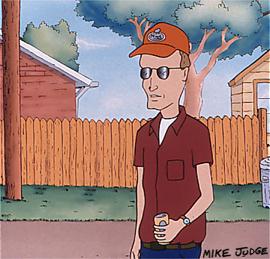
Comics writer and artist Scott McCloud has been advocating micropayments for Web content for a few years now, as well as pioneering the Web as a medium for comics in general. Now he's actually put up a comic, The Right Number, with the installments on sale for twenty-five cents each. I'll be interested to see how this plays out; I find the idea of micropayments intriguing, but there are a lot of kinks to be ironed out. For instance, McCloud is using something called BitPass as his system for accepting payments, and thus anyone wanting to actually pay him for his work has to have a BitPass account. But I already have a PayPal account, and I really don't want to open up all manner of new accounts with different online-payment services just to get different things, so it seems to me that online-payment services need to be like banks in the real world, accepting one another's payments neatly and painlessly. (I haven't delved too deeply into this, so it may well be that BitPass accepts PayPal after all, but that's not the impression I got.)
One downside of online life is this mega-proliferation of UserIDs and passwords and whatnot. I'm starting to feel like my bathroom door is going to ask me to sign in with my user e-mail and password before I can go in there to take my shower.
(UPDATE: Apparently, you can use your PayPal account to buy a "prepaid card" for use with BitPass. But wouldn't you still have to sign up for BitPass just to get through?)
One downside of online life is this mega-proliferation of UserIDs and passwords and whatnot. I'm starting to feel like my bathroom door is going to ask me to sign in with my user e-mail and password before I can go in there to take my shower.
(UPDATE: Apparently, you can use your PayPal account to buy a "prepaid card" for use with BitPass. But wouldn't you still have to sign up for BitPass just to get through?)
Teresa Nielsen-Hayden has an interesting post today about a new wrinkle in vanity publishing. Writers beware. (I'm not worried; I long ago decided that the only money I will spend on publishing is on paper, ink cartridges, and postage in sending the manuscripts. Which is at it's supposed to be.)
Harry Potter and the Order of the Phoenix is a really good book. As with all of the books in this series, there are a couple of rough spots, but still: it's a really good book, full of imagination and magic. In lieu of a coherent essay, here are some bullet points on the good stuff (and the tiny amount of less-good stuff) in the book. I do give some mild spoilers, but I don't totally divulge all of the plot points. Except for the fact that Voldemort is revealed to be Harry's uncle. (No, not really.)
:: I don't like the title, really. It's too long and unwieldy, and it doesn't scan well. The former titles in the series roll off the tongue, but here we have "the" occurring twice, which trips up the nice rhythm the earlier titles had. It reminds me of Paramount Pictures' goofy decision to rename Raiders of the Lost Ark as Indiana Jones and the Raiders of the Lost Ark. Of course, at this point, JK Rowling could name the book Harry Potter Slaps the Queen of England With a Tuna and it wouldn't much matter.
:: What I love most about this book is the way it does two things: it seems to set up the conflagrations and confrontations of the last two books (assuming the seven-book plan still holds), and explains or casts new light on things that have gone before. I liked finding out just why on Earth Harry keeps getting sent back to Privet Drive every summer, and that there is more to those awful relatives than meets the eye. It was also terribly appropriate that Harry started to see some of the warts in the people around him, the people he has loved and idolized but whose flaws he is beginning to notice.
Most of all, I liked how Rowling addressed something that's been cited as a weak point in the previous books: the fact that Harry is, at times, a passive hero, coming through adventures unscathed (or less scathed than he should be) without, well, doing much of anything. Rowling doesn't just show us that she is aware of this; she shows us that Harry himself is aware of this. It all plays into his growing sense of frustration and futility, which is fueled by his hormones, which are beginning to rage.
:: As for Harry's teenage problems, Rowling handles these well, although I'm not sure I believe that Cho Chang would be attracted to the guy who brought back the dead body of the last guy she was attracted to. I had a slight problem with that whole storyline.
:: As usual, you have to pay attention in the first half of the book, because a lot of the stuff established there will later come into play in the last act of the book. Rowling doesn't waste anything, and I'm hard-pressed to find anything in the book that isn't there for some kind of reason. And that applies to bit-players and supporting characters from earlier books who suddenly become a lot more important this time out, which was a nice thing to see. Especially in the case of poor Neville Longbottom.
:: JK Rowling clearly subscribes to the theory of writing that says, "Step One: Create nice, likable characters. Step Two: Put them through hell." She dumps so much crud on poor Harry that even when he gets to Hogwarts, things don't brighten much, if at all, before getting immensely worse.
:: Is it just me, or was anyone else strongly reminded of Merry and Pippin in the Lord of the Rings movies whenever Fred and George Weasley showed up? (As opposed to the LOTR books. In the movies, Merry and Pippin are a lot more of a "dynamic duo".) Their last moment in Order of the Phoenix is one of the best moments Rowling has yet written. I loved it, and she delivered it at just the right time in the book. I won't say more than that.
:: I have a little trouble discussing the book's big moment, the Death, without spoiling it. I'll just say that it felt…perfunctory to me. The death didn't seem to grow out of the story, so much as be required by it, as if Rowling said, "I have to kill off someone, so, I guess we'll do away with Madame Pomfrey." (No, it's not Madame Pomfrey.) It just felt, I don't know, arbitrary. I was expecting the book's death to feel, in emotional storytelling terms, like Mr. Spock's in The Wrath of Khan. But it didn't, really.
:: Dolores Umbridge reminds me of the Director of Training at my last job: the cutesy, pleasant woman who's really a cold-hearted meanie underneath. (Just to illustrate: in the last two years, my former company has advertised in the local paper for a new assistant for the Director of Training five times. That's how quickly she chews people up and spits them out.)
:: I'm ready for Harry Potter and the Balance of the Force (working title). Bring it on, JK Rowling!
:: I don't like the title, really. It's too long and unwieldy, and it doesn't scan well. The former titles in the series roll off the tongue, but here we have "the" occurring twice, which trips up the nice rhythm the earlier titles had. It reminds me of Paramount Pictures' goofy decision to rename Raiders of the Lost Ark as Indiana Jones and the Raiders of the Lost Ark. Of course, at this point, JK Rowling could name the book Harry Potter Slaps the Queen of England With a Tuna and it wouldn't much matter.
:: What I love most about this book is the way it does two things: it seems to set up the conflagrations and confrontations of the last two books (assuming the seven-book plan still holds), and explains or casts new light on things that have gone before. I liked finding out just why on Earth Harry keeps getting sent back to Privet Drive every summer, and that there is more to those awful relatives than meets the eye. It was also terribly appropriate that Harry started to see some of the warts in the people around him, the people he has loved and idolized but whose flaws he is beginning to notice.
Most of all, I liked how Rowling addressed something that's been cited as a weak point in the previous books: the fact that Harry is, at times, a passive hero, coming through adventures unscathed (or less scathed than he should be) without, well, doing much of anything. Rowling doesn't just show us that she is aware of this; she shows us that Harry himself is aware of this. It all plays into his growing sense of frustration and futility, which is fueled by his hormones, which are beginning to rage.
:: As for Harry's teenage problems, Rowling handles these well, although I'm not sure I believe that Cho Chang would be attracted to the guy who brought back the dead body of the last guy she was attracted to. I had a slight problem with that whole storyline.
:: As usual, you have to pay attention in the first half of the book, because a lot of the stuff established there will later come into play in the last act of the book. Rowling doesn't waste anything, and I'm hard-pressed to find anything in the book that isn't there for some kind of reason. And that applies to bit-players and supporting characters from earlier books who suddenly become a lot more important this time out, which was a nice thing to see. Especially in the case of poor Neville Longbottom.
:: JK Rowling clearly subscribes to the theory of writing that says, "Step One: Create nice, likable characters. Step Two: Put them through hell." She dumps so much crud on poor Harry that even when he gets to Hogwarts, things don't brighten much, if at all, before getting immensely worse.
:: Is it just me, or was anyone else strongly reminded of Merry and Pippin in the Lord of the Rings movies whenever Fred and George Weasley showed up? (As opposed to the LOTR books. In the movies, Merry and Pippin are a lot more of a "dynamic duo".) Their last moment in Order of the Phoenix is one of the best moments Rowling has yet written. I loved it, and she delivered it at just the right time in the book. I won't say more than that.
:: I have a little trouble discussing the book's big moment, the Death, without spoiling it. I'll just say that it felt…perfunctory to me. The death didn't seem to grow out of the story, so much as be required by it, as if Rowling said, "I have to kill off someone, so, I guess we'll do away with Madame Pomfrey." (No, it's not Madame Pomfrey.) It just felt, I don't know, arbitrary. I was expecting the book's death to feel, in emotional storytelling terms, like Mr. Spock's in The Wrath of Khan. But it didn't, really.
:: Dolores Umbridge reminds me of the Director of Training at my last job: the cutesy, pleasant woman who's really a cold-hearted meanie underneath. (Just to illustrate: in the last two years, my former company has advertised in the local paper for a new assistant for the Director of Training five times. That's how quickly she chews people up and spits them out.)
:: I'm ready for Harry Potter and the Balance of the Force (working title). Bring it on, JK Rowling!
Editing update: I am now about three-quarters of the way through editing The Promised King, Book I. At my current pace, I should be ready to start it on its inevitable journey towards lots of rejection in about two or three weeks. Actually, I'm slightly waffling a bit: I'm thinking that since I'm this close, I should go ahead and get a portion-and-outline ready and send it out right now, since by the time they'd look at it and respond (by asking to see the entire manuscript, I hope) I'd have the thing done and be on to typing up Book II. I may go ahead and do just that, in which case I'd hope to send out the first P&O next week. (For those unfamiliar with what I'm talking about here, a "Portion and Outline" is just that: you send a publisher the first three chapters of your book, followed by a bare-bones summary of what happens after that. They peruse this, judging by the Portion if they like your writing and by the Outline if they like your story, and if the answer is affirmative on both counts, they request the full manuscript.)
Some little editing facts-and-figures: I have, to this point, cut 15,323 words from the manuscript. With six chapters and the epilogue to go, I think I'm pretty much guaranteed to hit my goal of cutting 18,700 words (that number being ten percent of my original manuscript, 187,377 words). My average chapter-length in the rough draft is 8,423 words; as of right now, the average chapter-length of the revised draft is 7,864 words. This means that I have almost cut two entire chapters of material from the book. That's a lot of flab.
And just on a lark, the other day I did a small estimation of the word count of George R. R. Martin's book A Storm of Swords, the third doorstop in his Song of Ice and Fire series. I don't recall the exact figure, but I know it was more than 400,000 words. (Methodology: I came up with an average number of words per line, multiplied that by the number of lines per page, and then multiplied that by the total number of pages in the book, not counting the appendices. This yields a very rough ball-park figure.) This means that one volume of Martin's six-volume series is longer than the entirety of my two-volume set The Promised King is likely to be (assuming that Book II is about the same length as Book I). My conclusion is, of course, that I'm not working near hard enough.
Some little editing facts-and-figures: I have, to this point, cut 15,323 words from the manuscript. With six chapters and the epilogue to go, I think I'm pretty much guaranteed to hit my goal of cutting 18,700 words (that number being ten percent of my original manuscript, 187,377 words). My average chapter-length in the rough draft is 8,423 words; as of right now, the average chapter-length of the revised draft is 7,864 words. This means that I have almost cut two entire chapters of material from the book. That's a lot of flab.
And just on a lark, the other day I did a small estimation of the word count of George R. R. Martin's book A Storm of Swords, the third doorstop in his Song of Ice and Fire series. I don't recall the exact figure, but I know it was more than 400,000 words. (Methodology: I came up with an average number of words per line, multiplied that by the number of lines per page, and then multiplied that by the total number of pages in the book, not counting the appendices. This yields a very rough ball-park figure.) This means that one volume of Martin's six-volume series is longer than the entirety of my two-volume set The Promised King is likely to be (assuming that Book II is about the same length as Book I). My conclusion is, of course, that I'm not working near hard enough.
Wednesday, July 02, 2003
Remember the joke a few months back where you typed "French Military Victories" into Google, clicked the "I'm Feeling Lucky" button, and then got a fake Google page saying, "Did you mean French Military Defeats?"
Well, there's a new wrinkle on that joke. Repeat the operation, but with the search phrase "Weapons of Mass Destruction".
As Insty would say, "Heh."
Well, there's a new wrinkle on that joke. Repeat the operation, but with the search phrase "Weapons of Mass Destruction".
As Insty would say, "Heh."
Talk about getting pulled in two directions: On the one hand, President Bush thinks that putting the man-woman definition of marriage right into the United States Constitution may be a good idea if the lawyers can't do it any other way; on the other hand, Wal-Mart has just added gays and lesbians to its antidiscrimination policy. I'm starting to think that Kevin Drum might be right, and that gay rights may just be a good wedge issue to start whittling away the GOP's current coalition.
Jesse wants to know why, O why, is Ann Coulter taken seriously at all. I wish I knew -- I've long thought that she was the right's version of Michael Moore, so much so that if the two of them ever came into physical contact with one another, both would annihilate each other with a sufficient release of energy to power the warp drive of a Federation starship. I pretty much completely ignore both of them.
I haven't read any of Coulter's books (I have read one of Moore's, and thought I wanted to like it, I didn't). I used to read her monthly columns in George, back when I had a subscription, and I pretty much blew her off as another weirdo trying to ride on Rush Limbaugh's coat-tails, which is apparently the correct response. I mean, she's thin, rich and blond -- what the hell does she have to be so angry about? At least Michael Moore is overweight and male.
I completely stopped paying any attention to Coulter at all when she appeared on Politically Incorrect with Bill Maher one night during the whole 2000 election fiasco, while the recounting was going on. She made such an ass of herself on that show that I then never watched another episode of PI on which she appeared. At one point she literally tossed her head, folded her arms and threw herself back in her chair, just like a small child who's just been informed that she can't go to the park today because it's raining, and said, "This is all Al Gore's fault!" And I'm thinking, "Hmmm, the Democratic nominee for President of the United States thinks there's a good chance that he might be the actual winner of Florida's electoral votes and is therefore fighting for recounts. Inconceivable!" Then, a few minutes later, someone brings up all the votes for Buchanan in that heavily-Jewish county, where the infamous butterfly ballot was used, and Maher pointed out that even Buchanan himself had publically stated that all those votes were unlikely to be his, from the standpoint of voter intent. Coulter's response? "Pat Buchanan is just being modest."
Ummmm....OK. Well, I decided then and there that any person whose opinion on the 2000 Election required ascribing the personal quality of modesty to Pat Buchanan, a guy who has generally shown only slightly less modesty than Bill Clinton over the years, is not a person likely to contribute much to the onward march of human knowledge.
I haven't read any of Coulter's books (I have read one of Moore's, and thought I wanted to like it, I didn't). I used to read her monthly columns in George, back when I had a subscription, and I pretty much blew her off as another weirdo trying to ride on Rush Limbaugh's coat-tails, which is apparently the correct response. I mean, she's thin, rich and blond -- what the hell does she have to be so angry about? At least Michael Moore is overweight and male.
I completely stopped paying any attention to Coulter at all when she appeared on Politically Incorrect with Bill Maher one night during the whole 2000 election fiasco, while the recounting was going on. She made such an ass of herself on that show that I then never watched another episode of PI on which she appeared. At one point she literally tossed her head, folded her arms and threw herself back in her chair, just like a small child who's just been informed that she can't go to the park today because it's raining, and said, "This is all Al Gore's fault!" And I'm thinking, "Hmmm, the Democratic nominee for President of the United States thinks there's a good chance that he might be the actual winner of Florida's electoral votes and is therefore fighting for recounts. Inconceivable!" Then, a few minutes later, someone brings up all the votes for Buchanan in that heavily-Jewish county, where the infamous butterfly ballot was used, and Maher pointed out that even Buchanan himself had publically stated that all those votes were unlikely to be his, from the standpoint of voter intent. Coulter's response? "Pat Buchanan is just being modest."
Ummmm....OK. Well, I decided then and there that any person whose opinion on the 2000 Election required ascribing the personal quality of modesty to Pat Buchanan, a guy who has generally shown only slightly less modesty than Bill Clinton over the years, is not a person likely to contribute much to the onward march of human knowledge.
An editorial appeared on the Army Times website a few days ago that was, shall we say, less than positive about the current Administration's treatment of the military (despite the right's insistence that Bill Clinton singlehandedly destroyed the military, but now that "the grown-ups" are in charge, everything is now just right-as-rain in our armed forces). Then, the article disappeared from that website.
But not before it was helpfully mirrored here.
[Mulder] You can't silence all of us! We will continue to speak out! We will continue to seek the truth! [/Mulder]
(I would like to know the explanation behind the article's removal, though. Was it for political reasons, or is this the Army Times equivalent of a major newspaper removing articles from the public website after a certain period?)
But not before it was helpfully mirrored here.
[Mulder] You can't silence all of us! We will continue to speak out! We will continue to seek the truth! [/Mulder]
(I would like to know the explanation behind the article's removal, though. Was it for political reasons, or is this the Army Times equivalent of a major newspaper removing articles from the public website after a certain period?)
According to AICN, Steven Spielberg may not be directing the fourth Indiana Jones movie after all. I don't know...I can't really get too worked up about that, really. I've never been all that enthusiastic about another Indy movie, as much as I love the previous three -- I think that Harrison Ford needs to start doing something else, and I think that the character of Indiana Jones has been explored as well as needs be. Now, if they have a killer script, that's one thing. But I'm pretty much on the "I can take it or leave it" side of this one.
(As for the originals, my preference mirrors the order in which they were made, although for a long time I didn't like Temple of Doom all that much. Now I prefer it to Last Crusade, which I think has "aged" the least successfully of all three. Raiders is, of course, magnificent.)
(UPDATE: Now, AICN is reporting that the original report was wrong. Those responsible have been sacked.)
(As for the originals, my preference mirrors the order in which they were made, although for a long time I didn't like Temple of Doom all that much. Now I prefer it to Last Crusade, which I think has "aged" the least successfully of all three. Raiders is, of course, magnificent.)
(UPDATE: Now, AICN is reporting that the original report was wrong. Those responsible have been sacked.)
In the "Filling Space on Byzantium's Shores by Boldly Stealing Stuff from MeFi Department", we have the goofiest interpretation of the song "American Pie" ever.
Wow-za....
(Here is a more prosaic, and more likely, interpretation of the song. Oh, and it's never been conclusively established that "American Pie" was the name of the airplane that took Buddy Holly and the others to their deaths.)
Wow-za....
(Here is a more prosaic, and more likely, interpretation of the song. Oh, and it's never been conclusively established that "American Pie" was the name of the airplane that took Buddy Holly and the others to their deaths.)
A lot of press is being given to the new "National Do-Not-Call List" which just started up. I like the idea of the list, but I haven't signed up, because I came up with a simpler way of evading marketing calls a while back: I simply stopped answering the phone. That's right, I never answer it. Period. I let the machine (or my handy-dandy Internet answering service) handle every incoming call. If a marketer calls and gets a machine, they won't leave a message; and if it's the autodialer, the machine will generally stop recording before the actual marketer comes on the line.
Even on the rare occasions when I do slip and answer the phone, thus encountering a telemarketer, I simply hang up immediately. I don't play any games with the poor slob on the other end of the line, nor do I demand to be placed on their do-not-call list. I just remind myself not to answer the phone. Works for me. (But then, I hate phones. I've always hated phones. The only person in the world I don't hate talking to on the phone is my wife. And probably my daughter, I suppose, but I've never tried and I'm a bit unwilling to tempt fate on that score. So, my solution might not work for everyone, but once I realized that there's no law -- physical, moral, or otherwise -- requiring me to come running every time some electronic gizmo in my home makes a "ringing" noise, life got a whole lot simpler.)
Even on the rare occasions when I do slip and answer the phone, thus encountering a telemarketer, I simply hang up immediately. I don't play any games with the poor slob on the other end of the line, nor do I demand to be placed on their do-not-call list. I just remind myself not to answer the phone. Works for me. (But then, I hate phones. I've always hated phones. The only person in the world I don't hate talking to on the phone is my wife. And probably my daughter, I suppose, but I've never tried and I'm a bit unwilling to tempt fate on that score. So, my solution might not work for everyone, but once I realized that there's no law -- physical, moral, or otherwise -- requiring me to come running every time some electronic gizmo in my home makes a "ringing" noise, life got a whole lot simpler.)
I'm afraid Christopher Moore may be slipping. I started Fluke, or, I Know Why the Winged Whale Sings last night, and I didn't get my first good belly-laugh until page seven. By Moore's standards, that's like not finding any magic in a Harry Potter novel until chapter twelve!
To be fair, though, I did also find this lovely passage on page 27:
"It says here that you last worked as a forensic calligrapher. What's that, handwriting analysis?"
"Uh, no, actually, it was a business I started where I would write people's suicide notes for them...it didn't do that well. No one wants to kill himself in Hawaii. I think if I'd started it back in New Jersey, or maybe Portland, it would have gone over really well. You now business: location, location, location."
"I thought that was real estate."
I had to put the book down for five minutes at that point. Those of you who haven't read Moore, well, what's stopping you?
(UPDATE: I got to the passage that Matt mentions in the comments. Oh, my God....what a mental image....)
To be fair, though, I did also find this lovely passage on page 27:
"It says here that you last worked as a forensic calligrapher. What's that, handwriting analysis?"
"Uh, no, actually, it was a business I started where I would write people's suicide notes for them...it didn't do that well. No one wants to kill himself in Hawaii. I think if I'd started it back in New Jersey, or maybe Portland, it would have gone over really well. You now business: location, location, location."
"I thought that was real estate."
I had to put the book down for five minutes at that point. Those of you who haven't read Moore, well, what's stopping you?
(UPDATE: I got to the passage that Matt mentions in the comments. Oh, my God....what a mental image....)
Tuesday, July 01, 2003
It's days like this that I'm reminded of an old George Carlin routine in which he describes ways to keep people "on their toes", such as walking into a gift shop and demanding your gift. The one I'm thinking of is, walking up to a person at random on the street and saying, very loudly, "Excuse me, I've got nothing to say!"
So that's enough blogging for today, I think. I have to get my quota of "actual work" done before I'll allow myself to dip into Order of the Phoenix. (Last night I sat down to read a few chapters, and three hours later I'd read three hundred pages....)
So that's enough blogging for today, I think. I have to get my quota of "actual work" done before I'll allow myself to dip into Order of the Phoenix. (Last night I sat down to read a few chapters, and three hours later I'd read three hundred pages....)
Forget about Amazon and Ebay and all the rest...by far, the single greatest source on the Net for both coolness and utility is this outfit.
But watch out for those unintended consequences, and whatever you do, read all documentation!!!
But watch out for those unintended consequences, and whatever you do, read all documentation!!!
AAAIIIEEEEE!!!!!
And to think, when the day finally comes, I live in what is likely to be one of the first points of invasion....

Oh well....a very Happy Canada Day to our fine neighbors to the north, who have given us, among so much else, this guy:

But then, I'm not sure I should be wishing the Canadians well, seeing as how they've just outlined their plan for world domination and seeing as how we've already classified them as Level One Enemies of the United States....so, have a nice day, Canada. But I'm afraid we're going to have to kill you...eh?
And to think, when the day finally comes, I live in what is likely to be one of the first points of invasion....
Oh well....a very Happy Canada Day to our fine neighbors to the north, who have given us, among so much else, this guy:
But then, I'm not sure I should be wishing the Canadians well, seeing as how they've just outlined their plan for world domination and seeing as how we've already classified them as Level One Enemies of the United States....so, have a nice day, Canada. But I'm afraid we're going to have to kill you...eh?
Over on the Bright Weavings forums, fantasist-extraordinaire Guy Gavriel Kay drops welcome tidbit today.
I know he's not called "The Grim Reaper" for nothing, but still, this is just sad.

Damn it all. My favorite Buddy Hackett roles were Marcellus Washburn in The Music Man and Tennessee, the mechanic with a fondness for Irish coffee, in The Love Bug.
I think that Death needs to rethink his priorities a bit.
Damn it all. My favorite Buddy Hackett roles were Marcellus Washburn in The Music Man and Tennessee, the mechanic with a fondness for Irish coffee, in The Love Bug.
I think that Death needs to rethink his priorities a bit.
Subscribe to:
Posts (Atom)