The personal blog of author Kelly Sedinger, chronicling the adventures of one overalls-clad wanderer.
Thursday, March 13, 2014
Something for Thursday (Freakishly late, almost-Friday edition)
Whoa, sorry to be so late with this feature! But anyway, I was reading an article on Cracked a bit ago that said some mean things about the 1980s era for the band Genesis. I take exception to this, because, well, that's the only era of the band whose music I know, and I like it quite a lot -- in fact, as luck would have it, Invisible Touch is one of my favorite rock albums ever. I am not kidding, and those who disagree can lump it. Yes, I suppose I should investigate the earlier, more "proper" and truly progressive music of the band, but for my money, Invisible Touch is 80s rock as good as it gets, even if the lyrics do occasionally stray into silliness. I love the sound of the band, and I really dig the album's variations of mood throughout, from bright dance-pop to bleak moodiness to two of the best 80s ballads ever. Yes, I love Invisible Touch, and I'm not afraid to say it! Nor am I afraid to feature it on Something for Thursday. Here's the entire album: Invisible Touch.

Wednesday, March 12, 2014
A Random Wednesday Conversation Starter
Probably did this before, but what the heck...name something that culture has decided is Full Of Awesome which just leaves you with that "Meh" feeling.
Tuesday, March 11, 2014
A Very Public Service Announcement
Whoa Nellie! Life has become quite busy the last few days and likely will remain so for the foreseeable future. Nothing bad, in any way, but blogging is likely to happen at a reduced or inconsistent pace for the next couple of months. Bear with me, folks!
Sunday, March 09, 2014
Sunday Burst of Weird and Awesome
Oddities and Awesome abound!
:: Secret passage bookshelves. I dig this notion.
:: I note with sadness the passing of Geoff Edwards, who was a staple of my teevee watching as a kid, because he was...a game show host! As a kid, I loved me some game show hosts. Bob Barker, Bill Cullen, Jack Barry, Wink Martindale, Bert Convy...those guys were awesome. So was Geoff Edwards, who hosted a show I loved called The New Treasure Hunt. This show featured a whole lot of goofiness, with Edwards often ad-libbing to ratchet up as much tension as possible; producers were very proud that they actually got a contestant to pass out onstage one time. The show often descended into pure slapstick silliness, such as in this segment, in which cream pies are put to good use:
Gotta love the cheesiness of the 70s and 80s game show era! Colorful sets, weird skits, hosts in bad tuxes, and pies in the face. As much fun as Jeopardy! can be, I doubt we'd ever see Alex Trebek having any part of cheesy fun like this.

More next week!
:: Secret passage bookshelves. I dig this notion.
:: I note with sadness the passing of Geoff Edwards, who was a staple of my teevee watching as a kid, because he was...a game show host! As a kid, I loved me some game show hosts. Bob Barker, Bill Cullen, Jack Barry, Wink Martindale, Bert Convy...those guys were awesome. So was Geoff Edwards, who hosted a show I loved called The New Treasure Hunt. This show featured a whole lot of goofiness, with Edwards often ad-libbing to ratchet up as much tension as possible; producers were very proud that they actually got a contestant to pass out onstage one time. The show often descended into pure slapstick silliness, such as in this segment, in which cream pies are put to good use:
Gotta love the cheesiness of the 70s and 80s game show era! Colorful sets, weird skits, hosts in bad tuxes, and pies in the face. As much fun as Jeopardy! can be, I doubt we'd ever see Alex Trebek having any part of cheesy fun like this.
More next week!
Saturday, March 08, 2014
Symphony Saturday

Yeah. That's not all that inaccurate.
What happened was this: Berlioz went to Paris to study music, and by all accounts he was a good student, if a bit rebellious and marked with a tendency to stubbornly do things in his music that his teachers didn't want him to do. He was also of a deeply literary mind, having already discovered Virgil and other poets as a boy, and now, as a student, he was to make another great literary discovery. In 1827, Berlioz attended a performance of Hamlet.
At the time, translation of literature from one language to another was not nearly as concerned with fidelity to the original work as we expect today, and the translators would often add new material (invented out of whole cloth) or omit scenes found distasteful. However, enough of Shakespeare's original work shone through that Berlioz would adore Shakespeare for the rest of his life. That performance of Hamlet did not yield just the one infatuation, though; Berlioz also feel desperately in love with the actress playing Ophelia, a young woman named Harriet Smithson.
Now, Berlioz was a full-on Romantic, in just about every sense of the word that exists. He was also living in 1827, when behavior toward women that might well be seen as criminal today was actually tolerated. In Berlioz's case...he flooded Miss Smithson's hotel room with love letter after love letter and pretty much became a creepy stalker. There's just no other way to describe it, and Smithson responded quite justifiably by having nothing to do with this guy. She eventually left Paris with her acting company, but Berlioz did not forget her (even to the point of breaking off a subsequent engagement), and later on, in 1830, he expressed his unrequited love in the Symphonie fantastique. Even as Berlioz's music languished in obscurity for nearly a century after his death, this work stayed in the symphonic repertoire.
The symphony is written for a fairly large orchestra, and it is in five movements, rather than the standard four. Also, Berlioz wrote the work specifically with the idea of conveying the emotions of a story in mind, and to that end, he wrote program notes to be distributed at each performance:
Programme of the symphony
A young musician of morbid sensitivity and ardent imagination poisons himself with opium in a moment of despair caused by frustrated love. The dose of narcotic, while too weak to cause his death, plunges him into a heavy sleep accompanied by the strangest of visions, in which his experiences, feelings and memories are translated in his feverish brain into musical thoughts and images. His beloved becomes for him a melody and like an idée fixe which he meets and hears everywhere.
Part one: Daydreams, passions
He remembers first the uneasiness of spirit, the indefinable passion, the melancholy, the aimless joys he felt even before seeing his beloved; then the explosive love she suddenly inspired in him, his delirious anguish, his fits of jealous fury, his returns of tenderness, his religious consolations.
Part two: A ball
He meets again his beloved in a ball during a glittering fête.
Part three: Scene in the countryside
One summer evening in the countryside he hears two shepherds dialoguing with their ‘Ranz des vaches’; this pastoral duet, the setting, the gentle rustling of the trees in the light wind, some causes for hope that he has recently conceived, all conspire to restore to his heart an unaccustomed feeling of calm and to give to his thoughts a happier colouring; but she reappears, he feels a pang of anguish, and painful thoughts disturb him: what if she betrayed him… One of the shepherds resumes his simple melody, the other one no longer answers. The sun sets… distant sound of thunder… solitude… silence…
Part four: March to the scaffold
He dreams that he has killed his beloved, that he is condemned to death and led to execution. The procession advances to the sound of a march that is sometimes sombre and wild, and sometimes brilliant and solemn, in which a dull sound of heavy footsteps follows without transition the loudest outbursts. At the end, the idée fixe reappears for a moment like a final thought of love interrupted by the fatal blow.
Part five: Dream of a witches’ sabbath
He sees himself at a witches’ sabbath, in the midst of a hideous gathering of shades, sorcerers and monsters of every kind who have come together for his funeral. Strange sounds, groans, outbursts of laughter; distant shouts which seem to be answered by more shouts. The beloved melody appears once more, but has now lost its noble and shy character; it is now no more than a vulgar dance-tune, trivial and grotesque: it is she who is coming to the sabbath… Roars of delight at her arrival… She joins the diabolical orgy… The funeral knell tolls, burlesque parody of the Dies Irae. The dance of the witches. The dance of the witches combined with the Dies Irae.
(via)
The idea of program music, of music depicting something beyond the purely musical, was not new even when Berlioz was active, but he did take the notion to greater lengths than anyone before. The Symphonie fantastique is quite the musical journey through a series of emotional vignettes, from its dreamlike beginning to the stormy feelings that arise once the "Beloved" makes her appearance. And here is another idea, the notion of a specific melody being attached to a specific worldly idea, and thus using that melody to suggest that idea at differing places in the score. This is another step in the development of the idea of the leitmotif, which would go on to be used to famously enormous effect by Wagner in his operas and by later film composers like John Williams and Howard Shore.
With his programmatic goals in mind, Berlioz writes a glittering waltz instead of a scherzo; his slow movement begins with the question-and-answer of the shepherd's horns in the mountains and ends with the oncoming the thunder in the hills; and the last two movements delve directly into the Romantic world of supernatural horror and hallucination. It's insanely compelling stuff, and the whole story behind this work's genesis is one of those Tales From The World Of Art that you can barely believe at first.
I also love this work for its rough-around-the-edges qualities. As you listen to it, there are times when it really stands out that Berlioz was in large part a self-taught composer who insisted on doing his own thing, usually on the assumption that authenticity of spirit can trump trained discipline. And this is true, but it's true less often than we might think, and when it's true, it's likely because genius can cover many sins. The opening movement is a good example of this, with several awkward transitions and one odd spot in the middle where Berlioz seemingly can't quite figure out the way from Point A to Point B, so he runs up and down the chromatic scale a few times before simply stopping the music and restarting. Those slow, sustained chords that end that movement, though? Pure magic. And there are places in the third movement that are as achingly beautiful as anything in any musical work, ever.
Here is the Symphonie fantastique, with a few pointers below of things to listen for:
Movement I:
5:25: This is the first appearance of the idee fixe, the tune associated with the Beloved. This long and asymmetrical melody will form the backbone of the rest of the movement and be heard throughout the entire symphony, in various guises.
9:00: The runs up and down the chromatic scale. One of the oddest passages in classical music that I know.
14:13: Final statement in this movement of the idee fixe, followed by the chords marked "Religioso" in the score.
Movement II:
In this performance you hear a solo cornet in this movement. This is an optional part that Berlioz later added; some recordings omit it. I personally prefer it.
17:28: The Idee fixe appears.
18:28: The second iteration of the waltz theme, but now it sounds so much more vibrant, because Berlioz allows the accompaniment to churn more. Pay attention to the harps here. Amazing stuff.
19:50: The build begins. Berlioz knew how to build. Whenever Berlioz starts mustering his energy, watch out. It always makes me think of this one thing that figure skaters do, when you see it you know they are about to jump.
20:29: The idee fixe again, quietly. Nice clarinet harmonies.
Movement III:
We open with an English horn and an oboe, sent offstage, in an answer and call. Gradually the strings come in, with tremolo chords underneath the English horn and oboe.
23:53: The main theme of this movement. One of Berlioz's favorite tricks is to double the strings and the flutes, which adds a wonderful dreamy quality to the sound. We will hear this melody again several more times in the movement, each time with different background.
25:02: The melody repeats, now harmonized. The simplest trick in the book, but there's a reason the simple tricks stay around.
28:06: Another iteration of the main melody, this time in the low strings.
29:40: The Idee fixe, sounding different, yet again.
32:37: The original theme again, sounding fresh again.
34:06: OK, these four bars here, constituting a call-and-response sounding of the Idee fixe, is one of my favorite musical passages ever. What's often amazing to me about Berlioz is that his music is so much like life in that the moments of aching beauty are often fleeting, over before you know it.
36:10: The movement's opening call-and-response again, but this time with thunder.
Movement IV:
This movement, as noted in the post below, was my first ever brush with Berlioz. What an odd, strange movement indeed. I can only imagine how this sounded to ears attuned to Beethoven and Schubert. The Idee fixe comes at the very end, and is cut short by the guillotine blade slamming home. The movement is dominated by syncopations, by melodies that start on the off beat, a musical depiction of relentlessness that's impossible to beat.
40:11: I always love this bassoon passage.
40:30: I'm always sad that my brief trumpet-playing career never included this passage (aside from in high school band).
45:12: The Idee fixe.
Movement V:
If you like darkly supernatural stuff in your classical music, here it is.
47:09: The Idee fixe's first appearance. Not the beautifully yearning melody of the first movement anymore. We only hear a bit of it here, a foretaste of what's to come in a bit.
47:28: Now we hear the Idee fixe for the last time, and it's become totally warped and grotesque, the transformation of the beloved into shrill, wailing harpy made complete by giving it to the E-flat clarinet. This is an amazing passage for the woodwinds, by the way -- listen to the snarling accompaniment by the bassoons!
48:41: The tolling of the bells for the dead. This is followed by Berlioz sounding the Dies irae, the Latin chant for the dead, three times, punctuating it with the bells and making the orchestral effects more pronounced each time. I wonder if Berlioz ever had the opportunity to read Edgar Allan Poe? Because this music is pure Poe. Berlioz begins building again...bring us to....
51:02: The Witches' Dance begins. From here on out, it's all macabre. There is no respite, no more beauty. It's all Romantic horror until the Symphonie fantastique ends.
But...
...that's not where the story ends. Berlioz actually wrote a second work, a sequel, which concludes the tale. It is called Lelio, or the Return to Life, and it picks up where the Symphonie fantastique leaves off, with the composer's drug-induced hallucinations ending and the composer immersing himself in music and literature to find his way back to life again, now that his love is gone. Berlioz intended Lelio to be played following the Symphonie fantastique, but this is rarely done today, because Lelio is not a symphony. It's a very oddly hybrid work, in which Berlioz used earlier compositions and stitched them together with a series of spoken-word monologues. It makes for a very strange listen indeed, although there are some very worthy moments in it, and some of the music in Lelio is good enough that it doesn't deserve the obscurity it earns by virtue of being incorporated into such an ungainly piece.
Here is Lelio. I've never been able to decide how much I like Lelio, but there's quite a bit in it that I find pretty damned cool, particularly the "Fantasy on The Tempest" at the end, which uses chorus and piano as an orchestral instrument (Berlioz wrote almost nothing for the piano). And while I'm not sure how much I love Lelio, I love that Berlioz wrote it.
Next week: Berlioz's only four-movement symphony...which is also part concerto.
Hector and Me: My relationship with France's greatest composer
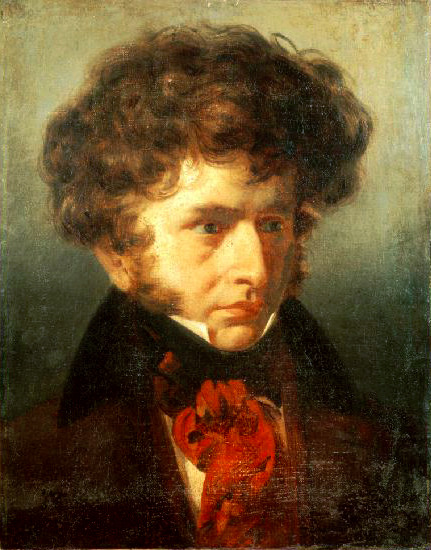
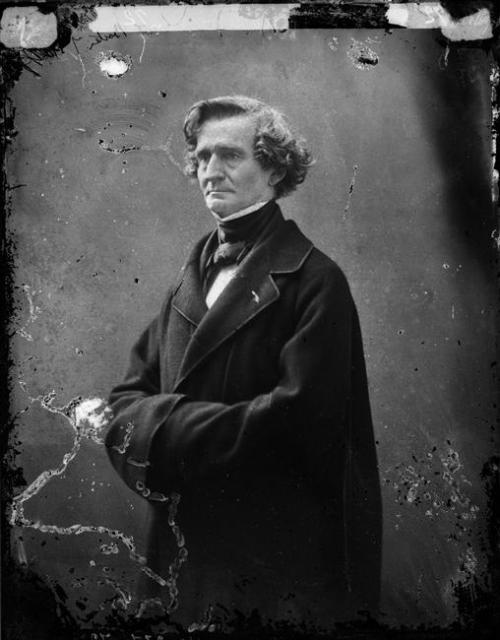
This is a repost of a piece I wrote -- oh my God! -- over ten years ago, on the bicentennary of the birth of Hector Berlioz. I'm reposting it as prelude to today's Symphony Saturday post.
In the movie Mr. Holland's Opus, there is a wonderful scene – one of many – when Mr. Holland's wife, Iris, is quite upset at her husband's under-enthusiastic response to her news that she is pregnant with their first child. Mr. Holland, of course, realizes how he's stepped in it, and he attempts to describe to his tearful wife his feelings about becoming a father. Like everything else in his life, he relates it back to music. What he says is this, in a rough paraphrase:
"When I was a kid I used to go to the record store every day, and the guy there would tell me what to listen to. One day he hands me a John Coltrane album and tells me to go home and listen to it. So I did, and I hated it. I mean, I just hated it. And I hated it so much that I had to listen to it, every day, over and over again, until I figured out why it was that I hated it so much. And while I tried to figure out why I hated it, I finally realized that I loved it. And to this day, I love John Coltrane. (beat) You telling me about our baby was like me coming to love John Coltrane all over again."
That pretty much sums up my experience with the music of Hector Berlioz.
It was a pretty prosaic introduction, actually: high school band, when I was in ninth grade. We had just performed our fall concert the night before, and now it was time to start on some new pieces for our winter and spring activities. Two pieces of sheet music I'd never seen before turned up that day at rehearsal: something called Le Carnival Romain by a guy named Berlioz, and something called March to the Scaffold, also by this Berlioz fellow. We attempted sight-reading Carnival for most of the rehearsal, but since we were a high school band we had to take it incredibly slow at first, and as anyone who's heard the piece will attest, most of it is a spirited vivace. Not the best way to make my acquaintance with Berlioz.
But then, the next day – that was when we started digging into March to the Scaffold.
So it's a March, I can tell. That means a pretty brisk tempo, right? That's what I expected, Mr. Young Band Student, after a steady diet of Sousa and K.L. King and "Entry of the Gladiators" and whatnot. But not this piece. It starts out with muffled drum sextuplets, which are answered by this weird syncopated figure in the low woodwinds. (No high school bandmember likes the sound of low woodwinds. Take it from a member of the trumpet section who used to join his brassplaying mates in inventing euphemisms for the low woodwinds that frequently involved metaphoric flatulent bovines. Luckily, I would later realize that those instruments do wonderful things. Like, say, the opening bars of March to the Scaffold.)
The piece went on, getting louder in places and having strange and sudden bursts of loudness from the brass – always fun – and then, at long last, a wonderful marching melody for the trumpets and the rest of the brass. (We trumpet players pretty much define the membership of any ensemble as "the trumpets and the rest of the instruments".) Now I was a bit happier; after some weird and jocular opening stuff we get to the "meat" of the March, and everything would be fine.
Except after that melody ends (it's stated twice, unless you observe the repeat which we did not), well, the March gets even weirder. The glorious brass melody is replaced with snarling, biting brass figures, the woodwinds scream, the rhythms become more insistent and driving, the guy behind me on the timpani starts pounding away, everything builds and builds and builds, and it gets crazier – until everything stops, and there's this tiny wisp of melody on a solo clarinet. This is cut savagely short two bars later by a resounding whack by the whole group, some descending woodwind notes, and then a series of fortissimo chords ending the whole thing.
It was all very weird, and I didn't understand any of it. The piece made no sense.
Well, we rehearsed that damned thing for a few days before the band director decided to reject it in favor of something else. At some point he let us in on the fact that the March to the Scaffold actually is a piece of program music. The story is simple: a guy is being "marched" to the scaffold where the guillotine awaits. He's going to his execution; hence the dark beginnings and the frenetic stuff in the second half. And that bit of clarinet melody at the end? That's the guy thinking of his lover one last time before the blade drops. Whack!
So, I thought, "OK, it's interesting. Big whoop. At least I'll never have to play that weird stuff again."
A few months pass, and I'm in a record store thumbing through the budget-priced cassettes. Something strikes me: a cassette with this Berlioz fellow's name on it. Picking it up, I see that it's a recording of something called Symphonie fantastique; and perusing the back of the thing, I see that the fourth movement of this symphony is none other than the March to the Scaffold. Intrigued, and made adventurous by the $3.99 price tag (I'm a lot more likely to be musically adventurous when the recording is cheap), I bought the thing and took it home. I played the tape a few times, mainly just skipping right to that March just so I could hear the way the orchestra's supposed to sound, and not a band arrangement (although it must be said that a lot of fine work gets done in band transcriptions). I had to admit, the March to the Scaffold was quite a bit more effective in its intended medium.
But I still didn't like it.
Skip ahead a month or two when, on a lazy day, I happened to ask my band director a few questions about how to read a full score. He responds by handing me a book and telling me to figure it out on my own. The book is, I see, entitled The Symphony, 1800-1880, and opening it, I find that it is nothing more than eight or nine symphonies, each by a different composer, in the full orchestral score. Every part, from the flutes down to the double basses and including all the percussion, is laid out side-by-side. Here, I see, are the composers' secrets: Beethoven's Eroica, Mendelssohn's Italian, Brahms's Third (which, sad to say, is the only one of Brahms's four symphonies that I've never liked), and…the Symphonie fantastique by Hector Berlioz.
I couldn't wait to get home. In went the tape, onto my lap went the book, and I started following along. I kept up well through the first movement's slow, dreamy opening, but I got lost a few times during the subsequent allegro. And then, about the third time I heard the main melody of that first movement, I realized that this was the melody that that single clarinet is quoting at the very end of the March to the Scaffold. And that same melody turns up in the second movement, a lilting waltz; and in the third movement, a ravishing pastoral slow movement; and in the last movement, which is titled "The Witches' Sabbath"!
It wasn't just the March to the Scaffold that was telling a story, I realized: the whole symphony is telling a story.
And as I taught myself how to read a score, by following along with the Symphonie fantastique, I became entranced and enchanted with the things this Berlioz does with the orchestra. Why use the flutes to double the melody in the violins? Well, it doesn't sound the same, does it? Makes it more "dreamy"….and when he restates the waltz theme in the second movement, he uses a harp for the waltz rhythm and the woodwinds for the melody…and an part for solo cornet…and that opening of the third movement! Depicting the shepherds of the hills with an English horn and an offstage oboe answering it! Depicting a thunderstorm in a slow movement!…and a demonic dance of the witches, complete with the Dies Irae and that weird sound by having the violins turn their bows over and slap the wooden bow against the strings!
Over time, I realized that it didn't really matter what the story of the Symphonie was; even then I had started being skeptical about music and its ability to "depict" anything concrete. What was more important is that I hated Berlioz, and then it was as if the Fates conspired to force me to re-evaluate him. And I did. Did I ever. I sought out other works by Berlioz, and then I read more about his life.
That was when I was hooked.
I have always thought that I would have been most comfortable in the Romantic era, and in the life of Berlioz I found proof. Here was a man of powerful appetites and desires: a man who fell in love with an actress when he saw her onstage in Hamlet, and he fell so completely that he ended up writing the Symphonie fantastique in her honor. (And could it be any surprise that, when he finally managed to marry her, it did not turn out well?) Here was a man who refused to adhere to the forms of his day: only one of his four Symphonies has the traditional four movements, and that one is heavily programatic with extensive use of a solo viola; he never wrote a concerto; he invented whole new groupings of instruments; for his Requiem he supplemented his full orchestra with four brass bands placed at the ordinal compass points in the Cathedral. Here was a man whose greatest literary loves were Shakespeare and Virgil, and here was a man whose music to this day has never been as appreciated within his homeland of France as outside it. Here was a man whose greatest work, Les Troyens, was never performed in his lifetime. Here was a man who viewed art in such stark terms that Schumann said of him: "Berlioz does not try to be pleasing and elegant. What he hates, he grasps fiercely by the hair; what he loves, he almost crushes in his fervor." That sounds familiar to me. I have myself been accused of going overboard in praise for things I admire, and going equally overboard in my attacks on things I dislike. But in this I have had good company, n'est ce pas?
How keenly I remember my disappointment when I watched the remarkable film Impressions de France at Disney World's Epcot, a thirty-minute travelogue of stunning French scenery scored with great French classical music – but not a single note of Berlioz! And how proud I was to have a scene in a Star Trek movie when Riker enters Picard's quarters and finds the Captain listening to blazing, fiery operatic music. "Bizet?" Riker asks. "Berlioz," answers Picard. In moments like these I realize that I take Berlioz personally. His music is my music, and if much of the world does not share that opinion, what of it? I, in admiring Berlioz, stand in the company of Wagner and Liszt. Pretty good company, that.
Ultimately, I think that every thoughtful person has that "tortured artist" whom they love dearly. For some it's Jim Morrison, or maybe John Lennon. Some respond to Sylvia Plath; others are moved by the sufferings of Van Gogh or Mozart. I think that if we're lucky enough to find someone who suffered for their art in much the same way that we see ourselves suffering (even if not nearly so dramatically), and we find them at the right time, the tumblers can somehow fall into place and something deep within our soul is unlocked. It's ours forever -- truly ours, in that sense that even when we find someone else who claims to love what we love, we're skeptical. Nobody loves Berlioz the way I love Berlioz.
And so be it.
In the movie Mr. Holland's Opus, there is a wonderful scene – one of many – when Mr. Holland's wife, Iris, is quite upset at her husband's under-enthusiastic response to her news that she is pregnant with their first child. Mr. Holland, of course, realizes how he's stepped in it, and he attempts to describe to his tearful wife his feelings about becoming a father. Like everything else in his life, he relates it back to music. What he says is this, in a rough paraphrase:
"When I was a kid I used to go to the record store every day, and the guy there would tell me what to listen to. One day he hands me a John Coltrane album and tells me to go home and listen to it. So I did, and I hated it. I mean, I just hated it. And I hated it so much that I had to listen to it, every day, over and over again, until I figured out why it was that I hated it so much. And while I tried to figure out why I hated it, I finally realized that I loved it. And to this day, I love John Coltrane. (beat) You telling me about our baby was like me coming to love John Coltrane all over again."
That pretty much sums up my experience with the music of Hector Berlioz.
It was a pretty prosaic introduction, actually: high school band, when I was in ninth grade. We had just performed our fall concert the night before, and now it was time to start on some new pieces for our winter and spring activities. Two pieces of sheet music I'd never seen before turned up that day at rehearsal: something called Le Carnival Romain by a guy named Berlioz, and something called March to the Scaffold, also by this Berlioz fellow. We attempted sight-reading Carnival for most of the rehearsal, but since we were a high school band we had to take it incredibly slow at first, and as anyone who's heard the piece will attest, most of it is a spirited vivace. Not the best way to make my acquaintance with Berlioz.
But then, the next day – that was when we started digging into March to the Scaffold.
So it's a March, I can tell. That means a pretty brisk tempo, right? That's what I expected, Mr. Young Band Student, after a steady diet of Sousa and K.L. King and "Entry of the Gladiators" and whatnot. But not this piece. It starts out with muffled drum sextuplets, which are answered by this weird syncopated figure in the low woodwinds. (No high school bandmember likes the sound of low woodwinds. Take it from a member of the trumpet section who used to join his brassplaying mates in inventing euphemisms for the low woodwinds that frequently involved metaphoric flatulent bovines. Luckily, I would later realize that those instruments do wonderful things. Like, say, the opening bars of March to the Scaffold.)
The piece went on, getting louder in places and having strange and sudden bursts of loudness from the brass – always fun – and then, at long last, a wonderful marching melody for the trumpets and the rest of the brass. (We trumpet players pretty much define the membership of any ensemble as "the trumpets and the rest of the instruments".) Now I was a bit happier; after some weird and jocular opening stuff we get to the "meat" of the March, and everything would be fine.
Except after that melody ends (it's stated twice, unless you observe the repeat which we did not), well, the March gets even weirder. The glorious brass melody is replaced with snarling, biting brass figures, the woodwinds scream, the rhythms become more insistent and driving, the guy behind me on the timpani starts pounding away, everything builds and builds and builds, and it gets crazier – until everything stops, and there's this tiny wisp of melody on a solo clarinet. This is cut savagely short two bars later by a resounding whack by the whole group, some descending woodwind notes, and then a series of fortissimo chords ending the whole thing.
It was all very weird, and I didn't understand any of it. The piece made no sense.
Well, we rehearsed that damned thing for a few days before the band director decided to reject it in favor of something else. At some point he let us in on the fact that the March to the Scaffold actually is a piece of program music. The story is simple: a guy is being "marched" to the scaffold where the guillotine awaits. He's going to his execution; hence the dark beginnings and the frenetic stuff in the second half. And that bit of clarinet melody at the end? That's the guy thinking of his lover one last time before the blade drops. Whack!
So, I thought, "OK, it's interesting. Big whoop. At least I'll never have to play that weird stuff again."
A few months pass, and I'm in a record store thumbing through the budget-priced cassettes. Something strikes me: a cassette with this Berlioz fellow's name on it. Picking it up, I see that it's a recording of something called Symphonie fantastique; and perusing the back of the thing, I see that the fourth movement of this symphony is none other than the March to the Scaffold. Intrigued, and made adventurous by the $3.99 price tag (I'm a lot more likely to be musically adventurous when the recording is cheap), I bought the thing and took it home. I played the tape a few times, mainly just skipping right to that March just so I could hear the way the orchestra's supposed to sound, and not a band arrangement (although it must be said that a lot of fine work gets done in band transcriptions). I had to admit, the March to the Scaffold was quite a bit more effective in its intended medium.
But I still didn't like it.
Skip ahead a month or two when, on a lazy day, I happened to ask my band director a few questions about how to read a full score. He responds by handing me a book and telling me to figure it out on my own. The book is, I see, entitled The Symphony, 1800-1880, and opening it, I find that it is nothing more than eight or nine symphonies, each by a different composer, in the full orchestral score. Every part, from the flutes down to the double basses and including all the percussion, is laid out side-by-side. Here, I see, are the composers' secrets: Beethoven's Eroica, Mendelssohn's Italian, Brahms's Third (which, sad to say, is the only one of Brahms's four symphonies that I've never liked), and…the Symphonie fantastique by Hector Berlioz.
I couldn't wait to get home. In went the tape, onto my lap went the book, and I started following along. I kept up well through the first movement's slow, dreamy opening, but I got lost a few times during the subsequent allegro. And then, about the third time I heard the main melody of that first movement, I realized that this was the melody that that single clarinet is quoting at the very end of the March to the Scaffold. And that same melody turns up in the second movement, a lilting waltz; and in the third movement, a ravishing pastoral slow movement; and in the last movement, which is titled "The Witches' Sabbath"!
It wasn't just the March to the Scaffold that was telling a story, I realized: the whole symphony is telling a story.
And as I taught myself how to read a score, by following along with the Symphonie fantastique, I became entranced and enchanted with the things this Berlioz does with the orchestra. Why use the flutes to double the melody in the violins? Well, it doesn't sound the same, does it? Makes it more "dreamy"….and when he restates the waltz theme in the second movement, he uses a harp for the waltz rhythm and the woodwinds for the melody…and an part for solo cornet…and that opening of the third movement! Depicting the shepherds of the hills with an English horn and an offstage oboe answering it! Depicting a thunderstorm in a slow movement!…and a demonic dance of the witches, complete with the Dies Irae and that weird sound by having the violins turn their bows over and slap the wooden bow against the strings!
Over time, I realized that it didn't really matter what the story of the Symphonie was; even then I had started being skeptical about music and its ability to "depict" anything concrete. What was more important is that I hated Berlioz, and then it was as if the Fates conspired to force me to re-evaluate him. And I did. Did I ever. I sought out other works by Berlioz, and then I read more about his life.
That was when I was hooked.
I have always thought that I would have been most comfortable in the Romantic era, and in the life of Berlioz I found proof. Here was a man of powerful appetites and desires: a man who fell in love with an actress when he saw her onstage in Hamlet, and he fell so completely that he ended up writing the Symphonie fantastique in her honor. (And could it be any surprise that, when he finally managed to marry her, it did not turn out well?) Here was a man who refused to adhere to the forms of his day: only one of his four Symphonies has the traditional four movements, and that one is heavily programatic with extensive use of a solo viola; he never wrote a concerto; he invented whole new groupings of instruments; for his Requiem he supplemented his full orchestra with four brass bands placed at the ordinal compass points in the Cathedral. Here was a man whose greatest literary loves were Shakespeare and Virgil, and here was a man whose music to this day has never been as appreciated within his homeland of France as outside it. Here was a man whose greatest work, Les Troyens, was never performed in his lifetime. Here was a man who viewed art in such stark terms that Schumann said of him: "Berlioz does not try to be pleasing and elegant. What he hates, he grasps fiercely by the hair; what he loves, he almost crushes in his fervor." That sounds familiar to me. I have myself been accused of going overboard in praise for things I admire, and going equally overboard in my attacks on things I dislike. But in this I have had good company, n'est ce pas?
How keenly I remember my disappointment when I watched the remarkable film Impressions de France at Disney World's Epcot, a thirty-minute travelogue of stunning French scenery scored with great French classical music – but not a single note of Berlioz! And how proud I was to have a scene in a Star Trek movie when Riker enters Picard's quarters and finds the Captain listening to blazing, fiery operatic music. "Bizet?" Riker asks. "Berlioz," answers Picard. In moments like these I realize that I take Berlioz personally. His music is my music, and if much of the world does not share that opinion, what of it? I, in admiring Berlioz, stand in the company of Wagner and Liszt. Pretty good company, that.
Ultimately, I think that every thoughtful person has that "tortured artist" whom they love dearly. For some it's Jim Morrison, or maybe John Lennon. Some respond to Sylvia Plath; others are moved by the sufferings of Van Gogh or Mozart. I think that if we're lucky enough to find someone who suffered for their art in much the same way that we see ourselves suffering (even if not nearly so dramatically), and we find them at the right time, the tumblers can somehow fall into place and something deep within our soul is unlocked. It's ours forever -- truly ours, in that sense that even when we find someone else who claims to love what we love, we're skeptical. Nobody loves Berlioz the way I love Berlioz.
And so be it.
Friday, March 07, 2014
Thursday, March 06, 2014
Something for Thursday
A short song today, but a favorite of mine.
Sheila O'Malley often sets her music player to "shuffle", and then she will post the list of songs that it plays, with comment. I always look forward to these posts, even if I usually don't have a lot of knowledge of the songs she mentions. This one, however, I know quite well: "Lodi" by Creedence Clearwater Revival.
CCR is one of my favorite bands of all time, and The Wife and I have an odd ritual where whenever CCR comes up in the background of our daily lives -- car radio, music in a store, whatever -- I have to say, "CCR!" Just one of those weird things...but this song isn't usually one of the ones that comes up in general listening situations. I'm not sure why that is, but "Lodi" is a sad song about failed dreams, about what happens when life doesn't meet our expectations. It's along the same lines as the famous admonition (by John Lennon?) that "Life is what happens while you are busy making other plans."
The lyrics to "Lodi" are simple, but the words are so perfectly chosen to the song's message: "Rode into town on a Greyhound, I'll be walking out if I go"; "You know I'd catch the next train back to where I live"...that last is a killer. "Where I live". By this point, our singer's been stuck in Lodi for a very long time, and yet, it's not where he lives. He still believes this is temporary, a hitch in the plan. But we know: You live in Lodi now. Lodi's home, Lodi's the best you're ever gonna have in this world.
Here's "Lodi" by CCR.
Wednesday, March 05, 2014

A Random Wednesday Conversation Starter
A friend asked this on Facebook the other day and she got a lot of replies, so here's a penetrating question that reveals a surprising amount about your character and worth as a human being:
When you brush your teeth, do you use hot or cold water?
When you brush your teeth, do you use hot or cold water?
Tuesday, March 04, 2014
Nose to the grindstone (A writing update)
Time for a brief update on the writing business!
At the Oscars the other night, Robert De Niro presented one of the screenwriting awards, and in his presentation speech, he said this:
“The mind of a writer can be a truly terrifying thing. Isolated, neurotic, caffeine-addled, crippled by procrastination and consumed by feelings of panic, self-loathing and soul-crushing inadequacy. And that’s on a good day.”
Isn't that the truth, especially those last two! Most of the time I'm pretty confident in my abilities as a writer, but I have moments when I sit around in withering conviction that I'm not fooling anybody, that I totally suck, that I will never ever ever be any good at all.
But then I usually snap out of it. As John Cleese said in Monty Python and the Holy Grail, after revealing that he had been turned into a newt, "I got better!"
Anyway, I got the first round of edits done on Princesses II: Back in Blue (not the actual title) in early February, and since then, I've started hearing back from the beta readers, who are providing good and useful feedback. As for Princesses I: The Book That Started It All (not the actual title), I'm still waiting on that one until the summer months, at which point it's time to start whipping that book into shape for publication late in the year. Plus, at that point I'll probably start letting out drips and drabs of information about the story...including...the actual title!
And then there's Lighthouse Boy, on which I managed to get myself stuck on a particular plot point for quite a while. I did the backtrack-and-attack-again thing three or four times, but I think I've finally managed to crack through that particular problem. All it took was a complete reimagining of the main character and what he wants to accomplish in life! Writing: it allows us to avoid rethinking our own life choices by rethinking those of fictional people!
I think I may be forgetting something...oh yeah, I have a complete manuscript of GhostCop (not the actual title) sitting here someplace. I should probably figure out what to do with that, too....
A Book Quiz!!!
SamuraiFrog did a quiz about books. So I will too. Because I'm all about...umm...hmmm, what the heck am I all about, anyway....
1. Your favorite book:
This is always the question, innit? The Lord of the Rings (JRRT), The Lions of Al-Rassan (Guy Gavriel Kay), Cosmos (Sagan), and...I'll just stop there, or we'll never get to the next question.
2. Your least favorite book: Back when I actually used to insist on finishing books that I thought sucked, I found some real stinkers. Nowadays, if a book isn't doing it for me, I just stop reading it partway in. Life's just too short. But, as noted, I did waste a chunk of my life on some crappy books. Representative titles? The Celestine Prophecy (I knew that my "New Age" phase was definitively over when I read this and couldn't stop rolling my eyes), The Fountainhead and Atlas Shrugged (Ayn Rand was a morally stunted, facile non-thinker who couldn't even take her own advice), and Twilight (and yes, I wanted to like this one, since I thought that a good teen romance combined with a good vampire story would kick lots of ass, so imagine my consternation when I realized that the book is neither one of those things).
3. A book that completely surprised you (bad or good):
I remain stunned at how bad the last two volumes of A Song of Ice and Fire were. And there was a graphic novel that I checked out of the library pretty much because the title sounded intriguing, called Alice in Sunderland (by Bryan Talbot), which absolutely floored me with how good it is.
Oh, and A Tale of Two Cities. When I read this, my plan was to read it one chapter a week, so as to simulate the original reading experience the novel's readers had (because it was serialized in magazines of the day). This lasted until Chapter Five or so, when I just had to keep reading, the book was so good.
4. A book that reminds you of home:
Maybe the Prydain Chronicles by Lloyd Alexander or the Gothic YA novels of John Bellairs? Both entered my life via my mother's standard punishment method of handing me a book when I'd screwed up with the admonition that I was not allowed to watch any teevee at all until I finished it.
5. A non-fiction book that you actually enjoyed:
Um, what's with the wording of this question? It sounds like, "Holy crap, nonfiction doesn't have to suck!" I wonder if this was originally one of those Tumblr quizzes that often read like they were written for fifteen-year-olds. Nothing wrong with that, but this question makes me think this quiz is aimed at high-school kids who likely haven't read any nonfiction other than their textbooks.
Anyway, I read tons on nonfiction, so I could go on all day, here. Anything by Carl Sagan or Neil DeGrasse Tyson. Barbara Tuchman, for history. Bill Bryson.
6. A book that makes you cry: Lots of them have at various times.
There are a number of moments in Guy Gavriel Kay's Fionavar Tapestry that reduce me to tears every time I re-read the trilogy.
7. A book that's hard to read:
I increasingly view my life as a death-struggle between myself and The Brothers Karamazov What is it with me and that damned book?!
8. An unpopular book you believe should be a bestseller:
Mine, dammit! (Although it's stretching the definition of "unpopular", since it doesn't really exist yet. Hmmmm.)
9. A book you've read more than once:
Here's another question that makes me thing this quiz was aimed at younger readers, because the wording seems vaguely surprised at the idea of re-reading. I re-read a lot of books.
10. The first novel you remember reading:
Gosh, that's going back quite a ways. Maybe The Mouse and the Motorcycle? I honestly don't recall what the first proper "novel" I read might have been.
11. The book that made you fall in love with reading:
Ye Gods, I don't know. I honestly have zero idea. Maybe one of the Curious George books. I always loved the Alphabet one.
12. A book so emotionally draining you couldn't complete it or had to set it aside for a bit:
I don't know that I've ever found a book that emotionally draining.
13. Favorite childhood book:
I mention some of them above, don't I? I can't name just one. So many of the books I read as a kid make up the person I am now.
14. Book that should be on a high school or college required reading list:
Gosh, I don't know. I think the lists are probably pretty good already. Although I've always been really resentful that my own high school reading life didn't include a word of Mark Twain, but I had to read Ordinary People. What the hell was that?!
15. Favorite book dealing with foreign culture:
Great travel writing is a favorite genre of mine, such as the books of Paul Theroux. Bill Bryson wrote an amazing book about Australia.
16. Favorite book turned movie:
The Lord of the Rings.
17. Book turned movie and completely desecrated:
I never go into movies adapted from books to be faithful adaptations of the book; as long as the movie gets the basic moral thrust of the novel's story right, that's pretty good. I could name some of the James Bond movies, many of which bear no similarity to their books other than the titles, but I really do approach movies and books as different things.
18. A book you can't find on shelves anymore that you love:
Hmmmm. I generally know how to find what I want to read. No idea.
19. A book that changed your mind about a particular subject (non-fiction):
Macbeth changed my mind about Shakespeare being boring.
20. A book you would recommend to an ignorant/racist/close-minded person:
I wouldn't bother. If a person whose views I find repugnant actually asked me for reading material that reflects my views, by definition, they aren't closed-minded.
21. A guilty pleasure book:
I don't feel guilty about pleasure. I own a book, it's because I either like it or I haven't read it yet. Neither of these things embarrasses me.
22. Favorite series:
Harry Potter. Or the John Bellairs Johnny Dixon-and-Professor Childermass series. Or James Bond! Or....
23. Favorite romance novel:
Hmmmmm...I don't read romance as a genre, but I do like romance to figure in novels I read, for whatever reason. Pure love story? Richard Bach's The Bridge Across Forever.
24. A book you later found out the author lied about:
Like that guy who went on Oprah and then made tons of money and later admitted making it all up? Never read anything like that, to my knowledge. I remember being somewhat disappointed to learn that relatively little of John D. Fitzgerald's Great Brain books were really based on his youth...and then being disappointed again to learn that his Papa Married a Mormon was, likewise, not based all that closely on his family's early years.
25. Favorite autobiographical/biographical book:
On Writing: A Memoir of the Craft by Stephen King.
26. A book you wish would be written:
Princesses In SPACE!!! III, which I haven't written yet.
27. A book you would write if you had all the resources:
I have all the resources. I'm working on it.
28. A book you wish you never read:
I'd like to say that even by reading her I learned something about myself or became better able to discuss my own thought processes or some such rot, but ultimately, reading Ayn Rand was a giant frakking waste of time.
29. An author that you completely avoid/hate/won't read:
Orson Scott Card, a moral midget whose books can live on all the shelves but mine.
30. An author that you will read whatever they put out:
Guy Gavriel Kay, Christopher Moore, Bill Bryson, and quite a few more!
Monday, March 03, 2014
Answers, the fourth!
Time for some more answers to questions!
These from an anonymous reader:
Oddly, I don't think I ever have! I never read anything not expecting to like it. Which obviously doesn't mean that I will like everything I read, but I always expect to like it.
Now, I do tend to lean toward some genres and away from others, but even that can change. It's been a number of years since I found an epic fantasy that I really liked, and of late I've been kicking around dipping my toes into the mystery genre somewhat. We'll see.
(By the way, any mystery recommendations? I'd like more contemporary, urban stuff. Or crime writing.)
I tend to be moderately embarrassed to sing, and I'm not sure why...I like to think I have a decent voice and can carry a tune, but I have no idea, really. I do like to sing when I'm alone, and when I'm driving myself, I can belt showtunes with the best of 'em. I also tend to have a song somewhere under my breath as I go through my day at work. I've never sung publicly, for some reason. Probably some weird blend of cowardice and introversion!
These from an anonymous reader:
Have you read anything that you didn't expect to like, but did? Any genres that you expected to not like, but did like at least some of them?
Oddly, I don't think I ever have! I never read anything not expecting to like it. Which obviously doesn't mean that I will like everything I read, but I always expect to like it.
Now, I do tend to lean toward some genres and away from others, but even that can change. It's been a number of years since I found an epic fantasy that I really liked, and of late I've been kicking around dipping my toes into the mystery genre somewhat. We'll see.
(By the way, any mystery recommendations? I'd like more contemporary, urban stuff. Or crime writing.)
Do you sing at all? In church? In the shower?
I tend to be moderately embarrassed to sing, and I'm not sure why...I like to think I have a decent voice and can carry a tune, but I have no idea, really. I do like to sing when I'm alone, and when I'm driving myself, I can belt showtunes with the best of 'em. I also tend to have a song somewhere under my breath as I go through my day at work. I've never sung publicly, for some reason. Probably some weird blend of cowardice and introversion!
Sentential Links
Linkage...or something....
:: Back in mid-February, our local newspaper social media guru wrote: “A good deed loses some of its purity when it’s broadcasted by the ‘doer’ on social media.” I thought this was self-evidently true.
:: In dining establishments all over America, there is a pattern that is hurting us. We, as Americans, are a nation of consumers, no doubt. We tend to like things big: big cars, big coffees, big houses, big buildings, big sodas, big macs, big deals, big flavors, and big entrée portions. These last two are the ones that concern me most as a chef.
:: There is no reason that this should be the only video of the Court. Proceedings held in secret are suspect proceedings, and proceedings that cannot be recorded, in 2014, are not public in any meaningful sense.
:: Other than that, I have no idea what I’m doing.
:: Meanwhile, in the “fun” Funkyverse strip, the actual, literal spectre of Death is strolling through Crankshaft’s suburban neighborhood, looking for souls to reap.
:: I started a bit of a minor nerd kerfuffle yesterday on Twitter when I said this, but I’m standing by it.
:: But it's March now, and time to talk about cats. Specifically, it's time to talk to all the people who hate cats. "Ewww!" they say. "I hate cats! They're so aloof! They're not affectionate and demonstrative like dogs are!"
More next week. Theoretically.
Sunday, March 02, 2014
Sunday Burst of OH GOD NO NO NO
I'm not sure I was aware that New Orleans even had an NBA team, or that it was called the Pelicans, until I read about its new mascot a few minutes ago. Behold the creepiest damn thing in the entire world of sports, anywhere, on the ENTIRE PLANET.

If anyone needs me, I'll be sitting in my bathtub, with arms wrapped around my drawn-in knees, rocking back and forth as I weep.
(via)
If anyone needs me, I'll be sitting in my bathtub, with arms wrapped around my drawn-in knees, rocking back and forth as I weep.
(via)
Sunday Burst of Weird and Awesome
Oddities and Awesome abound!
I only have one link this week, and it's a pretty amazing read about "The audacious rescue plan that might have saved the space shuttle Columbia. Could NASA have rescued the Columbia astronauts? Technically...perhaps. Practically...almost certainly not. For the details, read the article.
I only have one link this week, and it's a pretty amazing read about "The audacious rescue plan that might have saved the space shuttle Columbia. Could NASA have rescued the Columbia astronauts? Technically...perhaps. Practically...almost certainly not. For the details, read the article.
Saturday, March 01, 2014
Symphony Saturday
I know, I said I'd be starting Berlioz this week, but I'm just not ready with that post yet, so here's a peek into a musical life that showed great promise before it was cut short at the age of nineteen. Spanish composer Juan Crisostomo Arriaga was born fifty years to the day after Mozart was, and like Mozart, Arriaga was a child prodigy who might have become Spain's greatest composer had he not contracted a lung ailment during his studies in Paris and died just ten days before he would have turned twenty. Alas, for this symphony is a clear sign of a confident and talented voice that was cut short far, far too early.
Here is Arriaga's Symphony in D.
Next week, we turn to Berlioz.
Here is Arriaga's Symphony in D.
Next week, we turn to Berlioz.
Friday, February 28, 2014
Thursday, February 27, 2014
Fixing the Prequels: Revenge of the Sith (part eight)
Yeah, we're doing this. And this time, we're gonna finish it. (I mean, this time as in, this time restarting this series. I'm not finishing it in one post.)

previously:
seven
six
five
four
three
two
one
When last we left, long long ago, Anakin Skywalker and Obi Wan Kenobi had parted for the last time, as friends. Obi Wan was off to Utapau to look into the rumors of General Grievous's location, while Anakin was still stuck on Coruscant, not really doing much of anything except keeping and eye on Chancellor Palpatine, who is continuing to sow distrust of the Jedi in Anakin's heart. It hardly helps that the Jedi themselves are already planning to take over the Senate and depose the Chancellor, seemingly for benevolent reasons.
This has always been, for me, the most interesting part of Palpatine's plan for the Jedi. He is not going to conquer them directly; he is setting them up so they have only one move available, and all the while they believe they are the ones calling the shots, so when he springs the trap, it will be all the more stunning to them. Palpatine isn't just making up all that stuff about the Jedi not trusting him and planning to seize power: all of that is true. But Palpatine is also able to make Anakin believe in him and doubt the Jedi, which is made easier because the Jedi so clearly don't trust Anakin to begin with.
Ultimately, then, the Jedi downfall is their own fault. The hanged themselves; all Palpatine did was give them the rope.
To the actual movie. This is make-or-break stuff, here. Anakin is about to finally fall to one side, or the other. I'll be taking a bit of a different approach here: instead of detailed examination of the actual script, I'll just reference the script and quote it when I absolutely have to. But for the most part, I'm just going to lay out my various fixes, because for the most part...well, this is the part of this film that I'm having the most trouble with "fixing", because I've always greatly admired it and felt that George Lucas never really got enough credit for it.
So on we go. Mainly I'm going to be trying to highlight story beats that are there in the original film but are often missed (maybe because Lucas didn't highlight them strongly enough), and there is one story element that I would add, for reasons I get into below.
When last we left off, Obi Wan Kenobi was surging into battle against General Grievous, and lots of other battles were taking place as well. The Jedi Council was having a secret discussion as to what they would have to do about Chancellor Palpatine once the war is over, and Anakin – the most powerful of all Jedi – is just hanging around, taking messages to the Chancellor.
In the film, we cut from the Jedi Council talking to Anakin walking into the Chancellor's office. I'd make a small insertion here to draw out the contrast:
I change this scene to put a lot more emphasis on Anakin's growing sense of distrust of the Jedi, and his growing sense that they distrust him. But the whole way it plays out – the silence of the scene, the way Ian McDiarmid varies his voice to show when he's being the Chancellor and when he's letting it all hang out as a Sith Lord, and Anakin's confusion as to what to do – has always been one of my favorite things in this movie.
Next we cut to Obi Wan's battle with General Grievous, which I wouldn't change at all. It's great how it ends with Obi Wan using a blaster and then tossing the "uncivilized" weapon aside. But when we return to Coruscant, Anakin tells Mace Windu that Palpatine is a Sith Lord, and Windu orders Anakin to stay behind while he and some others go to arrest the Chancellor. This leads to a visually gorgeous scene as Anakin, waiting in the Jedi Council chamber, looks across the city to the building where Padme lives, and she looks back. His pain is evident, and he finally gives in and goes to try and assist Windu in such a way that will leave Palpatine alive to help Anakin save Padme.
It's here that I would make maybe the biggest changes:
And...we're going to leave off there. I had set this up earlier, though; it seems to me that Mace Windu learning of Anakin's secret marriage would be the perfect thing to make him act on his distrust for the young Jedi, and it's that lack of trust that plays a huge role in Anakin's tipping over the brink into Darkness. Plus, Windu's refusal to listen to Anakin's attempts to warn him about the Chancellor play into the tragic fall of the Jedi, adding to the many, many ways their doom is self-inflicted.
I'd keep going, but this entry is pretty long, and the scene is about to unfold. So next time, Anakin finally fulfills his destiny, to the unfortunate chagrin of all concerned. Tune in, Star Warriors!
seven
six
five
four
three
two
one
When last we left, long long ago, Anakin Skywalker and Obi Wan Kenobi had parted for the last time, as friends. Obi Wan was off to Utapau to look into the rumors of General Grievous's location, while Anakin was still stuck on Coruscant, not really doing much of anything except keeping and eye on Chancellor Palpatine, who is continuing to sow distrust of the Jedi in Anakin's heart. It hardly helps that the Jedi themselves are already planning to take over the Senate and depose the Chancellor, seemingly for benevolent reasons.
This has always been, for me, the most interesting part of Palpatine's plan for the Jedi. He is not going to conquer them directly; he is setting them up so they have only one move available, and all the while they believe they are the ones calling the shots, so when he springs the trap, it will be all the more stunning to them. Palpatine isn't just making up all that stuff about the Jedi not trusting him and planning to seize power: all of that is true. But Palpatine is also able to make Anakin believe in him and doubt the Jedi, which is made easier because the Jedi so clearly don't trust Anakin to begin with.
Ultimately, then, the Jedi downfall is their own fault. The hanged themselves; all Palpatine did was give them the rope.
To the actual movie. This is make-or-break stuff, here. Anakin is about to finally fall to one side, or the other. I'll be taking a bit of a different approach here: instead of detailed examination of the actual script, I'll just reference the script and quote it when I absolutely have to. But for the most part, I'm just going to lay out my various fixes, because for the most part...well, this is the part of this film that I'm having the most trouble with "fixing", because I've always greatly admired it and felt that George Lucas never really got enough credit for it.
So on we go. Mainly I'm going to be trying to highlight story beats that are there in the original film but are often missed (maybe because Lucas didn't highlight them strongly enough), and there is one story element that I would add, for reasons I get into below.
When last we left off, Obi Wan Kenobi was surging into battle against General Grievous, and lots of other battles were taking place as well. The Jedi Council was having a secret discussion as to what they would have to do about Chancellor Palpatine once the war is over, and Anakin – the most powerful of all Jedi – is just hanging around, taking messages to the Chancellor.
In the film, we cut from the Jedi Council talking to Anakin walking into the Chancellor's office. I'd make a small insertion here to draw out the contrast:
EXTERIOR: Space – Utapau – Battle Montage.
We tour five or six planets on which battle rages, with the JEDI leading CLONE TROOPERS into war. We see OBI WAN, PLO KOON, and others in action, ending with YODA.
Sudden cut to:
INTERIOR: Coruscant – Night – Palpatine's office.
ANAKIN stands in a corridor between PALPATINE's main ceremonial office and his smaller office where PALPATINE sits at a computer desk, studying maps as he confers with COUNCILLORS via hologram. ANAKIN can't quite hear what is being discussed, and he clearly struggles with this obvious waste of his talents and time. He wanders from one large sculpture, and tries to look interested in a stone carving that dominates an entire wall.
PALPATINE: Yes, thank you.
The holograms fade.
PALPATINE: Anakin?
ANAKIN breathes a sigh of relief as he finally joins the CHANCELLOR.
PALPATINE: My apologies, Anakin. Affairs of state aren't always adventurous.
ANAKIN: I bring news, Chancellor. The Council wants you to know that General Kenobi has engaged General Grievous.
PALPATINE: Ah. Well, let's both hope he is up to the challenge.
ANAKIN: He will be.
PALPATINE: I'm sure he will. His skills are well-known, after all. Still...a shame that the Council chooses to use their best warrior as a messenger. They could have sent a droid with that news. You should be out there, partaking in the great adventure!
ANAKIN: A Jedi doesn't crave adventure.
PALPATINE: No, I suppose not. After all, the Jedi are known for their avoidance of temptations. It's one of the things that keeps the people of the Galaxy from ever really trusting them. Fortunately you have managed to avoid falling into that trap.
ANAKIN: I don't know what you mean....
PALPATINE: Yes, you do. There are things in your heart other than being a Jedi and focusing all your attention on the Force. You don't see the Force the way the Jedi do, Anakin. You see the Force as a tool to do things...great things...things that will help the ones you love.
ANAKIN stands.
ANAKIN: I should return to the Council.
PALPATINE also rises.
PALPATINE: Have you thought about what I told you? About the ability to stave off death?
ANAKIN: It's impossible. It's...not the way of things.
PALPATINE: Who is to say the way of things? The Jedi, with their focus on only one aspect of the Force? Anakin...let me help you.
The words hang there. PALPATINE stares at ANAKIN, refusing to back down. He's committed now.
ANAKIN: How can you help me? You can't teach me this power.
PALPATINE: I can help you find it.
ANAKIN is slowly beginning to realize as they move into the dark corridor, the one with the stone carving. PALPATINE begins to slowly circle ANAKIN as he talks.
PALPATINE: You live in fear, Anakin. You live in fear that the ones you love will die and you will be powerless to stop it. But you needn't be powerless. There is greater power in the Dark Side of the Force than anyone can possibly imagine.
ANAKIN: Dark side? How do you know of the Dark Side?
PALPATINE: I had a mentor too, once. He took a curious young boy and taught him many, many things. After he died I continued learning. If one is to understand the great mystery, one must study all its aspects, not just the narrow and dogmatic view of the Jedi. Think how useful my knowledge would have been to you earlier...your arm might not be that of a droid...your mother might still be alive.
ANAKIN: I couldn't have saved Mother....
PALPATINE: You know you could have. And you know you can save Padme, if only you are powerful enough. And you never will be, unless you become my young apprentice.
ANAKIN: Apprentice?
PALPATINE: The Jedi will never let you achieve your true potential. You must know this. Your destiny lies upon a different path. Join me, Anakin. Join me and I shall complete your training. You will wield the power of the Force in greater measure than anyone in history. Learn the Dark Side--
ANAKIN ignites his lightsaber.
ANAKIN: No! Stay away from me. You're a Sith Lord – no, you're THE Sith Lord! Darth—what was it?
PALPATINE: Sidious.
ANAKIN: I'll never join the Sith.
PALPATINE: Won't you?
ANAKIN: Never.
Silence as ANAKIN holds his lightsaber blade up, in the ready-to-strike pose.
PALPATINE: Would you really strike? I am defenseless.
ANAKIN: A Jedi doesn't use the Force for attack....
PALPATINE: A lesson Count Dooku learned well, wouldn't you say?
ANAKIN raises his lightsaber.
PALPATINE: Think, Anakin. You know that things are amiss. Who has trusted you more, the Jedi? Or me? Who has taught you more? The Jedi? Or me? I would entrust you with power like you have never known, like no one has ever known. The Jedi use you as a message boy. Master Windu has never trusted you. You know this to be true.
ANAKIN: Stop....
PALPATINE: Your destiny does not lie with them. It lies with me. Search your feelings.
ANAKIN: I...I am a Jedi....
PALPATINE: You are angry.
ANAKIN: The Jedi don't give in to anger....
PALPATINE: I can feel your anger. It gives you focus. Makes you stronger.
ANAKIN stands there, his lightsaber up. PALPATINE returns his gaze. Then ANAKIN lowers his weapon and deactivates the blade.
ANAKIN: I won't kill you.
PALPATINE: But will you give me to the Jedi, knowing that they plan to take power? Knowing that I hold the key to saving Padme from the fate you know is coming for her? And what then? A pat on the shoulder? You still won't be a Master. You will still be on the outside, looking in. You will never be a Jedi, Anakin. Not truly. You know this.
PALPATINE sighs and turns to walk to his office.
PALPATINE: I will not flee. I have no need to flee. You must do what you feel is right, of course.
PALPATINE disappears into his office, leaving a clearly disturbed ANAKIN.
I change this scene to put a lot more emphasis on Anakin's growing sense of distrust of the Jedi, and his growing sense that they distrust him. But the whole way it plays out – the silence of the scene, the way Ian McDiarmid varies his voice to show when he's being the Chancellor and when he's letting it all hang out as a Sith Lord, and Anakin's confusion as to what to do – has always been one of my favorite things in this movie.
Next we cut to Obi Wan's battle with General Grievous, which I wouldn't change at all. It's great how it ends with Obi Wan using a blaster and then tossing the "uncivilized" weapon aside. But when we return to Coruscant, Anakin tells Mace Windu that Palpatine is a Sith Lord, and Windu orders Anakin to stay behind while he and some others go to arrest the Chancellor. This leads to a visually gorgeous scene as Anakin, waiting in the Jedi Council chamber, looks across the city to the building where Padme lives, and she looks back. His pain is evident, and he finally gives in and goes to try and assist Windu in such a way that will leave Palpatine alive to help Anakin save Padme.
It's here that I would make maybe the biggest changes:
(Just after Obi Wan's fight with Grievous)
INTERIOR: Coruscant – evening – PADME's apartment.
ANAKIN enters the apartment, looking for PADME. But she isn't there, and C-3PO greets him.
C-3PO: Oh! Master Anakin. It is good to see you.
ANAKIN: Hello, 3PO. Is Padme here?
C-3PO: No, I'm afraid she isn't.
ANAKIN turns to leave.
C-3PO: But there is another visitor waiting for you.
ANAKIN turns to see MACE WINDU enter. His expression is grim.
ANAKIN: Master Windu!
WINDU: Skywalker. Interesting that you would come here, instead of back to the Temple.
ANAKIN: I...I had business with the Senator.
WINDU: You're a Jedi. There is nothing pertaining to Senator Amidala which falls under the mandate of your current assignment. But you're not here for official business, are you? Or Jedi business.
ANAKIN is caught, and he knows it.
WINDU: Attachment is forbidden by the Jedi code. Did you really think we wouldn't find out about your marriage?
ANAKIN: Master...I have news...about the Chancellor.
WINDU: The Chancellor will no longer be an issue. Master Kenobi has destroyed General Grievous, and the Separatist forces are falling apart on all remaining fronts. The war is as good as over. Now, the Jedi and I will force the Chancellor to step down.
ANAKIN: Master, you must listen to me!
WINDU: I never trusted you, Skywalker. I allowed Yoda to talk me into allowing your entry into the Jedi Order. I should never have done that, but I can atone for that mistake now. You are hereby expelled from the Jedi. Your rank is stripped, and until the Council can deliberate on your permanent status, you are under house arrest.
ANAKIN: Master, no!
ANAKIN starts to reach for his lightsaber, but WINDU raises his hand, and ANAKIN's lightsaber flies from his belt to WINDU's hand. Then WINDU snaps his fingers, and three JEDI enter.
WINDU: Keep him here.
WINDU starts toward the exit.
ANAKIN: You can't take on the Chancellor!
WINDU looks at ANAKIN one last time, and then leaves, without another word. ANAKIN remains behind as the three JEDI each take up position at one of the exits.
And...we're going to leave off there. I had set this up earlier, though; it seems to me that Mace Windu learning of Anakin's secret marriage would be the perfect thing to make him act on his distrust for the young Jedi, and it's that lack of trust that plays a huge role in Anakin's tipping over the brink into Darkness. Plus, Windu's refusal to listen to Anakin's attempts to warn him about the Chancellor play into the tragic fall of the Jedi, adding to the many, many ways their doom is self-inflicted.
I'd keep going, but this entry is pretty long, and the scene is about to unfold. So next time, Anakin finally fulfills his destiny, to the unfortunate chagrin of all concerned. Tune in, Star Warriors!
Subscribe to:
Posts (Atom)