
The personal blog of author Kelly Sedinger, chronicling the adventures of one overalls-clad wanderer.
Friday, December 18, 2015
Bad Joke Friday (Star Wars edition)
Sorry -- the holidays and our recent NYC trip pushed this feature out of my mind. I'll probably let it rest until the new year, given that Christmas and New Year's Day are both Fridays this year, but for now...


Your Daily Dose of Christmas
Yipes! Sorry to be late with this, but my computer decided to update this morning, so I had to restart and watch it update when I would have been picking out a Christmas thing. So here's today's Christmas thing: "The First Noel" as sung by Annie Lennox (whom I believe to have the best pure voice in popular music since Freddie Mercury).
Thursday, December 17, 2015
Wednesday, December 16, 2015
"Let's get the shit kicked out of us by love!" (a repost)
(Goodness! I wrote this post almost seven years ago! But I stand by every word: Love Actually is the best Christmas movie ever, and I will entertain exactly zero debate on this point.)

So. Love Actually. This is one of my favorite movies, so I'm going to wax poetic about it for a while (with spoilers, by the way). Some people watch A Christmas Story and It's a Wonderful Life at Christmastime; for me it's My Fair Lady (which I haven't watched yet this season) and Love Actually (which I have). The other day Mrs. M-Mv posted her own appreciation of the movie:
That's true, isn't it? I have yet to read a critique of this film that fails to mention the "fact" that it is just too long of a movie. Heck, even the movie's director, Richard Curtis, seems to feel that it's too long; in his filmed introductions to the deleted scenes on the DVD, he says something along the lines of "Well, the original cut was three-and-a-half hours long, so if you think the two-and-a-quarter-hour version is too long, it could have been worse." But I heard that and thought, paraphrasing the movie's Prime Minister of the United Kingdom, "Who do I have to screw around here to get to see the original cut?" I've never found Love Actually too long; in fact, it's one of the rare films that leaves me wishing I could spend more time with these characters, in their world.
I want to know if Harry and Karen repair the damage to their marriage that Harry caused with his near-miss of an affair.
I want to know if Sarah ever gets another chance with Karl, or if she ever manages to find love in a way that still allows her to care for her brother.
I want to know how the PM's relationship with a staffer turns out.
I want to know if Mark ever finds love after his impossible crush on Juliet plays out.
I want to know how Sam and Joanna fare as kid loves, and how Daniel and Carol make out as a potential couple.
I want to know if Colin ever matures beyond his need for impressive sex with American girls.
And I'd love to see a biopic of aged, battered old rocker Billy Mack, who late in the movie admits that his life, though lonely, has been a wonderful life.
Few movies seem as full of real people, to me, as Love Actually. That's a testament, really, not just to the writing, but the entire production, because the movie by its nature has to rely on its actors and editors to make the whole thing really come to life. Since each story in the movie is basically told in miniature, each cast member is put in the position of having to knock each scene out of the park. Luckily for the movie, they accomplish this.
So no, I don't think Love Actually is too long; not even close. And I think that beneath its exterior, which makes it look like the schmaltziest, mushiest romantic comedy ever made, the film is surprisingly insightful about how some relationships work when they're based on love.
The film's masterstroke is this: not everybody gets a happy ending. And, thinking about it, you realize that the movie is aware of an even deeper truth: that nobody gets an ending at all, save one, and that's the big ending, the one that really ends everything.
When we first meet Daniel (Liam Neeson) and Sam (Thomas Sangster), they are at the funeral for Sam's mother (and Daniel's wife). [Daniel is actually Sam's step-father, which raises other questions about Sam's life: has he already lost one parent, or were his parents divorced with his mother then marrying Daniel? We never learn, and for the purposes of the story in Love Actually, it really doesn't much matter.] Daniel is devastated, as is Sam, but it soon turns out that Sam's got another problem of his own: he's in love, probably for the first time in his life, with an American girl in his school who doesn't know he exists. When Daniel finally gets this out of Sam, shortly after the funeral, it's in a scene where the two are sitting on a bench, and Daniel finally appeals for Sam to tell him what the problem is, even if he can't help the boy. We're as surprised as Daniel is when Sam bluntly states, "Well, the truth is, I'm in love." Daniel and Sam spend much of the rest of the film, when they're onscreen, working out the details of how Sam can win Joanna's heart. It's a beginning that only comes out of a horrible moment of ending.
Harry (Alan Rickman) and Karen (Emma Thompson) are middle-aged married folks. Harry is the boss of what appears to be a non-profit or something like that; Karen is the housewife who basically keeps everything at home going, doing the cooking and cleaning and making the lobster costume for their daughter who has just been cast as First Lobster in the school's Nativity play. ("There was more than one lobster present at the birth of Jesus?") Their marriage seems staid and dull, but not unfeeling; even so, Harry finds himself responding to the advances of his new administrative assistant, a comely young woman named Mia. They never have a physical affair, but Harry indulges the attraction to the point of buying Mia a gold necklace for Christmas, which Karen finds out about. When the film reaches its last scene, Harry and Karen greet each other somewhat warmly but cautiously, and nothing really is said of what is going on with them: are they divorcing? Was Harry away on business, or were they separated? Are they working on it, or is it ending? We don't know.
And then there's Mark, who serves as his best friend's best man in a wedding at the beginning of the movie. His problem is that he is himself desperately in love with Juliet, the bride who is marrying his best friend. This is hard for him to cope with, so his way of compensating is to treat Juliet very coldly, to the point where she thinks he hates her – until she visits him one day, hoping to find some good footage in the videotapes he'd made of the wedding, and realizes that all he taped that day was her. Late in the movie this plays out in a fairly charming scene that could give pause, as Mark admits to Juliet his love for her. Was this the right thing to do? It's tempting, I suppose, to say that he should never tell the wife of his best friend that he loves her, but I don't see it that way. Mark knows that he owes Juliet an explanation, and he knows that he has to find a way to be around her and not act like an arse, and he further knows that there's no danger that he's going to be coming between his friend and his friend's wife by doing so, because he knows them. Mark knows that Juliet is not going to love her husband one bit less, so he knows that what he's doing is not a potential act of abetting adultery. His is an act of reconciliation, and as he walks away, he says to himself: "Enough. Enough now." He's put himself in a position to move on, and it's a totally right thing for him to do, even though if someone else were to try the same type of thing, it might well be disastrous for all concerned.
The most notable unhappy ending, though, belongs to Sarah (Laura Linney), who works for Harry and has been in love with their office's graphic designer, Karl, for "two years, seven months, three days, one hour and thirty minutes" (half an hour less than the time she's actually worked in that office). Harry finally sits her down and tells her to do something about her crush on Karl, since it's Christmas and apparently everybody in the office knows already. Sarah's eyes light up briefly with the sense of possibility. The problem, though, comes in the person of Sarah's brother, who is institutionalized with some unspecified mental illness. Sarah is the only one to take care of him, and she does, out of an intense sense of duty (their parents are apparently long deceased). Her brother calls her on her cell phone constantly, usually to talk about problems that she really can't help him with, but she takes each call anyway – including two that come the very night she is finally trying to seize her chance with Karl. It's an awful moment that she faces: the two are in bed, beginning foreplay, when the phone rings; Karl says, "Can you help him right now?", and when she shakes her head, he says, "Then maybe you don't answer it." But she can't bring herself to do this, and she answers, telling her brother that she's not busy at all. The moment passes, and as far as this film goes, Sarah and Karl never get together.
Sometimes in our lives, our various loves come into conflict. The love people have for one another can't be exercised because of the love they have for their children; or, as with poor Sarah, her love and desire for Karl – her desire for a life of her own, even – is pushed back because of her love and duty to her brother. One friend of mine hated the movie, mainly for this particular plot point, but I found it entirely realistic. I've known people who have made these kinds of choices in their lives.
Of course, I wouldn't be so enchanted with Love Actually if the movie wasn't so wickedly funny. There isn't a scene with Billy Mack (Bill Nighy), the aging rocker, that doesn't leave me grinning at the very least. There's the wonderful moment when the Prime Minister has to literally go door-to-door looking for someone, at one point being exhorted by a trio of little girls who have no idea who he is to sing Christmas carols (the look on Hugh Grant's face when the PM discovers that his own bodyguard has an amazing singing voice is priceless). There is one hilarious moment after another.
Lastly, Love Actually is a beautiful film. So much of the movie seems to actually sparkle, and the music is, for a typical selection of romantic-comedy music, mostly wonderful stuff, including two gorgeous love themes by composer Craig Armstrong.
As a conclusion, here's the opening scene to Love Actually, with a brief monologue by Hugh Grant as the PM. Love actually is all around.
I don't know of a scene that better sets the tone for what's to come in a movie than this one -- so much so that I almost want to turn off the computer and watch the movie again right now.

So. Love Actually. This is one of my favorite movies, so I'm going to wax poetic about it for a while (with spoilers, by the way). Some people watch A Christmas Story and It's a Wonderful Life at Christmastime; for me it's My Fair Lady (which I haven't watched yet this season) and Love Actually (which I have). The other day Mrs. M-Mv posted her own appreciation of the movie:
I know that many folks dislike this film -- too long, too sentimental, too... something. Everyone has a suggestion for a storyline that needs to go or a character that could be deleted. Even Roger Ebert: "I once had ballpoints printed up with the message, No good movie is too long. No bad movie is short enough. 'Love Actually' is too long. But don't let that stop you." [Emphasis added.]
I, on the other hand, think the pace, the narrative, and the characters are practically perfect in every way. Moreover, I think the film wears well: I've seen it at least six times since it was first released -- more, if you count all of the partial viewings -- and it's funny, sweet, and effective each time.
That's true, isn't it? I have yet to read a critique of this film that fails to mention the "fact" that it is just too long of a movie. Heck, even the movie's director, Richard Curtis, seems to feel that it's too long; in his filmed introductions to the deleted scenes on the DVD, he says something along the lines of "Well, the original cut was three-and-a-half hours long, so if you think the two-and-a-quarter-hour version is too long, it could have been worse." But I heard that and thought, paraphrasing the movie's Prime Minister of the United Kingdom, "Who do I have to screw around here to get to see the original cut?" I've never found Love Actually too long; in fact, it's one of the rare films that leaves me wishing I could spend more time with these characters, in their world.
I want to know if Harry and Karen repair the damage to their marriage that Harry caused with his near-miss of an affair.
I want to know if Sarah ever gets another chance with Karl, or if she ever manages to find love in a way that still allows her to care for her brother.
I want to know how the PM's relationship with a staffer turns out.
I want to know if Mark ever finds love after his impossible crush on Juliet plays out.
I want to know how Sam and Joanna fare as kid loves, and how Daniel and Carol make out as a potential couple.
I want to know if Colin ever matures beyond his need for impressive sex with American girls.
And I'd love to see a biopic of aged, battered old rocker Billy Mack, who late in the movie admits that his life, though lonely, has been a wonderful life.
Few movies seem as full of real people, to me, as Love Actually. That's a testament, really, not just to the writing, but the entire production, because the movie by its nature has to rely on its actors and editors to make the whole thing really come to life. Since each story in the movie is basically told in miniature, each cast member is put in the position of having to knock each scene out of the park. Luckily for the movie, they accomplish this.
So no, I don't think Love Actually is too long; not even close. And I think that beneath its exterior, which makes it look like the schmaltziest, mushiest romantic comedy ever made, the film is surprisingly insightful about how some relationships work when they're based on love.
The film's masterstroke is this: not everybody gets a happy ending. And, thinking about it, you realize that the movie is aware of an even deeper truth: that nobody gets an ending at all, save one, and that's the big ending, the one that really ends everything.
When we first meet Daniel (Liam Neeson) and Sam (Thomas Sangster), they are at the funeral for Sam's mother (and Daniel's wife). [Daniel is actually Sam's step-father, which raises other questions about Sam's life: has he already lost one parent, or were his parents divorced with his mother then marrying Daniel? We never learn, and for the purposes of the story in Love Actually, it really doesn't much matter.] Daniel is devastated, as is Sam, but it soon turns out that Sam's got another problem of his own: he's in love, probably for the first time in his life, with an American girl in his school who doesn't know he exists. When Daniel finally gets this out of Sam, shortly after the funeral, it's in a scene where the two are sitting on a bench, and Daniel finally appeals for Sam to tell him what the problem is, even if he can't help the boy. We're as surprised as Daniel is when Sam bluntly states, "Well, the truth is, I'm in love." Daniel and Sam spend much of the rest of the film, when they're onscreen, working out the details of how Sam can win Joanna's heart. It's a beginning that only comes out of a horrible moment of ending.
Harry (Alan Rickman) and Karen (Emma Thompson) are middle-aged married folks. Harry is the boss of what appears to be a non-profit or something like that; Karen is the housewife who basically keeps everything at home going, doing the cooking and cleaning and making the lobster costume for their daughter who has just been cast as First Lobster in the school's Nativity play. ("There was more than one lobster present at the birth of Jesus?") Their marriage seems staid and dull, but not unfeeling; even so, Harry finds himself responding to the advances of his new administrative assistant, a comely young woman named Mia. They never have a physical affair, but Harry indulges the attraction to the point of buying Mia a gold necklace for Christmas, which Karen finds out about. When the film reaches its last scene, Harry and Karen greet each other somewhat warmly but cautiously, and nothing really is said of what is going on with them: are they divorcing? Was Harry away on business, or were they separated? Are they working on it, or is it ending? We don't know.
And then there's Mark, who serves as his best friend's best man in a wedding at the beginning of the movie. His problem is that he is himself desperately in love with Juliet, the bride who is marrying his best friend. This is hard for him to cope with, so his way of compensating is to treat Juliet very coldly, to the point where she thinks he hates her – until she visits him one day, hoping to find some good footage in the videotapes he'd made of the wedding, and realizes that all he taped that day was her. Late in the movie this plays out in a fairly charming scene that could give pause, as Mark admits to Juliet his love for her. Was this the right thing to do? It's tempting, I suppose, to say that he should never tell the wife of his best friend that he loves her, but I don't see it that way. Mark knows that he owes Juliet an explanation, and he knows that he has to find a way to be around her and not act like an arse, and he further knows that there's no danger that he's going to be coming between his friend and his friend's wife by doing so, because he knows them. Mark knows that Juliet is not going to love her husband one bit less, so he knows that what he's doing is not a potential act of abetting adultery. His is an act of reconciliation, and as he walks away, he says to himself: "Enough. Enough now." He's put himself in a position to move on, and it's a totally right thing for him to do, even though if someone else were to try the same type of thing, it might well be disastrous for all concerned.
The most notable unhappy ending, though, belongs to Sarah (Laura Linney), who works for Harry and has been in love with their office's graphic designer, Karl, for "two years, seven months, three days, one hour and thirty minutes" (half an hour less than the time she's actually worked in that office). Harry finally sits her down and tells her to do something about her crush on Karl, since it's Christmas and apparently everybody in the office knows already. Sarah's eyes light up briefly with the sense of possibility. The problem, though, comes in the person of Sarah's brother, who is institutionalized with some unspecified mental illness. Sarah is the only one to take care of him, and she does, out of an intense sense of duty (their parents are apparently long deceased). Her brother calls her on her cell phone constantly, usually to talk about problems that she really can't help him with, but she takes each call anyway – including two that come the very night she is finally trying to seize her chance with Karl. It's an awful moment that she faces: the two are in bed, beginning foreplay, when the phone rings; Karl says, "Can you help him right now?", and when she shakes her head, he says, "Then maybe you don't answer it." But she can't bring herself to do this, and she answers, telling her brother that she's not busy at all. The moment passes, and as far as this film goes, Sarah and Karl never get together.
Sometimes in our lives, our various loves come into conflict. The love people have for one another can't be exercised because of the love they have for their children; or, as with poor Sarah, her love and desire for Karl – her desire for a life of her own, even – is pushed back because of her love and duty to her brother. One friend of mine hated the movie, mainly for this particular plot point, but I found it entirely realistic. I've known people who have made these kinds of choices in their lives.
Of course, I wouldn't be so enchanted with Love Actually if the movie wasn't so wickedly funny. There isn't a scene with Billy Mack (Bill Nighy), the aging rocker, that doesn't leave me grinning at the very least. There's the wonderful moment when the Prime Minister has to literally go door-to-door looking for someone, at one point being exhorted by a trio of little girls who have no idea who he is to sing Christmas carols (the look on Hugh Grant's face when the PM discovers that his own bodyguard has an amazing singing voice is priceless). There is one hilarious moment after another.
Lastly, Love Actually is a beautiful film. So much of the movie seems to actually sparkle, and the music is, for a typical selection of romantic-comedy music, mostly wonderful stuff, including two gorgeous love themes by composer Craig Armstrong.
As a conclusion, here's the opening scene to Love Actually, with a brief monologue by Hugh Grant as the PM. Love actually is all around.
I don't know of a scene that better sets the tone for what's to come in a movie than this one -- so much so that I almost want to turn off the computer and watch the movie again right now.
Your Daily Dose of Christmas
Here, edited into one helpful suite, are the three major love themes from Love Actually! Which is, of course, the best Christmas movie ever (a point which will not be debated).
Tuesday, December 15, 2015
Your Daily Dose of Christmas
I wasn't a terribly big fan of my seventh grade English teacher, but one good thing she did was make us watch Scrooge, the musical version of A Christmas Carol, with Albert Finney as old Ebenezer. Of course, being the jaded world-wise young man I was then (translated: know-it-all little schmuck), I made fun of the movie without realizing its charms. Here's one of the songs, which erupts when Scrooge meets the Ghost of Christmas Present, who turns out to be fond of life.
Monday, December 14, 2015
Your Daily Dose of Christmas
I don't always believe that the first version of a song is the best, but in this case...yes, it is.
Sunday, December 13, 2015
Your Daily Dose of Christmas
I had already posted yesterday's Daily Dose of Christmas when I learned that it was Frank Sinatra's 100th birthday, so I missed the boat there. I hope he doesn't send his heavenly goons after me for posting these on the day after!
Anyway, here's Old Blue Eyes. A few times, actually.
Anyway, here's Old Blue Eyes. A few times, actually.
Saturday, December 12, 2015
Symphony Saturday
Brahms.
Johannes Brahms is one of the giant figures of late 19th-century music, and his symphonies are of sufficient import that they tend to fall into the "No classical music collection is complete without them" category. I personally consider them as such: they are amazing, tremendous works that look back to Mozart and Beethoven (and earlier) with their skillful handling of form; they combine moments of muscular defiance with heartfelt lyricism; they have moments that want to linger and other moments that propel the listener with such force that it feels as if Nature herself is taking a hand.
Brahms was, at heart, a classicist, and his music stands in high contrast with the other dominant school of thought in Western (and German) music at the time, the fiery Romanticism of Richard Wagner. Brahms and Wagner were rivals, and even though it was Wagner who "won out" by having the greatest influence on the history of music as it unfolded after both men were gone, Brahms has never been forgotten, and indeed, as the pendulum inevitably began to swing back the other way after Wagnerism began to give way, Brahms's music found even greater acceptance.
Brahms himself was a troubled figure. He never married, and it's almost certain this is because his lifelong love was actually Clara Schumann, wife of his good friend, composer Robert Schumann. Some of his music is deeply spiritual (particularly his German Requiem), but his known religious beliefs bordered on pure agnosticism. Brahms was musically conservative, and yet there are moments of his that sing with the voice of any of the Romantics, and in his works live the spirit of the Viennese woods that he loved deeply. He had a reputation for being a gruff and introverted man, and yet the friends he made were fiercely loyal and lifelong.
Brahms's First Symphony, in C-minor, was one of the works he found most vexing in its composition. It took him over twenty years to compose it, from the first sketches to its premiere performance. Why did it take so long? Well, Brahms was a perfectionist (to the point that he personally destroyed some of his own works), and there was social pressure on him as well, applied by his musical contemporaries, for Brahms to basically pick up where Beethoven had left off. Even for a musical genius who would achieve his own place in the pantheon, this was probably too much to ask of the man, and the result was the tortured creation of a First Symphony that saw some material rejected and reused in a piano concerto, other material unused outright, and a twenty-year journey of composition. Did it pay off? Indeed it did, and not just because an over-excited colleague introduced the work, upon its long-awaited first performances, as "Beethoven's Tenth".
The symphony begins with a fascinating introduction as the high strings and winds pursue a melodic line that climbs upward, while the lower strings and winds undertake a line that marches downward (both doing this as the timpani pounds a relentless drumbeat in the background). The result is a work that starts with two lines pulling against one another, and a mood of tension from the opening bars. Leonard Bernstein used the opening bars of this symphony in a televised lecture on conducting and the issues that face the modern conductor, many years ago; these bars pose a number of such problems for the conductor to solve. The two lines have to be balanced so as the create the right sense of tension, the tempo must be right, and so on.
The first three movements of this Symphony are amazing, but for me, the real magic comes in the fourth and final movement. Again, an introduction that creates tension and mystery -- but this time, suddenly, it's as if (and I hate using metaphors like this in discussing music, but sometimes it can't be helped) the clouds part. The horns sound a call that, according to Brahms, is an echo of an Alpine horn call he once heard while walking in the woods, and it certainly sounds like that. Then, after the horn call is finished, the high woodwinds repeat it (listen for the single trumpet in the background here, sounding just four descending notes, in a spot that Chicago Symphony trumpeter, and personal hero of mine, Adolph Herseth once claimed as his favorite spot in all of music). Then the low brass sounds a chorale theme that sounds almost liturgical in nature...and the movement's main section begins, with a major-key melody whose resemblance to the famous "Ode to Joy" theme in Beethoven's Ninth Symphony has inspired much comment over the years.
This last movement is one of the grandest movements of symphonic music that I know. It is a model of power and majesty, perfectly cast with not a single note out of place, and when the payoff finally arrives at the end -- with the orchestra's entire brass section sounding out the Chorale theme in a magnificent fortissimo -- the effect is as overwhelming as any I know in music.
Here is the Symphony No. 1 in C-minor, by Johannes Brahms.
Next week: The sunniest of Brahms's symphonies, the Symphony No. 2.
Johannes Brahms is one of the giant figures of late 19th-century music, and his symphonies are of sufficient import that they tend to fall into the "No classical music collection is complete without them" category. I personally consider them as such: they are amazing, tremendous works that look back to Mozart and Beethoven (and earlier) with their skillful handling of form; they combine moments of muscular defiance with heartfelt lyricism; they have moments that want to linger and other moments that propel the listener with such force that it feels as if Nature herself is taking a hand.
Brahms was, at heart, a classicist, and his music stands in high contrast with the other dominant school of thought in Western (and German) music at the time, the fiery Romanticism of Richard Wagner. Brahms and Wagner were rivals, and even though it was Wagner who "won out" by having the greatest influence on the history of music as it unfolded after both men were gone, Brahms has never been forgotten, and indeed, as the pendulum inevitably began to swing back the other way after Wagnerism began to give way, Brahms's music found even greater acceptance.
Brahms himself was a troubled figure. He never married, and it's almost certain this is because his lifelong love was actually Clara Schumann, wife of his good friend, composer Robert Schumann. Some of his music is deeply spiritual (particularly his German Requiem), but his known religious beliefs bordered on pure agnosticism. Brahms was musically conservative, and yet there are moments of his that sing with the voice of any of the Romantics, and in his works live the spirit of the Viennese woods that he loved deeply. He had a reputation for being a gruff and introverted man, and yet the friends he made were fiercely loyal and lifelong.
Brahms's First Symphony, in C-minor, was one of the works he found most vexing in its composition. It took him over twenty years to compose it, from the first sketches to its premiere performance. Why did it take so long? Well, Brahms was a perfectionist (to the point that he personally destroyed some of his own works), and there was social pressure on him as well, applied by his musical contemporaries, for Brahms to basically pick up where Beethoven had left off. Even for a musical genius who would achieve his own place in the pantheon, this was probably too much to ask of the man, and the result was the tortured creation of a First Symphony that saw some material rejected and reused in a piano concerto, other material unused outright, and a twenty-year journey of composition. Did it pay off? Indeed it did, and not just because an over-excited colleague introduced the work, upon its long-awaited first performances, as "Beethoven's Tenth".
The symphony begins with a fascinating introduction as the high strings and winds pursue a melodic line that climbs upward, while the lower strings and winds undertake a line that marches downward (both doing this as the timpani pounds a relentless drumbeat in the background). The result is a work that starts with two lines pulling against one another, and a mood of tension from the opening bars. Leonard Bernstein used the opening bars of this symphony in a televised lecture on conducting and the issues that face the modern conductor, many years ago; these bars pose a number of such problems for the conductor to solve. The two lines have to be balanced so as the create the right sense of tension, the tempo must be right, and so on.
The first three movements of this Symphony are amazing, but for me, the real magic comes in the fourth and final movement. Again, an introduction that creates tension and mystery -- but this time, suddenly, it's as if (and I hate using metaphors like this in discussing music, but sometimes it can't be helped) the clouds part. The horns sound a call that, according to Brahms, is an echo of an Alpine horn call he once heard while walking in the woods, and it certainly sounds like that. Then, after the horn call is finished, the high woodwinds repeat it (listen for the single trumpet in the background here, sounding just four descending notes, in a spot that Chicago Symphony trumpeter, and personal hero of mine, Adolph Herseth once claimed as his favorite spot in all of music). Then the low brass sounds a chorale theme that sounds almost liturgical in nature...and the movement's main section begins, with a major-key melody whose resemblance to the famous "Ode to Joy" theme in Beethoven's Ninth Symphony has inspired much comment over the years.
This last movement is one of the grandest movements of symphonic music that I know. It is a model of power and majesty, perfectly cast with not a single note out of place, and when the payoff finally arrives at the end -- with the orchestra's entire brass section sounding out the Chorale theme in a magnificent fortissimo -- the effect is as overwhelming as any I know in music.
Here is the Symphony No. 1 in C-minor, by Johannes Brahms.
Next week: The sunniest of Brahms's symphonies, the Symphony No. 2.
Your Daily Dose of Christmas
I've never been able to decide if I like "The Twelve Days of Christmas", or if I find it really irritating. This version's pretty fun, if you happen to have been a brass player at some point in your life.
Heck, you often can't go wrong with comedic versions of "Twelve Days"...here's a version Johnny Carson did (embedding is disabled, so you have to follow the link, and excuse the awful video as it's a rip from an old VHS tape -- sound is fine, though).
And then there's this:
I include that mainly for the fact that they incorporate two of the "Chicken Dances" from Arrested Development.
And then, of course, the Muppets:
Heck, you often can't go wrong with comedic versions of "Twelve Days"...here's a version Johnny Carson did (embedding is disabled, so you have to follow the link, and excuse the awful video as it's a rip from an old VHS tape -- sound is fine, though).
And then there's this:
I include that mainly for the fact that they incorporate two of the "Chicken Dances" from Arrested Development.
And then, of course, the Muppets:
Friday, December 11, 2015
Thursday, December 10, 2015
Your Daily Dose of Christmas!
Here's a band I love, even though for some reason I haven't listened to them in a bizarrely long time: Blackmore's Night, performing "Good King Wenceslas"!
Wednesday, December 09, 2015
A Random Wednesday Conversation Starter
Where were you when you heard that John Lennon had been killed?
(For me, it was the next morning. I can't remember if I heard it first on a Good Morning America kind of show or not, but I remember that my father drove me to school that morning for some reason, and that the news was on the radio. At the time, I honestly didn't know anything at all about the Beatles.)
(For me, it was the next morning. I can't remember if I heard it first on a Good Morning America kind of show or not, but I remember that my father drove me to school that morning for some reason, and that the news was on the radio. At the time, I honestly didn't know anything at all about the Beatles.)
Your Daily Dose of Christmas
Time for a repeat of a song I use every year at some point: Dan Fogelberg's "Same Old Lang Syne", that achingly beautiful song that's barely a Christmas song but yet perfectly captures that certain wistful part of the season, when no matter how well your life is going, you can't help but think back over choices made and others not.
And, of course, the true story behind the song.
And, of course, the true story behind the song.
Tuesday, December 08, 2015
Question about Ads
Is anyone experiencing a problem with ads playing when I embed YouTube videos? Somehow my Google account has become eligible for "YouTube Red", which means (among other things) that I never have to watch ads when I'm viewing YouTube while logged into my Google account, which is pretty much always. So I have no way of knowing what ads are running for people who are not logged in while watching the videos here.
I'm honestly not sure what I can do to solve this problem, but I would like to know if it is a distraction with a high annoyance factor.
I'm honestly not sure what I can do to solve this problem, but I would like to know if it is a distraction with a high annoyance factor.
Your Daily Dose of Christmas
I used to hate early music, but I find my appreciation for it growing slowly. Here is the Boston Camerata with "Adeste Fidelis".
Monday, December 07, 2015
Sunday, December 06, 2015
Black Friday in New York
Continuing the adventures in New York City! On Black Friday, we didn't do much by the way of shopping until late. First up was one of two things that had been on my Must-Do list: Visit the Museum of Natural History and the Hayden Planetarium. This was indulging the Little Kid Space Nerd in me, I fully admit! And imagine what flitted through my heart when we walked in and saw the Hayden Sphere looming above:
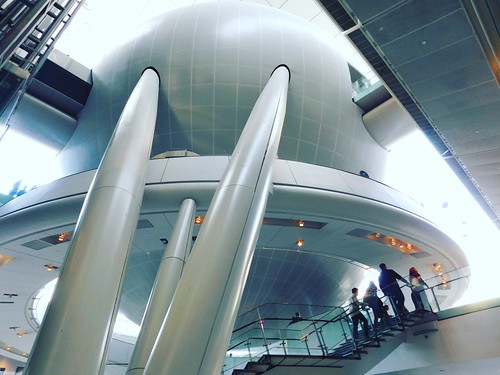
Such a fascinating place -- all the displays about things that I've been interested in for almost literally as long as I can remember.
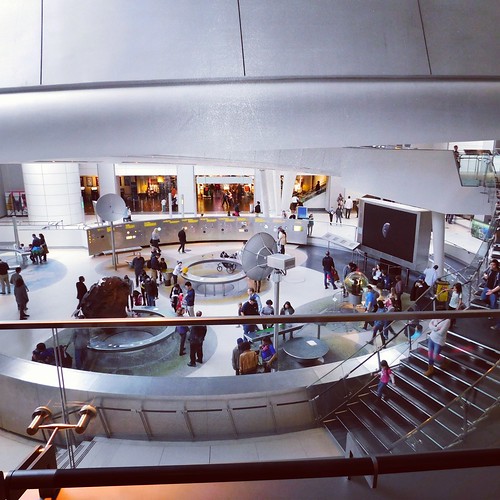
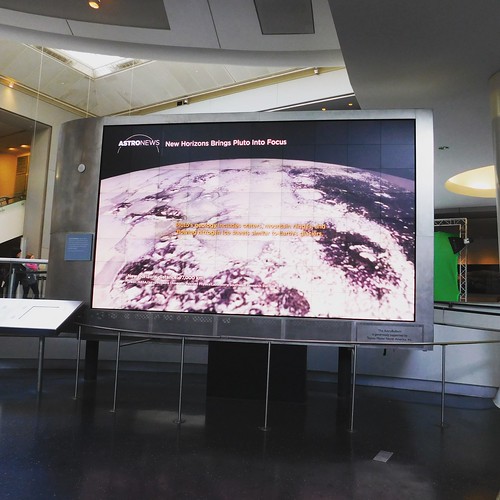
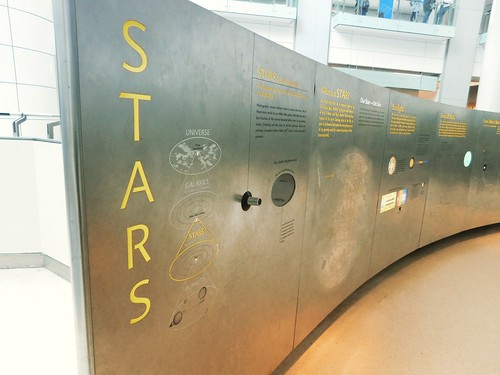
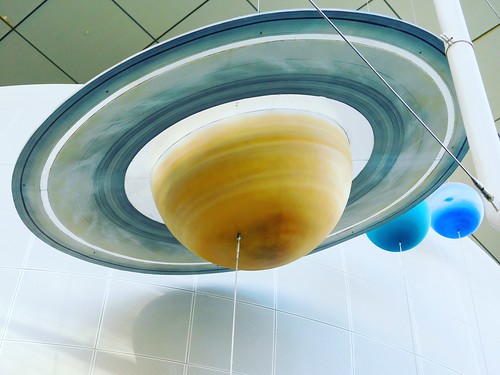
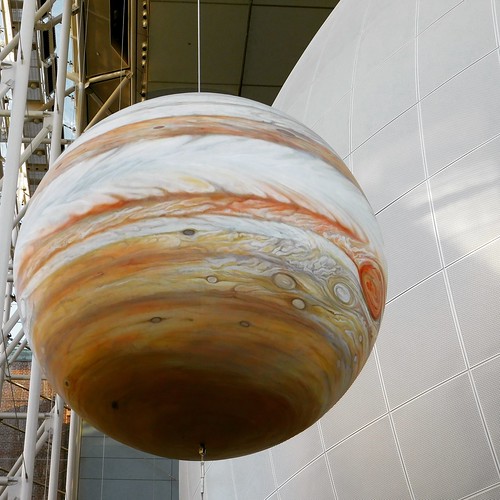
Fascinatingly, those planet models are to scale: If the Hayden Sphere is the size of the sun, then that's how big the planets are. There's another series of walking displays around the lower perimeter, showing the size of increasingly tiny things: If the Hayden Sphere is the size of a single raindrop, then this is how big a common cold virus is -- that sort of thing. This whole place was amazing.
The upper portion of the sphere itself is the Planetarium, where we saw a show about dark energy, narrated by Neil DeGrasse Tyson himself. I could sit through a dozen planetarium shows in one day, to be quite honest. It was our great luck that the Planetarium had just reopened after several months downtime for refitting: the dome was rebuilt to make the seams between the sections almost invisible, and the seats and projection systems were upgraded. To my surprise, there was no Big Bug-Eyed Projector sitting in the middle of the planetarium, which is a traditional fixture of such places (this kind of thing, if you're wondering what I'm talking about). Projection seems to be handled from a series of projectors along the boundaries of the planetarium. The show was amazing and very well-done. There's another theater in the lower half of the Sphere, but we didn't attend that one. Instead we moved on to the rest of the museum.
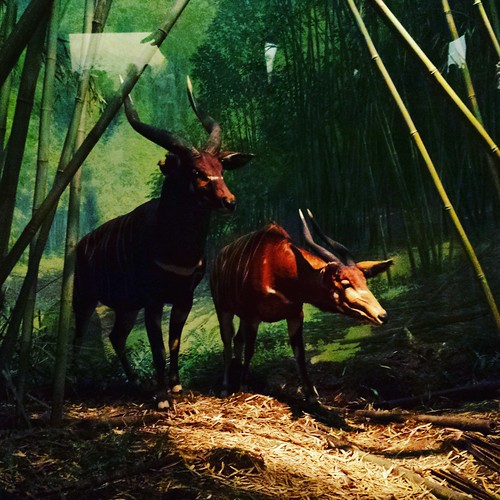
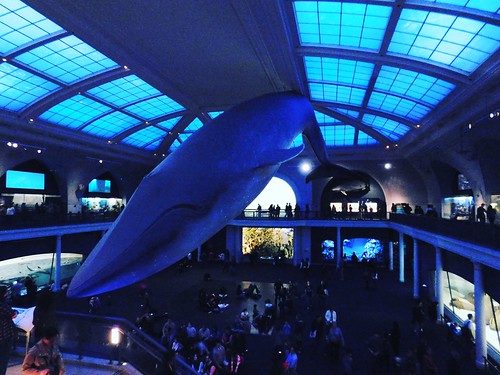
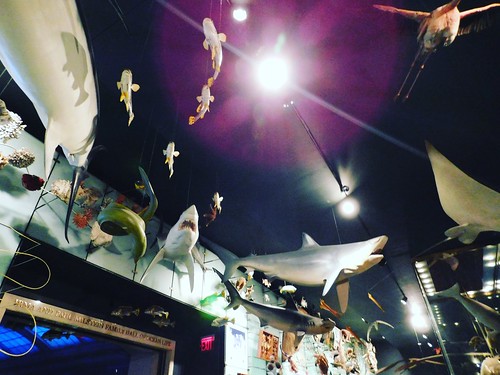
Much of the museum is dedicated to the kinds of taxidermy-based diorama displays that I'm sure we all remember from our youths. This museum's dioramas are some of the best I've ever seen, but in all honesty, a little of that kind of thing tends to go a long way with me. There were still some cool things to see, though.
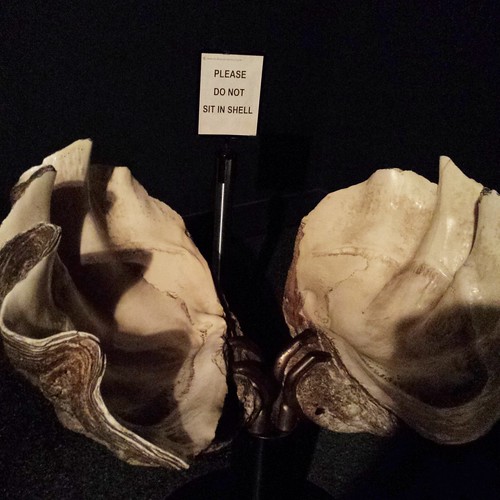
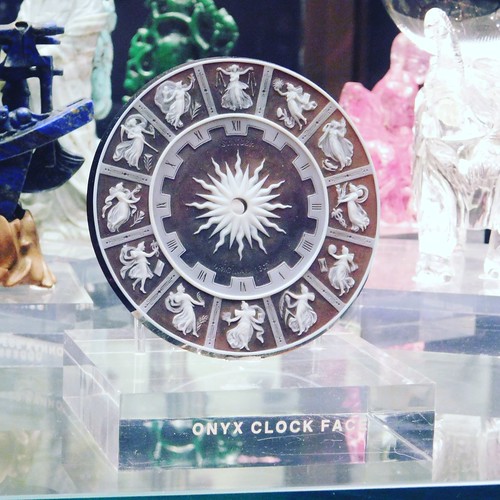
We spent some time in the Hall of Gems and Minerals, because rocks are cool, dammit.
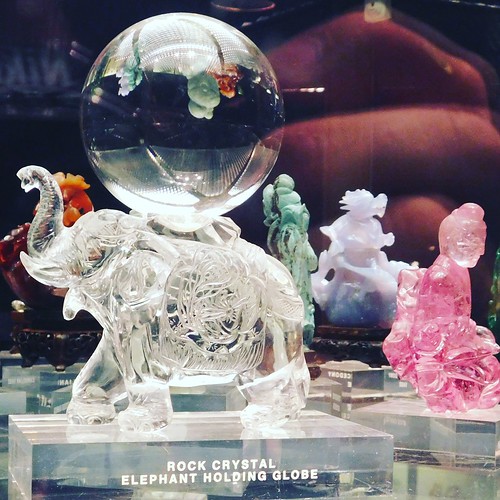
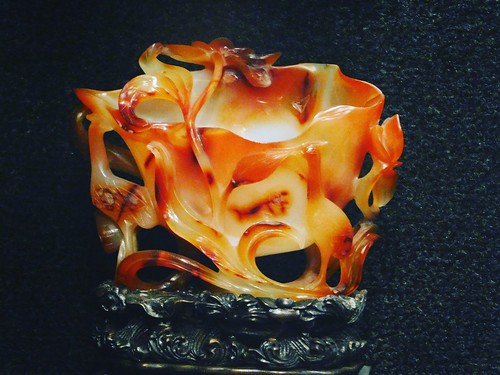
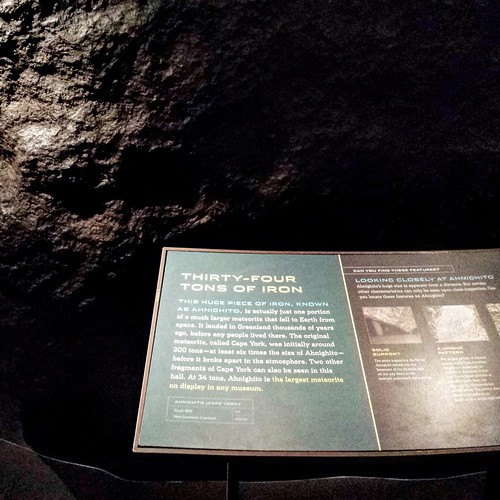
That last is pretty fascinating: it's a piece of a much larger meteorite, about the size of a small car -- and it weighs 34 tons. That blew my mind. The signage illustrates the engineering problems they faced just displaying the thing in the Museum: it sits on support posts that extend down through the basement floor all the way to bedrock.
After the museum, it was time for another touristy stop: Rockefeller Center.
And that place is every bit as gorgeous as it looks on teevee and in the pictures.
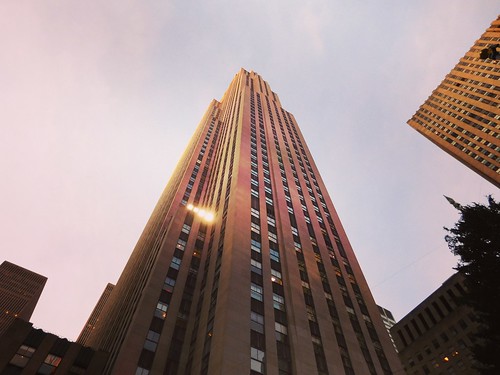
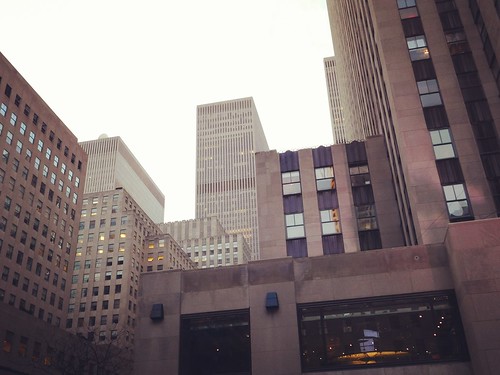
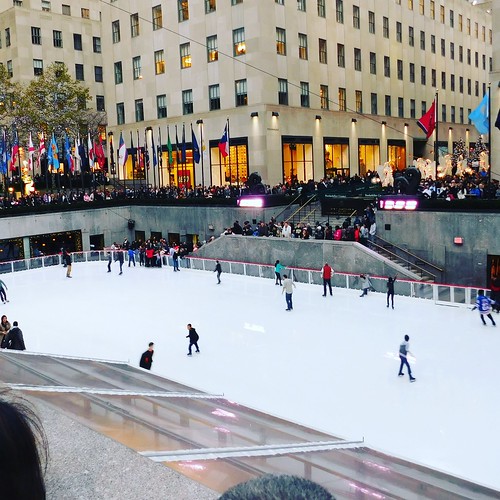
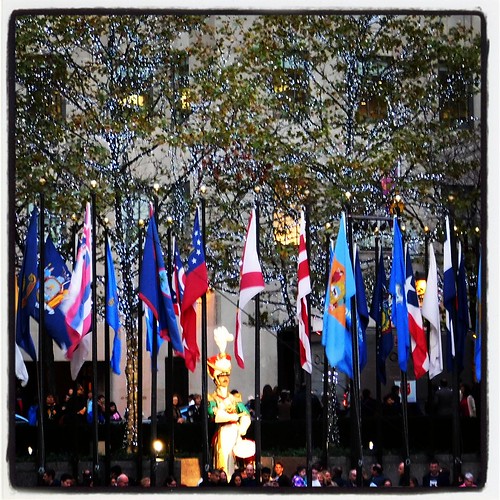
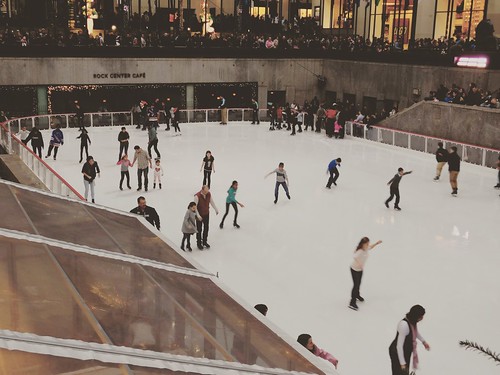
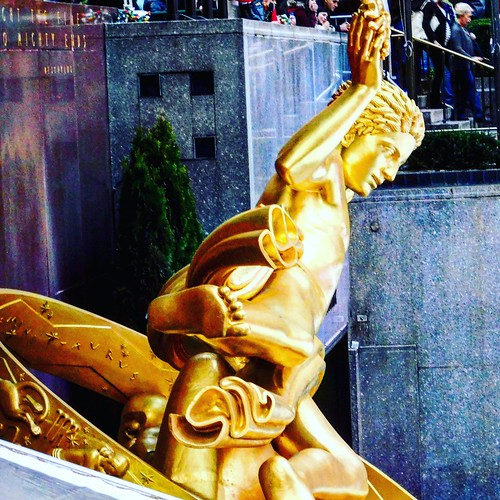
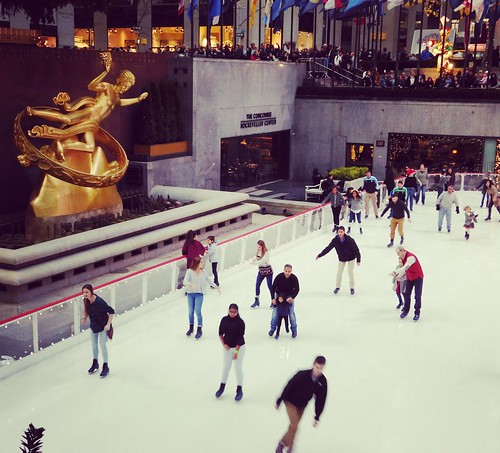
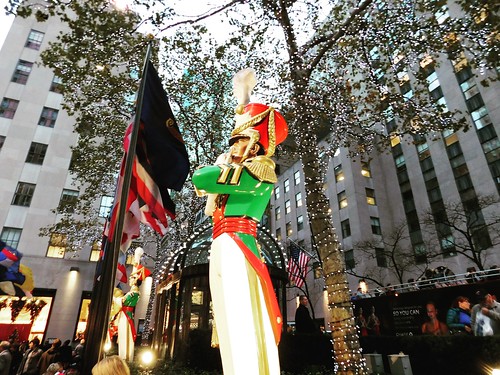
Watching people skate at Rockefeller Center is one of the most unexpectedly wonderful things that we saw on this trip. It was just...sheer, beautiful happiness, from the family that was skating together...
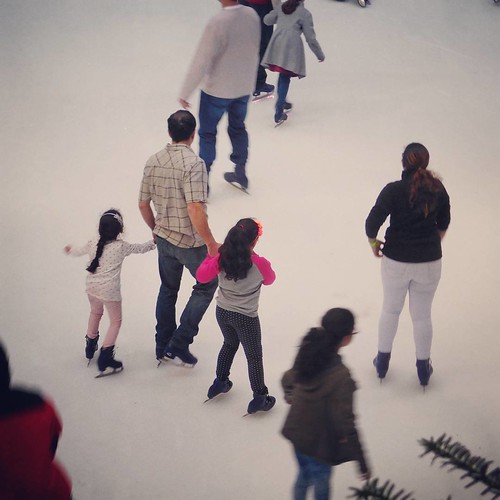
...to the young woman in the wonderful scarf who couldn't let go of the rail.

After Rockefeller Center, it was off to find dinner. We wound up at a burger joint called 5 Napkin, where we had a terrific meal in a dining room made up to look like an old meat market:
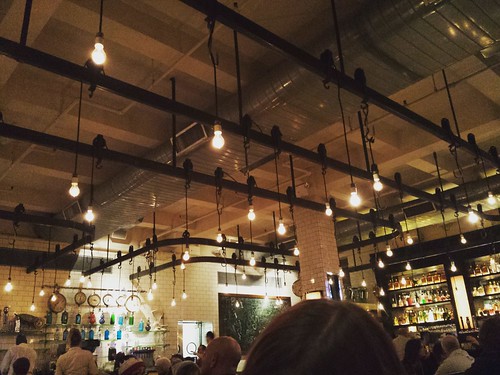
And then, where else to go on a Friday Night in New York City than...TIMES SQUARE!!!
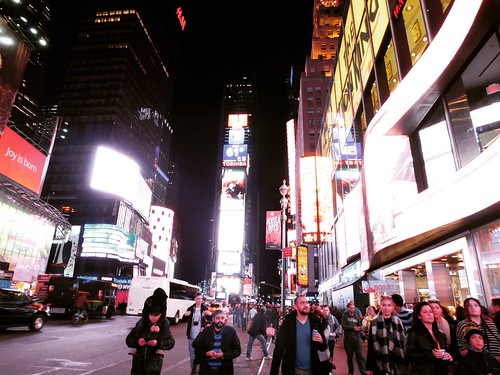
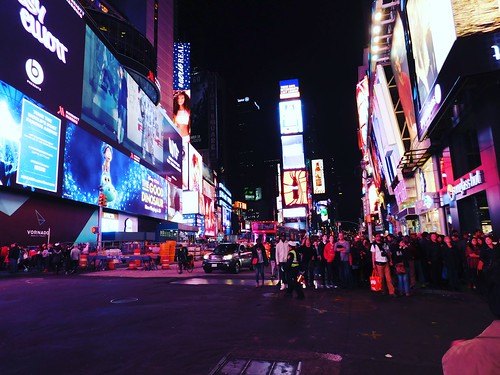
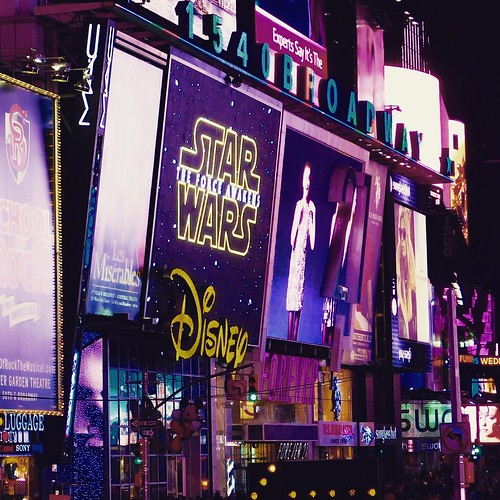
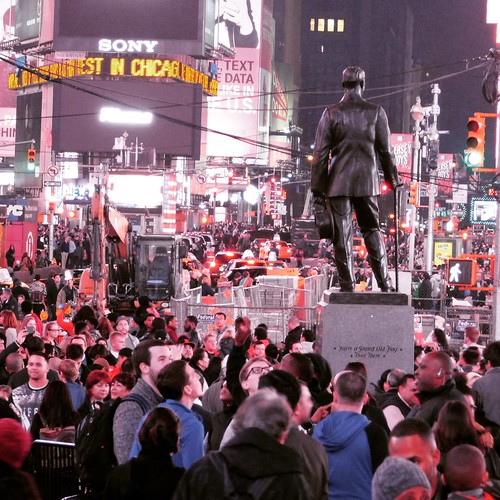
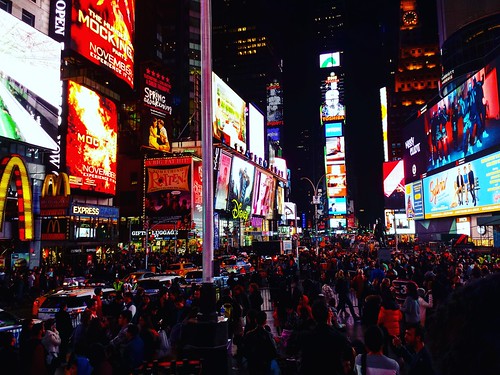
The coolest thing was that everywhere we went that day, nobody was pushy, nobody was in a bad mood. It was as if the thousands of people in our company were all just...happy. Even in Times Square, there was no shoving, no rancor...everybody was relaxed and having a good time. Everybody was. I've no idea if it's always that way or if was just a function of the season (and the presence of cops everywhere), but this entire trip was almost entirely free of anxiety.
So ended our third night in New York City. Two nights remained....
Such a fascinating place -- all the displays about things that I've been interested in for almost literally as long as I can remember.
Fascinatingly, those planet models are to scale: If the Hayden Sphere is the size of the sun, then that's how big the planets are. There's another series of walking displays around the lower perimeter, showing the size of increasingly tiny things: If the Hayden Sphere is the size of a single raindrop, then this is how big a common cold virus is -- that sort of thing. This whole place was amazing.
The upper portion of the sphere itself is the Planetarium, where we saw a show about dark energy, narrated by Neil DeGrasse Tyson himself. I could sit through a dozen planetarium shows in one day, to be quite honest. It was our great luck that the Planetarium had just reopened after several months downtime for refitting: the dome was rebuilt to make the seams between the sections almost invisible, and the seats and projection systems were upgraded. To my surprise, there was no Big Bug-Eyed Projector sitting in the middle of the planetarium, which is a traditional fixture of such places (this kind of thing, if you're wondering what I'm talking about). Projection seems to be handled from a series of projectors along the boundaries of the planetarium. The show was amazing and very well-done. There's another theater in the lower half of the Sphere, but we didn't attend that one. Instead we moved on to the rest of the museum.
Much of the museum is dedicated to the kinds of taxidermy-based diorama displays that I'm sure we all remember from our youths. This museum's dioramas are some of the best I've ever seen, but in all honesty, a little of that kind of thing tends to go a long way with me. There were still some cool things to see, though.
We spent some time in the Hall of Gems and Minerals, because rocks are cool, dammit.
That last is pretty fascinating: it's a piece of a much larger meteorite, about the size of a small car -- and it weighs 34 tons. That blew my mind. The signage illustrates the engineering problems they faced just displaying the thing in the Museum: it sits on support posts that extend down through the basement floor all the way to bedrock.
After the museum, it was time for another touristy stop: Rockefeller Center.
And that place is every bit as gorgeous as it looks on teevee and in the pictures.
Watching people skate at Rockefeller Center is one of the most unexpectedly wonderful things that we saw on this trip. It was just...sheer, beautiful happiness, from the family that was skating together...
...to the young woman in the wonderful scarf who couldn't let go of the rail.
After Rockefeller Center, it was off to find dinner. We wound up at a burger joint called 5 Napkin, where we had a terrific meal in a dining room made up to look like an old meat market:
And then, where else to go on a Friday Night in New York City than...TIMES SQUARE!!!
The coolest thing was that everywhere we went that day, nobody was pushy, nobody was in a bad mood. It was as if the thousands of people in our company were all just...happy. Even in Times Square, there was no shoving, no rancor...everybody was relaxed and having a good time. Everybody was. I've no idea if it's always that way or if was just a function of the season (and the presence of cops everywhere), but this entire trip was almost entirely free of anxiety.
So ended our third night in New York City. Two nights remained....
Your Daily Dose of Christmas!
Time for a repeat! I've never liked "Carol of the Bells", but this rendition makes me happy.
Saturday, December 05, 2015
Symphony Saturday
I know, we missed this feature last week, but fret not! We're back, with a work I didn't even know existed until this very morning. It's the Symphony No. 2, subtitled "Roma", by Georges Bizet. It's an interesting piece, with an interesting history. Bizet only lived until he was 36, and he wrote this symphony over an eleven-year period until he was 33, and by all reports, he was still unsatisfied with it and might have done more revision work on it had he not died. The work's movements were never performed together during his lifetime, and because the symphony is generally viewed as a flawed and incomplete work, it is rarely performed today. But listening this morning, there is music of value here.
Here's Bizet's Second Symphony, "Roma".
Next week we start looking at one of the greatest of all symphonists: Johannes Brahms!
Here's Bizet's Second Symphony, "Roma".
Next week we start looking at one of the greatest of all symphonists: Johannes Brahms!
Your Daily Dose of Christmas!
Alan Silvestri's music to The Polar Express is just wonderful stuff. Here's a suite of it!
Friday, December 04, 2015
Your Daily Dose of Christmas
Yo Yo Ma and Natalie MacMaster, two of my favorite string players, teaming up for a Christmas jig!
Thursday, December 03, 2015
Thanksgiving in New York, continued
After the Parade dispersed, we went in search of something very pressing: a bathroom. Hey, we'd been standing there for five hours! We found a Starbucks. To my great disappointment, they spelled my name correctly on my cup.

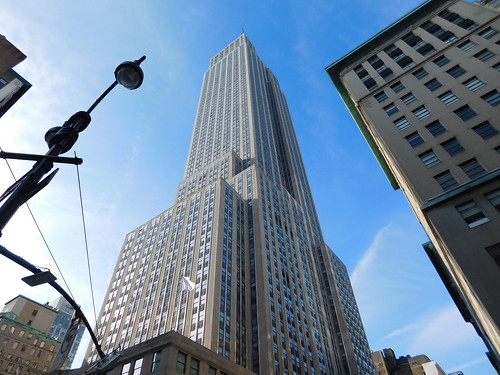
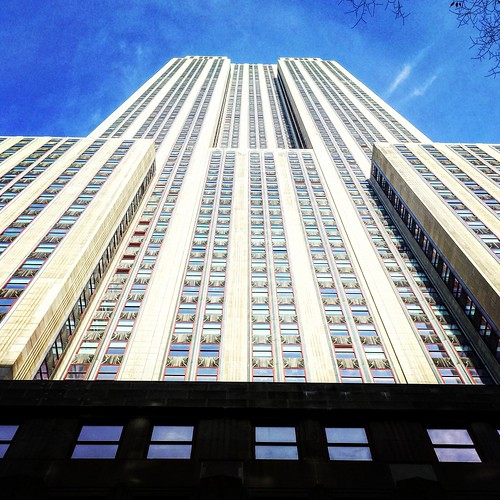
Just across the street from Starbucks? This rather notable building.
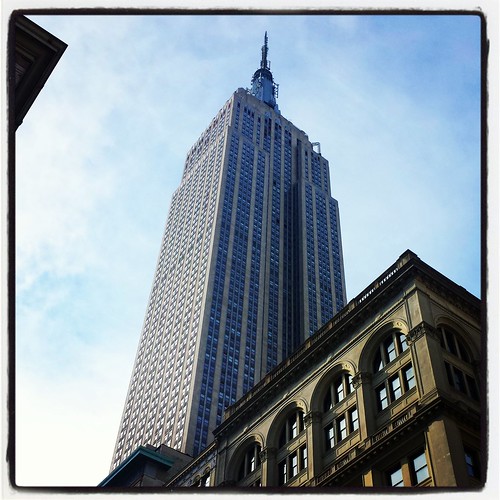
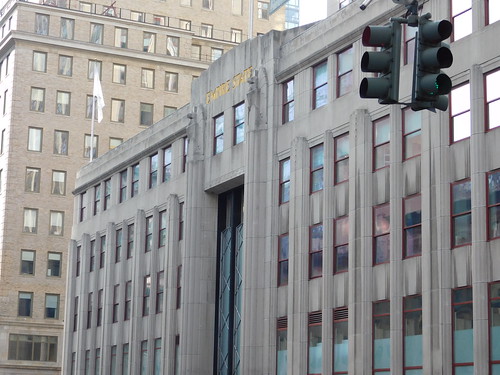
Sadly, no Deborah Kerr running across the street, staring up at the building because it's the closest thing to Heaven; no Tom Hanks running up there to find his son and Meg Ryan, either. And no giant gorilla. Just the Empire State Building, as beautiful a thing as I've ever seen.
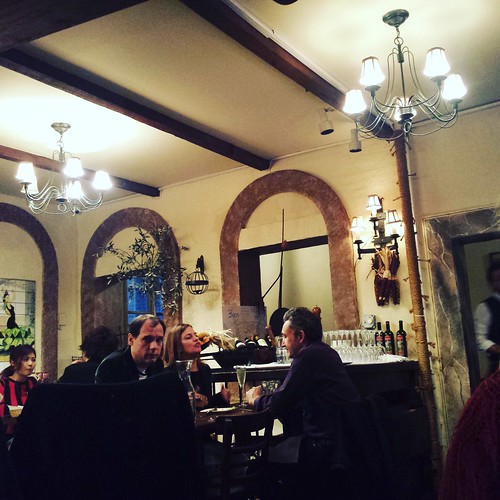
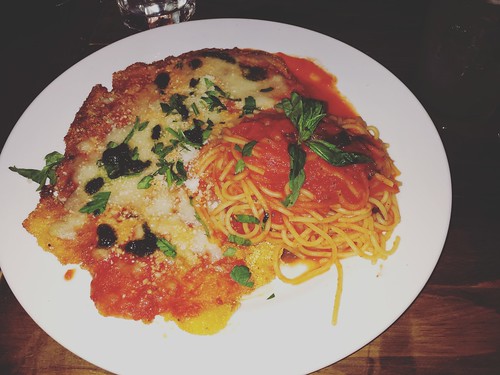
Later on that night, we went to dinner. I had already made reservations the week before at a place called Senza Gluten, an Italian restaurant in Greenwich Village. (The Wife is celiac, so we always have to seek out gluten-free options for her. I've never minded this, because in truth, it's led us to some really amazing food finds that we wouldn't necessarily have discovered otherwise.) The place was tiny and rustic, and the food was wonderful. Yes, it was Thanksgiving, and yes, there was traditional turkey dinner on the menu. I had the chicken parm.
Upon leaving the restaurant, I had to walk into the middle of the street, because this is the view outside Senza Gluten's front door, facing south:
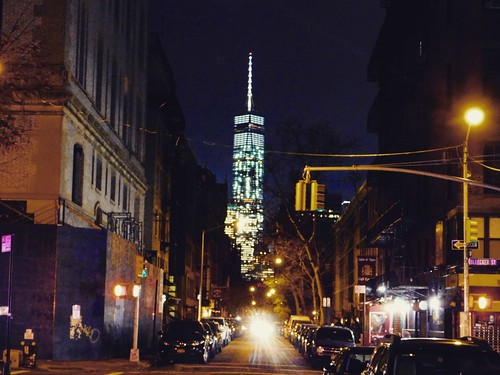
One World Trade Center is actually a very impressive building, especially at night.
This night was amazingly beautiful. It had been in the low 60s during the day, and by now it was in the 50s, a perfect night for a stroll through Greenwich Village, on our way back to the 9th Street PATH Station...and then I spotted something lit up, bright and white, off in the distance. It turned out -- and I honestly hadn't even realized this until I saw it -- that we were approaching Washington Square Park with that amazing, beautiful, famous arch.
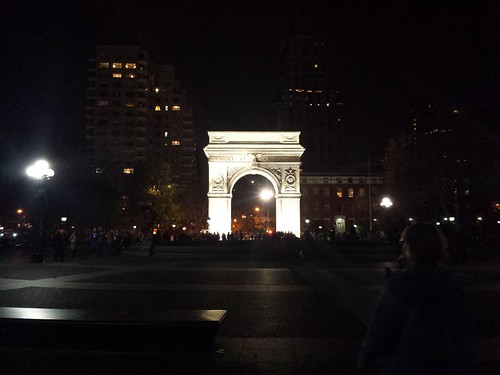
We lingered here a bit, taking in the November air that felt like May, gazing upon the arch and reflecting upon the impromptu memorials left for the victims of the attacks in Paris.
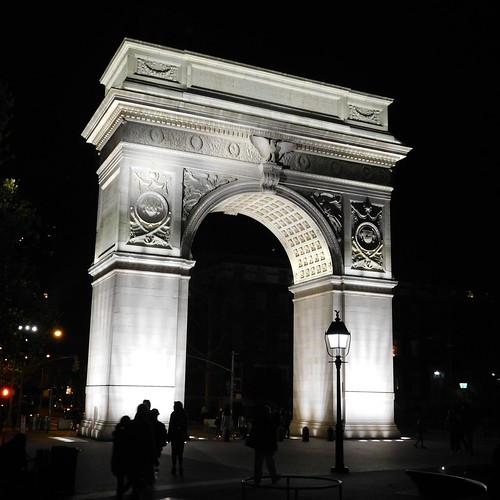
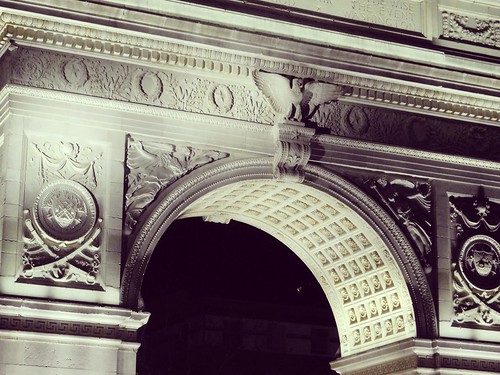
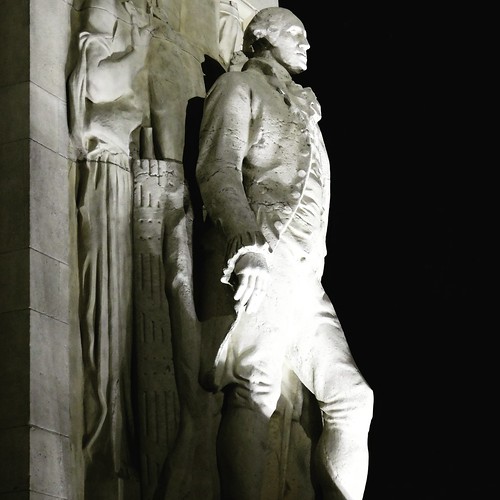
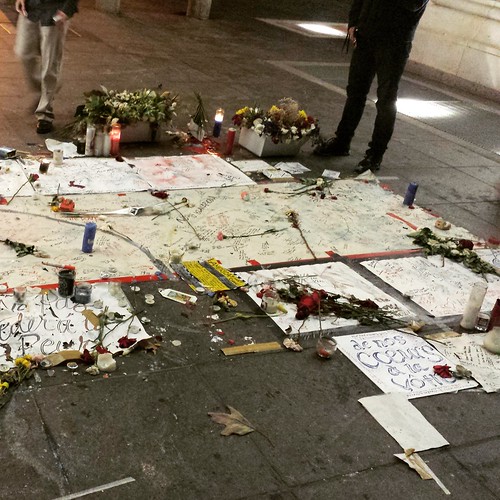
After that we finally made our way back to the hotel, full and tired and happy and thankful.
The next day? That's another post to come!
Just across the street from Starbucks? This rather notable building.
Sadly, no Deborah Kerr running across the street, staring up at the building because it's the closest thing to Heaven; no Tom Hanks running up there to find his son and Meg Ryan, either. And no giant gorilla. Just the Empire State Building, as beautiful a thing as I've ever seen.
Later on that night, we went to dinner. I had already made reservations the week before at a place called Senza Gluten, an Italian restaurant in Greenwich Village. (The Wife is celiac, so we always have to seek out gluten-free options for her. I've never minded this, because in truth, it's led us to some really amazing food finds that we wouldn't necessarily have discovered otherwise.) The place was tiny and rustic, and the food was wonderful. Yes, it was Thanksgiving, and yes, there was traditional turkey dinner on the menu. I had the chicken parm.
Upon leaving the restaurant, I had to walk into the middle of the street, because this is the view outside Senza Gluten's front door, facing south:
One World Trade Center is actually a very impressive building, especially at night.
This night was amazingly beautiful. It had been in the low 60s during the day, and by now it was in the 50s, a perfect night for a stroll through Greenwich Village, on our way back to the 9th Street PATH Station...and then I spotted something lit up, bright and white, off in the distance. It turned out -- and I honestly hadn't even realized this until I saw it -- that we were approaching Washington Square Park with that amazing, beautiful, famous arch.
We lingered here a bit, taking in the November air that felt like May, gazing upon the arch and reflecting upon the impromptu memorials left for the victims of the attacks in Paris.
After that we finally made our way back to the hotel, full and tired and happy and thankful.
The next day? That's another post to come!
Something for Thursday
I've featured this piece before, but here it is again, as I've just discovered that my favorite performance of it ever is on YouTube! It's the Trumpet Concerto by Alexander Arutiunian, a Soviet/Armenian composer who only died a few years ago. This concerto just drips with Armenian folk flavor. I had this performance on a cassette for years, but never managed to locate it on CD. And now here it is, with Timofey Dokshitzer performing with the Bolshoi Orchestra. This is fiery stuff!
Wednesday, December 02, 2015
Thanksgiving in New York
The Wife has maintained, pretty much since the very first Thanksgiving I spent with her, that one day she wanted to go to New York City and see the Macy's Thanksgiving Day Parade in person.
Then, a little less than a year ago, she suggested that we make that dream a reality and commit to going, this year.
So we committed...and we went. The other night we got back, and let me say this: New York City is an astonishing, amazing place. I loved it so much that I really hate the fact that I'm not still there, right now. But hey: it's not going anywhere, right? So we'll be back. Meantime, I've got pictures. Lots and lots of pictures. I'll break these up over a few posts, but I'm also putting them below the fold. Onward!
Then, a little less than a year ago, she suggested that we make that dream a reality and commit to going, this year.
So we committed...and we went. The other night we got back, and let me say this: New York City is an astonishing, amazing place. I loved it so much that I really hate the fact that I'm not still there, right now. But hey: it's not going anywhere, right? So we'll be back. Meantime, I've got pictures. Lots and lots of pictures. I'll break these up over a few posts, but I'm also putting them below the fold. Onward!
Your Daily Dose of Christmas!
"Happiness can be found, even in the darkest of times, if one only remembers to turn on the light."
--Albus Dumbledore
--Albus Dumbledore
Tuesday, December 01, 2015
Tinkering
Yes, I'm doing some redressing of the blog today! It's a work in progress, so as of THIS writing, not all details are set. I've been finding the old layout increasingly clunky with too much un-updated stuff hanging about, so I want to tidy it up and make it look better. Stay tuned!
Sunday, November 29, 2015
Stuff for a Sunday!
Some links before we head out to brunch in Manhattan, as people do! (I am so going to miss this city...but more on that another time!)
:: A couple of Star Wars links first. Here's an interesting interview with Lawrence Kasdan, who wrote The Empire Strikes Back and co-wrote Return of the Jedi, and has now returned to Star Wars to write episodes VII, VIII, and IX. Kasdan also wrote Raiders of the Lost Ark and Silverado, two other faves of mine.
:: Here's an interesting history of Marvel Comics's first foray into Star Wars comics, back before the Expanded Universe or the Prequels or just about anything else. There were some really fun stories in those Marvel comics, and I especially liked the creative team that was in charge at the end of the series's run; I wish they'd have had more time to flesh out the story they were working on before the series's abrupt cancellation.
:: Exploring an active volcano via kayak. Don't try this at home, kids!
:: Many years ago -- in 1980 or so -- my mother took me to see the Ice Capades when we were living in Portland, OR. The chief attraction was Dorothy Hamill, of course, but to our dismay, Ms. Hamill did not perform when we went, because she was sick or something. But still, I got to see the Ice Capades! I'd pretty much forgotten all about it until a random check of the RetroSpace Flickr stream, whereupon I found that they posted captures of some of the pages from that Ice Capades program. I had this program book, and wow, does this take me back to when I was no more than nine years old!
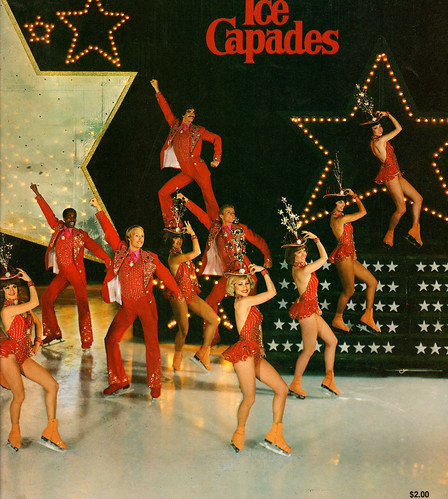
And yes, the Ice Capades really were that cheesy, which is why it was awesome!
That's about all...behave, folks, and regular stuff should resume mid-week! (Today's our last full day in NYC and then tomorrow we're on the Amtrak all day.)
:: A couple of Star Wars links first. Here's an interesting interview with Lawrence Kasdan, who wrote The Empire Strikes Back and co-wrote Return of the Jedi, and has now returned to Star Wars to write episodes VII, VIII, and IX. Kasdan also wrote Raiders of the Lost Ark and Silverado, two other faves of mine.
:: Here's an interesting history of Marvel Comics's first foray into Star Wars comics, back before the Expanded Universe or the Prequels or just about anything else. There were some really fun stories in those Marvel comics, and I especially liked the creative team that was in charge at the end of the series's run; I wish they'd have had more time to flesh out the story they were working on before the series's abrupt cancellation.
:: Exploring an active volcano via kayak. Don't try this at home, kids!
:: Many years ago -- in 1980 or so -- my mother took me to see the Ice Capades when we were living in Portland, OR. The chief attraction was Dorothy Hamill, of course, but to our dismay, Ms. Hamill did not perform when we went, because she was sick or something. But still, I got to see the Ice Capades! I'd pretty much forgotten all about it until a random check of the RetroSpace Flickr stream, whereupon I found that they posted captures of some of the pages from that Ice Capades program. I had this program book, and wow, does this take me back to when I was no more than nine years old!
And yes, the Ice Capades really were that cheesy, which is why it was awesome!
That's about all...behave, folks, and regular stuff should resume mid-week! (Today's our last full day in NYC and then tomorrow we're on the Amtrak all day.)
Thursday, November 26, 2015
Thankfulness (Something for Thursday -- Thanksgiving edition)
Wow...hard to believe it's been a year since the last time I was thankful! There seems to be so much ugliness in the world right now, but I wonder if that's not always the case...it comes and goes. But the beauty and the good things remain, and I am thankful to be privileged enough to be in a position to realize it.
Here is my ongoing list of things I'm thankful for, tweaked for this year. Further posting may be sporadic for a few days, as I'm on vacation with The Family in the Big Apple, the City that Never Sleeps, the Town So Nice They Named It Twice, New York, NY! Happy Thanksgiving, folks!
Bib overalls, writing, Star Wars, Hayao Miyazaki, Guy Gavriel Kay, John Williams, Person of Interest, Sarah Shahi, Lois Macmaster Bujold, Cutthroat Kitchen, Alton Brown, Veronica Mars, Enrico Colantoni, Adele, Idina Menzel, Kristen Stewart, "Let It Go", Arrested Development, chicken dances, Freaks and Geeks, The Musketeers, indie authors, Ithaca, Cayuga Lake, the Rochester Lilac Festival, fleece pullovers, scarves, retired racing greyhounds, our new house, a room for all my books, George Lucas, Gordon Ramsay, Hector Berlioz, Sergei Rachmaninov, Wicked, showtunes, raisin bran, The Oatmeal, the Sterling Renaissance Festival, antique shopping, taking ridiculous numbers of selfies, Guardians of the Galaxy, discovering that a coworker and I have the same second-favorite Madonna song, handing copies of Stardancer to my friends, Asian Star (our favorite local Chinese restaurant), Arriba Tortilla (our favorite local Mexican restaurant), Firefly (our local cupcake joint), Firefly (the teevee show), Castle and Beckett, A Prairie Home Companion, Car Talk (thanks for the memories, Tommy!), snow, sun, learning to live with a dog, watching two cats learning to live with a dog, hiking in the woods with the dog, drinking rum, single-malt Scotch, science, the stars, new friends online and off, finding out how cool my coworkers are, Princesses Tariana and Margeth, Lieutenant Rasharri, John Lazarus (hopefully you’ll find out who he is nest year), Aeric Seaflame (someday....), being tantalized by story ideas, figuring out a way out of a plot jam, getting a pie in the face, holding The Wife's hand, listening to The Daughter play music and video games, the feeling of getting home, the sense that I've figured out the plot, life, the Universe, and everything.
Happy Thanksgiving to each and every one of my readers and interactors throughout the Cyber-world! May the Holiday season be one of joy, and even if joy is hard to find, please try to take a moment and find some beauty!
Saturday, November 21, 2015
Symphony Saturday
Ooooh, here's one of my absolute favorites. There's just something about Russian Romantics that always calls me home. I don't really know why that is; it's nothing genetic or ethnic or to do with genealogy. To my knowledge, there's not a drop of Russian blood in me, anywhere. But this group of composers, along with their post-Romantic brethren, seem to speak to my heart more than most other groups or national schools or whatever you want to call them. I don't want to indulge too much in sweeping generalities, but there's just something about the way the Russians can engage in lyrical brooding that appeals to me on an elemental level. Beautiful sadness, I think -- or the awareness that there are things in this world that can break your heart simply by being as beautiful as they are. There must be a German word for that feeling, or some lovely phrase in French.
Anyway, up today is the Symphony No. 1 by Vasily Kalinnikov. You have almost certainly not heard of Kalinnikov, because the fates dealt the music world a cruel blow when they afflicted him with tuberculosis. Kalinnikov was a deeply talented composer who was just starting to take flight when he died at the age of 35, becoming yet another "Oh, what if!" artist.
His first symphony is full of everything you would expect from a Russian Romantic symphony. It's full of amazing melodies (just try getting the first subject of the first movement out of your head after you've heard it), singing chromaticism, brooding churn in the lower registers, and cyclic construction that brings themes from the previous movements back for the finale. The delicate opening of the second movement is one of the most magical segments of any symphony I've ever heard, and that finale -- what an astonishing climax Kalinnikov creates, when he summons that delicate love song tune from the second movement to be the main focus of the symphony's glorious conclusion!
Maybe I'm being over-the-top in my praise of this work, but don't take my word for it. Here's the Symphony No. 1 by Vasily Kalinnikov.
Anyway, up today is the Symphony No. 1 by Vasily Kalinnikov. You have almost certainly not heard of Kalinnikov, because the fates dealt the music world a cruel blow when they afflicted him with tuberculosis. Kalinnikov was a deeply talented composer who was just starting to take flight when he died at the age of 35, becoming yet another "Oh, what if!" artist.
His first symphony is full of everything you would expect from a Russian Romantic symphony. It's full of amazing melodies (just try getting the first subject of the first movement out of your head after you've heard it), singing chromaticism, brooding churn in the lower registers, and cyclic construction that brings themes from the previous movements back for the finale. The delicate opening of the second movement is one of the most magical segments of any symphony I've ever heard, and that finale -- what an astonishing climax Kalinnikov creates, when he summons that delicate love song tune from the second movement to be the main focus of the symphony's glorious conclusion!
Maybe I'm being over-the-top in my praise of this work, but don't take my word for it. Here's the Symphony No. 1 by Vasily Kalinnikov.
Friday, November 20, 2015


Thursday, November 19, 2015
Something for Thursday
I love Russian music. Composers from that land (and its various "satellite" countries) really have this way of letting it all hang out, don't they? Here's a short selection: the Sailor's Dance from The Red Poppy, by Reinhold Gliere.
Wednesday, November 18, 2015
Sunday, November 15, 2015
Sunday Linkage Clearing House!
Some links that have been gathering dust in my bookmarks!
:: "Why would you waste cream and sugar on anything that you don't like?" Nifty little video on one restaurant's tradition of celebrating departing crewmembers with a pie in the face.
:: Universes that blur the line between SF and fantasy. The genre lines are not sharp borders....
:: Found: Map of Middle-earth, annotated by JRR Tolkien himself.
:: Behold the most complicated watch in the world. This thing is amazing.
:: The tangled cultural roots of Dungeons and Dragons.
:: Unopened mail...from 400 years ago.
:: Making a Dagwood sandwich...and, if you're so inclined, making the original Dagwood sandwich.
:: How the ballpoint pen killed cursive. I've never been able to make up my mind about cursive and whether or not it should still be taught. I've never really understood the logic of learning to write twice, but I don't get the idea that it hurts anything to learn, so...I dunno.
:: They've found a new earliest use of the F-word! (And by the way, if you're one of those who thinks the F-word is an acronym, please stop. You're wrong.)
:: Making The Warriors. I never saw that movie, but I've sure heard of it.
:: How Richard Scarry updated Best Word Book Ever to reflect a newer world.
Finally, on a much more serious note, two pieces that pretty much encapsulate my thinking on the horror that's been unfolding in the world the last few days: The Price of Civilization by Jim Wright, and Paris by John Scalzi. I honestly don't have any great prescriptions for making our world better, although I do cling to my faith that we (as a species) are getting better, albeit so very slowly that sometimes it doesn't seem like we're getting better at all. I do hope that we don't completely give in (and by 'we', I mean the Western powers and not just the United States) to the eternally-seductive notion that if we just let slip enough of the dogs of war, for a long enough time, we'll eventually kill all the bad guys and let the credits roll on a victory. History just doesn't work like that; it never has, and I see little reason to expect it to work that way this time.
With that, I go back to writing. Excelsior, and live well, people!
:: "Why would you waste cream and sugar on anything that you don't like?" Nifty little video on one restaurant's tradition of celebrating departing crewmembers with a pie in the face.
:: Universes that blur the line between SF and fantasy. The genre lines are not sharp borders....
:: Found: Map of Middle-earth, annotated by JRR Tolkien himself.
:: Behold the most complicated watch in the world. This thing is amazing.
:: The tangled cultural roots of Dungeons and Dragons.
:: Unopened mail...from 400 years ago.
:: Making a Dagwood sandwich...and, if you're so inclined, making the original Dagwood sandwich.
:: How the ballpoint pen killed cursive. I've never been able to make up my mind about cursive and whether or not it should still be taught. I've never really understood the logic of learning to write twice, but I don't get the idea that it hurts anything to learn, so...I dunno.
:: They've found a new earliest use of the F-word! (And by the way, if you're one of those who thinks the F-word is an acronym, please stop. You're wrong.)
:: Making The Warriors. I never saw that movie, but I've sure heard of it.
:: How Richard Scarry updated Best Word Book Ever to reflect a newer world.
Finally, on a much more serious note, two pieces that pretty much encapsulate my thinking on the horror that's been unfolding in the world the last few days: The Price of Civilization by Jim Wright, and Paris by John Scalzi. I honestly don't have any great prescriptions for making our world better, although I do cling to my faith that we (as a species) are getting better, albeit so very slowly that sometimes it doesn't seem like we're getting better at all. I do hope that we don't completely give in (and by 'we', I mean the Western powers and not just the United States) to the eternally-seductive notion that if we just let slip enough of the dogs of war, for a long enough time, we'll eventually kill all the bad guys and let the credits roll on a victory. History just doesn't work like that; it never has, and I see little reason to expect it to work that way this time.
With that, I go back to writing. Excelsior, and live well, people!
Saturday, November 14, 2015
Symphony Saturday
Belgian composer Cesar Franck wrote only one symphony in his life, but it's a mainstay of the symphonic repertoire for reasons that become obvious upon hearing: it's a powerful work, lyrical and brooding and, in the end, optimistic. Franck'd reputation is mainly established by works he wrote toward the end of his life, and the Symphony in D minor is one of those. There was not much of a French symphonic tradition to speak of in the 19th century, which partly explains why the work was apparently poorly received at first, but like many great works, its reputation grew over the years where now it is considered, rightfully, a masterpiece.
Of particular interest is Franck's use of cyclic form, in which melodic material from earlier movements is used in later ones. I've always loved cyclic works, which partly explains my own fierce devotion to Tchaikovsky's Fifth and Rachmaninov's Second Symphonies.
Here is Cesar Franck's Symphony in D minor.
Of particular interest is Franck's use of cyclic form, in which melodic material from earlier movements is used in later ones. I've always loved cyclic works, which partly explains my own fierce devotion to Tchaikovsky's Fifth and Rachmaninov's Second Symphonies.
Here is Cesar Franck's Symphony in D minor.
Friday, November 13, 2015
Bad Joke Friday!
A panda walks into a bar and says, "I'll have a rum...
...
...
...
...
...
...
...
...
...
...
...
...
...
...
...
...
...and coke, please."
The bartender says, "OK, but why the big pause?"
The panda holds up his hands. "I was born with them."
...
...
...
...
...
...
...
...
...
...
...
...
...
...
...
...
...and coke, please."
The bartender says, "OK, but why the big pause?"
The panda holds up his hands. "I was born with them."
Thursday, November 12, 2015
Something for Thursday
Even despite the movie's gaping historical inaccuracies and Kevin Costner's less-than-robust attempt at a British accent, I still like the movie Robin Hood: Prince of Thieves. I especially love its sweeping score by Michael Kamen, who is to my mind one of the more underrated film composers of the last few decades. His death -- eleven years ago, and the same year as Jerry Goldsmith's and Elmer Bernstein's passings -- was especially cruel, because he should have had a few decades' worth of music left inside him. I'll always wonder what we might have heard.
Anyway, some kind soul uploaded the entire score album to Robin Hood: Prince of Thieves to YouTube (minus the wildly overplayed Bryan Adams song), so here it is. Enjoy!
Anyway, some kind soul uploaded the entire score album to Robin Hood: Prince of Thieves to YouTube (minus the wildly overplayed Bryan Adams song), so here it is. Enjoy!
Tuesday, November 10, 2015
THE WISDOMFOLD PATH is now LIVE!!!
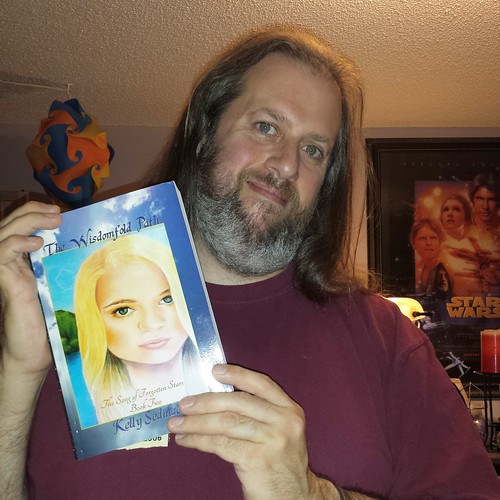
Yes, folks, the day has come: Book II of The Song of Forgotten Stars is now a reality! Details are over on the official site, but the important thing is: THE WISDOMFOLD PATH is a GO!!!
More commentary to come, but for now...WOW!
Saturday, November 07, 2015
Symphony Saturday (the Return!)
I've been meaning to dust off this once-regular feature of mine, in which I take time each Saturday to explore the world of that grandest of classical music forms, the symphony -- and what better time than right now?
During the 19th century, Italy did not have a great symphonic tradition as did other nations in Europe. In Italy, opera was by far the most popular form of musical composition, and practically zero symphonies by Italian composers of the Romantic era have entered the standard symphonic repertoire. This is not to say that there were no Italian symphonists during that era, however.
Giovanni Sgambati achieved some renown for his piano music, but he also wrote two symphonies, the first of which is the subject of this post. Listening to the work, it is easy to hear the heavy Germanic influence that Sgambati felt. He was an eager champion of German and Austrian music in Rome, and this symphony, with its decidedly Teutonic feel and sound, definitely shows that. It is clear that Sgambati felt more attuned to the line from Beethoven to Brahms than that from Cherubini to Verdi. The work does not feature the kind of lyricism one might expect from an Italian, but it is full of the kind of Germanic writing that is notable in many a symphony from the north.
Sgambati’s Symphony No. 1, like many an obscure work, deserves to be heard more than it is. Enjoy!
During the 19th century, Italy did not have a great symphonic tradition as did other nations in Europe. In Italy, opera was by far the most popular form of musical composition, and practically zero symphonies by Italian composers of the Romantic era have entered the standard symphonic repertoire. This is not to say that there were no Italian symphonists during that era, however.
Giovanni Sgambati achieved some renown for his piano music, but he also wrote two symphonies, the first of which is the subject of this post. Listening to the work, it is easy to hear the heavy Germanic influence that Sgambati felt. He was an eager champion of German and Austrian music in Rome, and this symphony, with its decidedly Teutonic feel and sound, definitely shows that. It is clear that Sgambati felt more attuned to the line from Beethoven to Brahms than that from Cherubini to Verdi. The work does not feature the kind of lyricism one might expect from an Italian, but it is full of the kind of Germanic writing that is notable in many a symphony from the north.
Sgambati’s Symphony No. 1, like many an obscure work, deserves to be heard more than it is. Enjoy!
Friday, November 06, 2015
Bonus Bad Joke Friday! (Visual Pun Edition)
Saw this yesterday and posted it to Facebook. It made me laugh.


Bad Joke Friday
"Sorry, but I'm dealing with a lot of pressure at work!"
--When a barometer complains
--When a barometer complains
Thursday, November 05, 2015
Wednesday, November 04, 2015
Monday, November 02, 2015
It's NaNoWriMo time!
Here we go, folks!
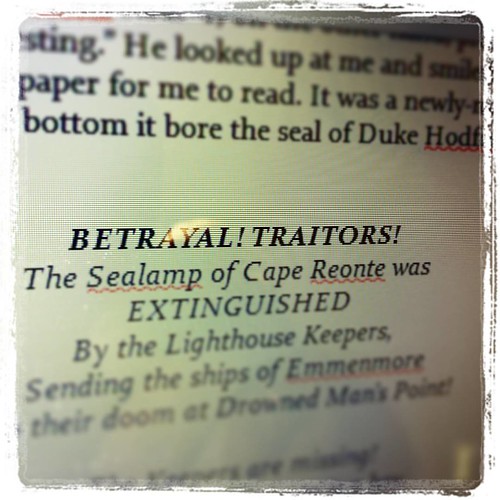
Posting will be a bit more infrequent and more reliant on pictures and such this month, so bear with me as I try to crank out 50000 words. Yipes!
The book is the on-again, off-again Dumas-inspired adventure tale, The Adventures of Lighthouse Boy (not the actual title). I actually ended up starting this one over from square one, and I'm liking the direction it's taking thus far, so we'll see how it goes!
Posting will be a bit more infrequent and more reliant on pictures and such this month, so bear with me as I try to crank out 50000 words. Yipes!
The book is the on-again, off-again Dumas-inspired adventure tale, The Adventures of Lighthouse Boy (not the actual title). I actually ended up starting this one over from square one, and I'm liking the direction it's taking thus far, so we'll see how it goes!
Subscribe to:
Posts (Atom)