Monday, March 17, 2014

Candyland? Again???


Patrick Rothfuss on the game Candyland:

He’s bored because the game is tedious. And it’s tedious because there is no skill involved. You draw a card, you look at a card, you match a color, you move your piece.

Games that involve no skill are not good games.

Yesterday, after months of not playing, we brought out the game again and took another crack at it. Because he wanted to, and he asked nicely. And I can deal with some tedium if it makes him happy.

But we changed the game a little bit. We added a house rule where you drew two cards and got to pick which one you wanted.

With this small change, Candy Land became an actual game.

Sure there was still a huge random element to it, but now there was some skill as well. You had to make decisions.

Oh, why the hell didn't I ever think of that?

You see, the problem with Candyland is that, aside from shuffling the cards, there is no random element to it at all.

It's a "start here and first one to get there wins" game. But instead of rolling a die or spinning a spinner, you draw cards. The cards have colors on them, and the game board is a path laid out in blocks the same colors as are on the cards. So if you draw a red card, you advance your piece to the next red square. There are a couple "double" cards, which move you forward two squares of that color. And there are a couple of spaces where you lose your turn.

The problem is that once you shuffle the deck and start game play, literally all you are doing is playing out the sequence of cards. There are no choices to make, no element of chance whatsoever. Your route through the game board is already determined, and all you're doing is unveiling it, one card at a time. It may seem like there's chance involved, but that's an illusion, simply because you don't know what's going to happen. It's like seeing a movie: you may have no idea at all what the story is, but there is exactly one scene that can be happening at, say, the fifty-five minute mark. It's the same thing in Candyland. The only way for the game to include an element of chance is for the first arrangement of the deck to line up in such a way that it doesn't bring any of the players to the end, in which case you have to reshuffle. But that's it: as soon as you start drawing cards again, you're right back to simply playing out a drama.

But here, Mr. Rothfuss has made one teeny-tiny change that introduces a whole new element to the game. It might have actually been fun, as such.

Damn. I wish I'd thought of that.

Sentential Links

Links!

:: So yes, I sing. I’d rather sing harmony than melody. I’m a baritone and can generally find the bass line to any song, even those without one. I sing in the shower. I sing inside my head when singing out loud would be inappropriate.

I do sing.


:: You know, I believe you. You work hard for the money. Harder than people know.

But the question is still: How hard?


:: Casper is a GHOST and by definition that means he's is a transparent spirit that everything can pass through, light, RAIN and even that gun you will throw at the ghost after you waste your bullets trying to kill it.

:: What passes for joy in the Funkyverse: He’s Not Really Dead, Part IV.

:: It’s also to the point that culture is not static and that every generation wants their own music, books and movies. (Odd thing: Aside from a few short stories, I've never really read Heinlein. I bounced off The Moon Is a Harsh Mistress years ago, but I've never really tried to get into him outside of that.)

:: It’s a trend that comes and goes. Forty years ago we loved Archie Bunker and those kooky Corleones, and thirty years ago we cheered on J.R. Ewing. I suspect the trend really reignited with debut of THE SOPRANOS. Tony Soprano was clearly a monster, but he was so fascinating and complex that he drew us all into his world. Don Draper on MAD MEN was another. Walter White became America’s chemist. Vic Mackey brought new meaning to good cop/bad cop. And who can forget everybody’s favorite serial killer, DEXTER? (I don't know...to me, evil is only interesting to a point....)

:: The use of drones as a tool to study wildlife is a marvelous idea. We all like the various animal cams. My mother-in-law is absolutely obsessed right now with a camera that's fixed on a bald eagle's nest. I saw this footage and was thrilled by its potential.

More next week.

Saturday, March 15, 2014

Sunday Burst of Weird and Awesome (late Saturday edition)

Oddities and Awesome abound!

:: Trains are wonderful and people are garbage, which is in partial response to...

:: ...Amtrak is running a pilot program for writers' retreats on their trains. If accepted, I guess you literally get to ride around the country on Amtrak and write. I'd consider this, if not for family obligations and the job at The Store and whatnot.

:: Want to listen to ten hours of "sad violin music"? Sure you do.

More next week!


Symphony Saturday

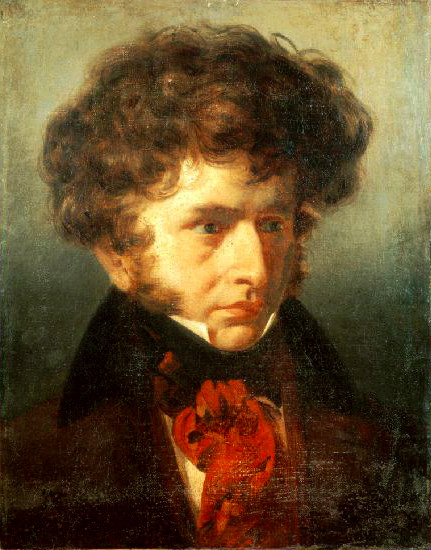
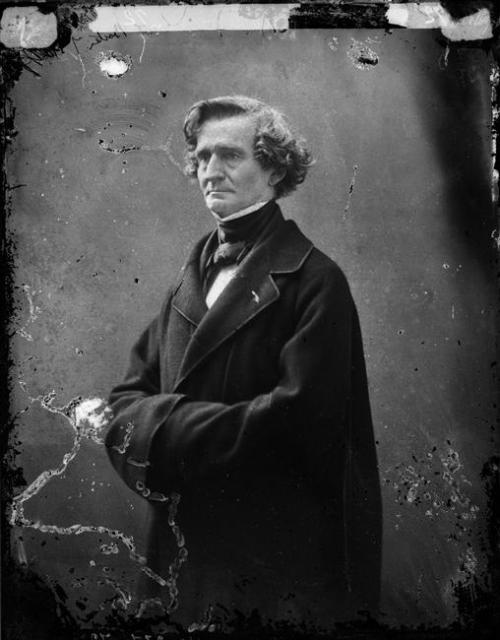
In 1833, after a concert of his music, Berlioz was introduced to Niccolo Paganini, who was already one of the most famous figures in the musical world, owing to his unimaginable virtuosity with the violin. (Paganini is one of those figures whose performances would almost certainly be a destination were any classical musicians of today to find the keys to Doc Brown's Delorean.) Paganini loved what he had heard at the concert, so he officially commissioned from Berlioz a work for solo viola and orchestra, so that he might have a worthy new work to perform on the Stradivarius viola he had just acquired. Berlioz set to work...but Paganini was ultimately disappointed, because he had expected a virtuoso showpiece in which he would be constantly playing, and Berlioz was simply not attuned to that style of thing.

Berlioz never wrote a proper concerto. The closest he ever got was this piece for Paganini, which turned out to be his second symphony. It's also the only one of Berlioz's four symphonies to follow the traditional four-movement model, but it has the extensive passages for solo viola, making it a kind-of symphony-and-concerto hybrid, and it is also deeply steeped in Berlioz's love of literature. This time the object of literary interest is the poetry of Bryon, which led Berlioz to title the work Harold en Italie ("Harold in Italy"), after the hero of Byron's poem, Childe Harold's Pilgrimmage. The soloist "plays" the part of Harold as he tours Italy, witnessing such scenes as the treacherous paths in the mountains, a group of pilgrims marching to a shrine, a love-serenade, and in the final movement, a dance and revelry at a camp for outlaws. That fourth movement takes a page from Beethoven's book by quoting the first three movements before getting down to business, but this is a literary allusion as well as a musical one: Harold, in the form of our violist, is remembering his previous journeys before the revelry begins.

Harold in Italy is, for me, a delightful listen. It's loaded with Berliozian drama, his weirdly asymmetrical approach to melody is on full display, and his love of interesting orchestral effects shines through (the wonderful moment in the last movement when he sends some musicians offstage to quote the Pilgrim's March, for one).

Here's Harold in Italy, performed this time on original instruments by the Orchestre Revolutionnaire et Romantique, with Gerard Causse as the soloist and John Eliot Gardiner conducting.


By the way: the very Stradivarius viola that Paganini owned, inspiring him to commission Berlioz? That viola still exists, and is currently owned by the Nippon Music Foundation.

Next week: What is, for me, Berlioz's greatest symphony and his greatest work, and by far the strangest symphony he wrote. Maybe. (They're all pretty strange, you know.)

Friday, March 14, 2014

Wow.

That is all.

Instaweek

The week in photos!


Have a great weekend, everyone, and Happy Pi Day!


Fixing the Prequels: Revenge of the Sith (part nine)


previously:

eight
seven
six
five
four
three
two
one

OK, this is long...quite long. But necessary, because this is when we finally get to the meat of the whole thing.

At the end of last entry, Mace Windu had placed Anakin Skywalker under house arrest for the crime of MWJ (Marriage While Jedi). And now, Windu is on his way to force the Chancellor from power, not knowing – and having refuse to hear from Anakin – that Palpatine isn't just the Chancellor, but also a Sith Lord. Anakin knows that Mace Windu is walking into disaster, and that he'll need help if he is to take down a Sith Lord. What will Anakin do? Here we go!

I like the interplay of Anakin and Padme looking across the Coruscant cityscape to one another, but Anakin's decision to defy Windu and go join the arrest of the Chancellor comes a bit out of the blue. We know why he's feeling so tortured, but even so, there's nothing that really establishes it; we have to tease it out from what we know of the story at that point. We have Anakin and Padme looking at each other across the skyline (well, looking toward one another, anyway), and then Mace and friends arrive to arrest the Chancellor (knowing that he is possibly a Sith Lord), and then Anakin takes off.

So I change all this to remove Mace Windu knowing of Palpatine's Sith status, and to establish Anakin's rage at Windu for basically having kicked him out of the Jedi. Anakin is starting to spiral out of control, now. In the film, the sequence of events feels incomplete, so my goal is to connect the dots a bit.

Again, I'm doing this without a lot of comment -- I'll just present my rendition of events. Enjoy -- revisiting this terribly sad and emotional sequence was quite rewarding!

EXTERIOR: Planets – battle montage.

The various battles continue, with OBI WAN, YODA, PLO KOON, and other JEDI leading the fight against the battle droid armies.

INTERIOR: Coruscant – Jedi temple – Great Hall.

MACE WINDU stands with three other JEDI as he confers with a fifth, a young-looking JEDI WOMAN named GALINDA.

("Galinda" is just a placeholder name, obviously. Go with it, folks!)

WINDU: We are going to confront the Chancellor and force him to stand down from his office.

GALINDA: Understood.

WINDU: If he refuses, we'll be forced to act against him. Palpatine has many friends in the Senate. It will be your job to take a contingent of Jedi to the Senate and enforce our decision.

GALINDA: The people won't like it, Master Windu.

WINDU: We are acting in their interest. Democracy must be restored, even if by force. You have your instructions.

GALINDA: I will await your signal.

WINDU: May the Force be with us all.

GALINDA bows as MACE WINDU and his other three JEDI turn to go confront the CHANCELLOR.

INTERIOR: Coruscant – Senate building – observation deck.

PADME sits with BAIL ORGANA, MON MOTHMA, and several others.

MON MOTHMA: All reports are that the war cannot go on much longer.

BAIL ORGANA: That may be true, but if so, we don't yet have enough support in the Senate to stand against the Chancellor.

MON MOTHMA: I wonder what the Jedi think of all this....

The political talk goes on, but PADME is not listening quite attentively. Her hand absently massages her own belly, and she finds herself looking past her comrades, to the great glass windows overlooking the city.

INTERIOR: Coruscant – PADME's apartment.

ANAKIN kneels on the floor, meditating. He is trying to achieve peace, but is having little success.

ANAKIN: Calm...at peace...passive....

His eyes are twitching, though, and he is beginning to sweat.

ANAKIN: Padme....

INTERIOR: Coruscant – Senate observation room.

PADME's attention is increasingly focused on the great cityscape. We see that she is looking in the direction of her apartment building.

INTERIOR: Coruscant – Padme's apartment.

ANAKIN's meditation is growing more and more intense. He begins hearing VOICES:

PADME: Anakin! Please!

YODA: Death is a natural part of life...Mourn them, do not. Miss them, do not. Attachment leads to jealousy....

PALPATINE: He even learned to stop those he loved from dying....

MACE WINDU: You are no Jedi...The boy will not be trained.

PALPATINE: Your destiny does not lie with them.

PADME: Anakin! Please!

OBI WAN: Let her go, Anakin!

PALPATINE: Anakin!

MACE WINDU: Anakin!

QUI GON JINN: Anakin!

OBI WAN: Anakin!

PADME: Anakin!

ANAKIN snaps back to the present and blinks his eyes. He is very sweaty now. One last voice sounds in his mind:

PALPATINE: Only with my help, with my power, will you be able to save Padme.

ANAKIN rises to his feet and starts toward the door, but the JEDI move to intercede. He raises his hand to do something with the Force, and they ignite their lightsabers. ANAKIN gestures to a large sculpture and raises it with the Force, and the JEDI move into defensive position...but instead of hurling it at the JEDI, ANAKIN hurls it through the glass window, smashing it wide open. Then he runs and leaps into the open air, the sky of Coruscant.

C-3PO: Oh my!

EXTERIOR: Coruscant – twilight – sky above city.

ANAKIN plunges through the air and lands atop a speeder, whose DRIVER reacts with astonishment. ANAKIN jumps into the speeder alongside the driver.

ANAKIN: The Senate building. Jedi business.

The DRIVER jabbers something, but obeys.

INTERIOR: Senate building – Chancellor PALPATINE's office

PALPATINE sits at his desk, calmly reviewing reports. We HEAR the outer door slide open, and PALPATINE looks up from his work and smiles.

PALPATINE: Master Windu! It is good to see you, my friend. I assume you bring news. Has Master Kenobi defeated General Grievous?

MACE WINDU enters, with the three other JEDI.

WINDU: He has, Chancellor. The Separatist forces are on the run and will be dealt with. For all intents and purposes, the war is over.

PALPATINE: Indeed? Many people may still die while the Separatists are on the run. Be mindful of assuming too much.

WINDU: Jedi are always mindful.

PALPATINE: And this news could not be trusted to your preferred messenger, Master Skywalker?

WINDU: Skywalker is...indisposed. An internal Jedi matter.

PALPATINE: Pray you handle it more delicately than your prior treatment of him, Master Windu. Now what brings you here?

The three other JEDI shift to form a defensive formation behind WINDU.

WINDU: It is time to restore proper governance to the Republic, Chancellor. You have promised to set aside your special powers and leave office when the war ended. That time is now.

PALPATINE: Is it?

WINDU: We are prepared to make a move to encourage the Senate to stand with us.

PALPATINE: I was not aware of any public mandate granted the Jedi.

WINDU: You will step down, Chancellor. You will step down now.

PALPATINE rises.

PALPATINE: Are you threatening me, Master Jedi?

WINDU: You will step down.

PALPATINE: You have no authority.

WINDU: The Senate will do our bidding.

PALPATINE: I am the Senate!

WINDU: Not yet!

WINDU ignites his lightsaber, as do the others. PALPATINE stares at WINDU.

PALPATINE: You would raise a weapon against the elected leader of the Republic?

WINDU raises his lightsaber.

WINDU: Step down, Chancellor.

PALPATINE: It's treason, then.

A lightsaber snaps into PALPATINE's hand, and he surges over his desk as his ignites it.

JEDI: He's armed! He's a Sith!

PALPATINE's red-bladed lightsaber cuts down two of the JEDI almost immediately, and with shocking skill for a man his age, takes on a duel with the last JEDI and WINDU at the same time. In seconds he cuts down the third JEDI, and turns to face WINDU.

WINDU: Sidious.

PALPATINE: Only now do you understand.

EXTERIOR: Coruscant – night – Senate building.

The speeder that ANAKIN commandeered arrives, and Anakin barely waits for it to stop before leaping out and onto a speeder platform. He races inside, knocking over several DIGNITARIES in the process.

INTERIOR: Palpatine's suite.

The fight between PALPATINE and MACE WINDU continues. PALPATINE is clearly the most lethal opponent WINDU has ever faced, but even so, WINDU is hardly an easy target for PALPATINE, and the two cause considerable damage to the suite in the course of their deadly battle.

Meanwhile, ANAKIN is racing through the corridors toward the Chancellor's office.

The battle enters the Chancellor's main office, where PALPATINE and MACE WINDU circle each other, blades clashing with tremendous speed and force. We see PALPATINE sense something in a tiny glance to one side, toward the door, which is followed by a tiny smile. And then WINDU begins to get the upper hand...or is PALPATINE letting him?

ANAKIN enters just as WINDU forces PALPATINE behind the great desk and forces him to drop his lightsaber. PALPATINE uses the Force to throw something at WINDU, but WINDU deflects it, sending it through the great window, smashing it open. Wind begins howling through the office as PALPATINE stumbles and backs against the edge of the precipice.


PALPATINE: Anakin!

WINDU: Skywalker! Help me!

WINDU tosses ANAKIN his lightsaber, which he still had clipped to his belt. ANAKIN catches it...but does not ignite it. Not yet.

PALPATINE: Anakin, I told you this would happen! The Jedi are taking over the Republic!

WINDU: Don't listen to him, Skywalker! He's a Sith Lord! He's been a Sith Lord all along!

ANAKIN stands still.

WINDU: I will end this, Chancellor. Your plans are at an end, and you are under arrest.

PALPATINE: No. No, you will die!

PALPATINE blasts WINDU with Force lightning, which forces WINDU back.

PALPATINE: The Jedi are finished!

WINDU: Never!

WINDU manages to block the lightning with his lightsaber and force PALPATINE back until the Chancellor slumps back, breathing heavily.

WINDU: You are a traitor.

PALPATINE: No, you are the traitor! Anakin, you can see what is happening!

WINDU: Help me, Skywalker, and you will be a Jedi again.

PALPATINE: You will never be one of them, Anakin.

WINDU: Don't listen to him, Anakin!

PALPATINE: They know about Padme, but they can't help you save her! They will take her away from you!

WINDU: Enough of this!

WINDU steps forward for his final attack. PALPATINE tries to resist, but seems to be fading. WINDU moves in closer and closer...the flashes of the blue lightning reflect off ANAKIN's face as he looks from PALPATINE to WINDU and back again...WINDU's lightsaber blade gets closer and closer and closer to PALPATINE's throat....

PALPATINE: I can't hold out much longer....

WINDU: It...is...over!

WINDU raises his lightsaber for the final stroke, but then another lightsaber ignites and intersects his. ANAKIN has stepped in.

WINDU: Skywalker! What are you doing?!

ANAKIN's eyes are wide and full of fear as he faces WINDU.

WINDU: You are a traitor as well!

WINDU's words harden ANAKIN's expression as he defends himself against WINDU's attack. The duel is brief but furious, and WINDU almost wins when he strikes ANAKIN on the shoulder. The blow is only glancing, though, and ANAKIN becomes enraged and attacks with renewed and terrible vigor.

PALPATINE: Yes! Let the hate flow through you!

ANAKIN barely hears him as he pushes MACE WINDU back to the window. WINDU can barely keep up with ANAKIN's onslaught, and then ANAKIN strikes, severing WINDU's right hand. WINDU's saber tumbles into the abyss and WINDU himself shrieks in agony.

And then PALPATINE springs to life, not quite so wounded as before:


PALPATINE: Power! Unlimted...POWER!!!

PALPATINE unleashes a torrent of Force lightning to dwarf everything he threw before, and in seconds it is over: MACE WINDU, one of the most powerful Jedi ever, is flung to his death.

PALPATINE: So die the first traitors.

A look of horror takes over ANAKIN's face.

ANAKIN: What have I done?

ANAKIN turns to face PALPATINE, now looking more the frightened child than anything. He holds up his lightsaber, but his hand is trembling.

ANAKIN: Don't...don't move...you're under arrest....

PALPATINE: Stop this foolishness, boy. Your choice is made. Your destiny awaits.

PALPATINE steps forward. His face has contorted into a grotesque and evil mask which he now conceals beneath the folds of the hood of a robe he pulls onto his shoulders.

PALPATINE: You can never be a Jedi now, even if you wanted to. My power awaits. Take it! She will die if you do not. Search your feelings, my young apprentice!

ANAKIN lowers his lightsaber...deactivates it...drops it to the floor.

PALPATINE: You know she will die. You are her only hope. And I am yours.

ANAKIN sinks to his knees.

ANAKIN: I pledge myself to you, Lord Sidious.

EXTERIOR: Kashyyyk – battle – command center.

YODA is listening to a report when he suddenly seems to sense something, looks away, and then returns to the moment.

INTERIOR: PALPATINE's office.

PALPATINE: You swear to learn what I have to teach you?

ANAKIN: I swear.

EXTERIOR: Utapau – battle.

OBI WAN is climbing back onto his six-legged mount when he, too, senses something amiss. But he, too, dismisses the quick feeling....

INTERIOR: PALPATINE's office.

PALPATINE: Do you swear that you will stand against enemies of the Republic, no matter who they may be?

ANAKIN: I will stand against them, Master.

PALPATINE: Good! Then rise, my new Sith apprentice. Rise...as Darth Vader.

ANAKIN rises. His face is grim. He has turned.

PALPATINE: And now, Lord Vader, it is time for your first duty...if your feelings are clear.

ANAKIN: They are clear, my master.

PALPATINE grins and laughs. His laughter echoes as we cut to:

INTERIOR: PADME's apartment.

PADME's speeder arrives and docks; PADME and R2-D2 emerge, and C-3PO approaches.

C-3PO: Miss Padme! I'm afraid we've had some excitement....

PADME: What happened here?

She runs into the apartment and sees that the window has been smashed open.

C-3PO: I believe Master Anakin may be in some trouble.

R2 beeps with concern.

INTERIOR: Jedi Temple – Great Hall.

Jedi Master GALINDA has organized all the JEDI of fighting ability, several hundred strong, in the Great Hall.

GALINDA: We have not heard from Master Windu. Soon we will move on the Senate anyway.

EXTERIOR: Jedi Temple – concourse.

ANAKIN walks across the concourse toward the Temple entrance.

PALPATINE: (offscreen) The Jedi Order's attempt to seize control must be stopped.

ANAKIN: (offscreen) I will stop it.

GALINDA and several other JEDI emerge from the temple and run toward ANAKIN.

GALINDA: Skywalker? But Master Windu said....

Her attention is caught by the marching contingent of CLONE TROOPERS, easily a thousand strong, marching onto the concourse behind ANAKIN.

PALPATINE: offscreen Traitors to the Republic cannot be tolerated. Do what must be done. Show no mercy, for they have earned none.

ANAKIN: offscreen I will show them no mercy. I will do what must be done.

GALINDA ignites her lightsaber, as do the other JEDI. ANAKIN's expression does not change one bit as he ignites his...but now, he carries PALPATINE's red lightsaber.

EXTERIOR:  UTAPAU-TENTH LEVEL-LANDIXG PLATFORM-DAY 

The battle between the CLONES and the DROIDS rages throughout the sinkhole. OBI-WAN rides up to CLONE COMMANDER CODY. 

OBI-WAN: Commander, contact your troops. Tell them to move to the higher levels. 

CLONE COMMANDER CODY: Very good, sir. 

CLONE COMMANDER CODY starts to move away, then remembers something and returns to OBI-WAN. 

CLONE COMMANDER CODY: (continuing) Oh, by the way, I think you'll be needing this. 

He hands OBI-WAN his lightsaber, and the LIZARD rears up. 

OBI-WAN: Thank you, Cody, I've always had the most trouble with dropping this. Now let's get a move on. We've got a battle to win here! 

CLONE COMMANDER CODY: Yes, sir! 

OBI-WAN and the LIZARD ride off down the wall of the giant sinkhole.

EXTERIOR: GALAXY – BATTLE MONTAGE.

Another MONTAGE of JEDI leading CLONE TROOPERS into battle.

On Kashyyyk, YODA looks increasingly disturbed.


INTERIOR: Coruscant – Jedi temple.

ANAKIN is methodically butchering his way through the JEDI, with the CLONE TROOPERS backing him up. The scene is hellish as JEDI after JEDI falls. They Force-throw large objects at him, but he flings each aside.

INTERIOR: Palpatine's office.

PALPATINE presses a button, and COMMANDER CODY's holographic image appears.

CODY: Chancellor?

PALPATINE: Commander Cody. Your time has come.

CODY's posture changes, as PALPATINE's voice and words trigger something in him.

CODY: I obey, sir.

PALPATINE: Execute Order sixty-six.

CODY: It will be done.

PALPATINE grins evilly as CODY's image fades.

PALPATINE: Die, Jedi fools, die....

EXTERIOR: Utapau – tenth level.

CLONE COMMANDER CODY gestures to a nearby Clone Trooper. 

CLONE COMMANDER CODY: Blast him! 

The battle rages all around OBI-WAN. DROIDS and CLONES are everywhere. OBI-WAN is riding on a LIZARD, cutting down DROIDS as he races across the battlefield. Suddenly a volley of laser blasts from behind him knocks him and his LIZARD off the wall of the sinkhole. He looks around just in time to see his CLONE TROOPS are firing on him. OBI-WAN falls hundreds of feet to the bottom of the water-filled sinkhole.

EXTERIOR: MYGEETO-DAWN 

The sky slowly awakens on the crystal world of Mygeeto. A battle rages. Clone troops battle the droid armies across a long bridge. KI-ADI-MUNDi uses his light saber to deflect enemy fire. CLONE COMMANDER BACARA (1138) exits a Gunship near the entrance to the city. He rallies his TROOPS to attack the city, then gets a message on his comlink. He stops and moves to one side as a HOLOGRAM OF DARTH SIDIOUS appears on the comlink in the palm of his hand. He moves further into the shadows. 

DARTH SlDIOUS: Commander 1138 . . . 

CLONE COMMANDER BACARA: Yes, sir. 

DARTH SlDIOUS: Your time has come. Execute Order Sixty-Six. 

CLONE COMMANDER BACARA: It will be done, My Lord. 

DARTH SIDIOUS fades, and the CLONE COMMANDER snaps the comlink closed and looks to the main plaza of the city, where KI-ADI-MUNDI is leading the charge. The clones stop. KI-ADI-MUNDI turns around and is blasted by clone fire. He's killed before he can defend himself. 

EXTERIOR: FELUCIA-FOREST-DAY

A column of CLONE WALKERS marches across the forest floor. The STRANGE CALLS of the alien forest creatures of FELUCIA suddenly stop. The Jedi AAYLA SECURA and her CLONE TROOPS brace for an ambush. 

AAYLA: Steady. . . . steady . . . 

They all look around for signs of the enemy. CLONE COMMANDER BLY moves up behind the Jedi. BLY blasts AAYLA in the back. The OTHER CLONES fire on her as she hits the ground. Another Jedi, BARRISS OFFEE, is cutting down a patrol of DROIDS when a CLONE WALKING TANK and SEVEN CLONE TROOPERS round a corner and blast the Jedi away. 

EXTERIOR: KASHYYYK-MEETING HALL-DAY 

YODA drops his gimer stick, clutches his chest, and rests against a wall. 

EXTERIOR: KASHYYYK-EDGE OF VILIAGE-DAY 

The battle appears to be over. WOOKIEES stack destroyed Droids while CLONES assess the damage to their equipment. A Jedi, LUMINARA UNDULI, talks with EIGHT CLONE OFFICERS standing in a circle around her. Suddenly they reveal their hidden pistols and blast her before she can react.

The Jedi QUINLAN VOS is riding on top of a CLONE TURBO TANK. The main cannon of a second tank slowly swings to point right at him and a COUPLE OF CLONES. The cannon fires, and QUINLAN VOS and the CLONES disappear in a huge EXPLOSION. 


INTERIOR: CATO NEIMOIDIA-COCKPIT CLONE FIGHTER-DAY 

The CLONE PILOT watches a hologram of DARTH SIDIOUS. 

DARTH SIDIOUS: Execute Order Sixty-Six. 

CLONE PILOT: It will be done, My Lord. 

INTERIOR: CATO NEIMOIDIA-JEDI STARFIGHTER-DAY 

PLO KOON heads his ship toward a battle on a landing platform. 

EXTERIOR: CATO XEIMOIDIA-JEDI STARFIGHTER-DAY 

The FOUR CLONE PILOTS with PLO KOON drop back and blast him out of the sky. 

EXTERIOR: SALEUCAMI-FOREST 

Three Speeder Bikes race through the forest. A Jedi, STASS ALLIE is in the lead. The TWO CLONES following her drop back and blast her, causing her to crash in a huge EXPLOSION. 

INTERIOR: CORUSCANT-CHANCELLOR'S OFFICE-NIGHT 

DARTH SIDIOUS stands alone in his private office, illuminated only from a hologram projector beam from above. A small HOLOGRAM OF COMMANDER GREE stands in front of him. 

CLONE COMMANDER GREE: Yes, My Lord. 

DABTH SIDIOUS: The time has come. Execute Order Sixty-Six. 

EXTERIOR: KASHYYYK-MEETING HALL BALCONY-DAY 

A vista of waterways, high green mesas, and giant tree cities serves as a backdrop for the fierce battle, CLONES AND WOOKIEES against TRADE FEDERATION DROID ARMIES, with treaded tank-like vehicles. CLONE COMMANDER GREE holds his comlink. 

CLONE COMMANDER GREE: It will be done, My Lord. 

CLONE COMMANDER GREE snaps his comlink shut. 

YODA watches from the balcony. The battle rages as CLONES and WOOKIEES attack DROIDS coming across the water on CORPORATE ALLIANCE TANK DROIDS. CHEWBACCA and TARFFUL stand on either side of the Jedi Master as he watches the battle below. CLONE COMMANDER GREE and ONE OFFICER walk onto the balcony toward YODA. YODA stands looking over the battlefield below. When they are close enough, the CLONES reveal their weapons and fire. But faster than the CLONES can reveal their weapons, YODA ignites his lightsaber, leaps in the air, and beheads both CLONES. CHEWBACCA and TARFFUL fire their weapons as more CLONES enter the hall. The Wookiees call out to YODA to follow them. CHEWBACCA picks YODA up and carries him away. 

EXTERIOR: CORUSCANT-JEDI TEMPLE-NIGHT 

A JEDI is surrounded and gunned down by CLONE TROOPERS. Many fires are burning in the Temple.

EXTERIOR: Coruscant – sky – night.

A speeder flies through the air.

INTERIOR: Coruscant – sky – night – speeder.

PADME sits in the speeder, reviewing some documents, when something outside catches her eye. They are flying by the Jedi Temple, where fires are visible and smoke is rising into the air.

PADME: What is happening at the Temple? Pilot!

CLONE PILOT: There is danger, Senator. I am now ordered to escort you home.

PADME: But the Temple--

CLONE PILOT: My orders are from the Chancellor, My Lady.

PADME starts to say something else, but sits back and says nothing.

INTERIOR: CORUSCANT-JEDI TEMPLE-NIGHT 

ANAKIN walks through the Jedi Temple, where he finds and kills SHAAK TI without so much as breaking stride.

INTERIOR: CORUSCANT – JEDI TEMPLE – LIBRARY – NIGHT.

ANAKIN enters the library. He is immediately attacked by JOCASTA NU, the elderly but fierce librarian, who wields her lightsaber with dance-like grace that does not avail her at all as ANAKIN runs her through and Force-tosses her body aside. Then he deactivates his lightsaber and walks through the library, coming at last to stop before one of the busts of Jedi long-gone: the bust of QUI GON JINN. He stares up at the bust for a moment.

INTERIOR: Utapau – water cave.

The cave is filled by a lake whose surface is smooth until OBI WAN suddenly emerges from beneath the surface. He removes his breathing apparatus from his mouth and pulls himself up onto a rock, where the creature he'd been riding has just died. OBI WAN rubs its neck one last time.

OBI WAN: What is happening?

INTERIOR: CORUSCANT – JEDI TEMPLE – LIBRARY – NIGHT.

ANAKIN still stands before QUI GON JINN's bust, his back to the camera.

YOUNGLING: (offscreen) Master Skywalker?

ANAKIN does not move. We now see that there are several dozen YOUNGLINGS here, where they have come to hide.

YOUNGLING: Master Skywalker, there are too many of them. What are we going to do?

ANAKIN stares up at the face of QUI GON JINN.

PALPATINE: (voiceover) You must destroy them all, even those too young to understand why their destiny is at hand.

A single tear runs down ANAKIN's cheek as he finally looks down from QUI GON's kind and unchanging expression.

ANAKIN: (voiceover) I will do what must be done. It will be a kindness, releasing them from the clutches of the Jedi.

ANAKIN turns to face the YOUNGLING and steps forward, out of the frame, leaving only the bust of QUI GON JINN, which reflects the red light of ANAKIN's lightsaber as he reignites it.

YOUNGLING: Master?

We HEAR the characteristic sound of a lightsaber in motion, and then cut away....

And that's where we'll stop. From here on out, it's all downhill. I love the way Lucas composed the entire scene once Anakin had fallen: the betrayal and destruction of the Jedi is masterfully done, with all those amazing battles on stunning planets that we've never seen before, accompanied by some of John Williams's finest work. One thing that bothers me is that the music from Anakin's first march on the Temple is tracked in from Episode II, which always strikes me as odd – it seems to me that moment screams out for the first big sounding of the Imperial March with Anakin as Vader.

I also always thought that Anakin should have made the switch to a red lightsaber here, which I rectify. Ultimately, though, this sequence has to show that while Anakin has made the choice to allow the dark path to dominate his destiny, he is still maintaining some semblance of who he was. He hasn't completely gone yet...maybe.

Next time, the ramifications of Anakin's betrayal become clear. Tune in, Star Warriors!

Thursday, March 13, 2014

Something for Thursday (Freakishly late, almost-Friday edition)

Whoa, sorry to be so late with this feature! But anyway, I was reading an article on Cracked a bit ago that said some mean things about the 1980s era for the band Genesis. I take exception to this, because, well, that's the only era of the band whose music I know, and I like it quite a lot -- in fact, as luck would have it, Invisible Touch is one of my favorite rock albums ever. I am not kidding, and those who disagree can lump it. Yes, I suppose I should investigate the earlier, more "proper" and truly progressive music of the band, but for my money, Invisible Touch is 80s rock as good as it gets, even if the lyrics do occasionally stray into silliness. I love the sound of the band, and I really dig the album's variations of mood throughout, from bright dance-pop to bleak moodiness to two of the best 80s ballads ever. Yes, I love Invisible Touch, and I'm not afraid to say it! Nor am I afraid to feature it on Something for Thursday. Here's the entire album: Invisible Touch.

Wednesday, March 12, 2014

A Random Wednesday Conversation Starter

Probably did this before, but what the heck...name something that culture has decided is Full Of Awesome which just leaves you with that "Meh" feeling.

Tuesday, March 11, 2014

A Very Public Service Announcement

Whoa Nellie! Life has become quite busy the last few days and likely will remain so for the foreseeable future. Nothing bad, in any way, but blogging is likely to happen at a reduced or inconsistent pace for the next couple of months. Bear with me, folks!

Sunday, March 09, 2014

Sunday Burst of Weird and Awesome

Oddities and Awesome abound!

:: Secret passage bookshelves. I dig this notion.

:: I note with sadness the passing of Geoff Edwards, who was a staple of my teevee watching as a kid, because he was...a game show host! As a kid, I loved me some game show hosts. Bob Barker, Bill Cullen, Jack Barry, Wink Martindale, Bert Convy...those guys were awesome. So was Geoff Edwards, who hosted a show I loved called The New Treasure Hunt. This show featured a whole lot of goofiness, with Edwards often ad-libbing to ratchet up as much tension as possible; producers were very proud that they actually got a contestant to pass out onstage one time. The show often descended into pure slapstick silliness, such as in this segment, in which cream pies are put to good use:


Gotta love the cheesiness of the 70s and 80s game show era! Colorful sets, weird skits, hosts in bad tuxes, and pies in the face. As much fun as Jeopardy! can be, I doubt we'd ever see Alex Trebek having any part of cheesy fun like this.


More next week!

Saturday, March 08, 2014

Symphony Saturday


Yeah. That's not all that inaccurate.

What happened was this: Berlioz went to Paris to study music, and by all accounts he was a good student, if a bit rebellious and marked with a tendency to stubbornly do things in his music that his teachers didn't want him to do. He was also of a deeply literary mind, having already discovered Virgil and other poets as a boy, and now, as a student, he was to make another great literary discovery. In 1827, Berlioz attended a performance of Hamlet.

At the time, translation of literature from one language to another was not nearly as concerned with fidelity to the original work as we expect today, and the translators would often add new material (invented out of whole cloth) or omit scenes found distasteful. However, enough of Shakespeare's original work shone through that Berlioz would adore Shakespeare for the rest of his life. That performance of Hamlet did not yield just the one infatuation, though; Berlioz also feel desperately in love with the actress playing Ophelia, a young woman named Harriet Smithson.

Now, Berlioz was a full-on Romantic, in just about every sense of the word that exists. He was also living in 1827, when behavior toward women that might well be seen as criminal today was actually tolerated. In Berlioz's case...he flooded Miss Smithson's hotel room with love letter after love letter and pretty much became a creepy stalker. There's just no other way to describe it, and Smithson responded quite justifiably by having nothing to do with this guy. She eventually left Paris with her acting company, but Berlioz did not forget her (even to the point of breaking off a subsequent engagement), and later on, in 1830, he expressed his unrequited love in the Symphonie fantastique. Even as Berlioz's music languished in obscurity for nearly a century after his death, this work stayed in the symphonic repertoire.

The symphony is written for a fairly large orchestra, and it is in five movements, rather than the standard four. Also, Berlioz wrote the work specifically with the idea of conveying the emotions of a story in mind, and to that end, he wrote program notes to be distributed at each performance:

Programme of the symphony

A young musician of morbid sensitivity and ardent imagination poisons himself with opium in a moment of despair caused by frustrated love. The dose of narcotic, while too weak to cause his death, plunges him into a heavy sleep accompanied by the strangest of visions, in which his experiences, feelings and memories are translated in his feverish brain into musical thoughts and images. His beloved becomes for him a melody and like an idée fixe which he meets and hears everywhere.

Part one: Daydreams, passions

He remembers first the uneasiness of spirit, the indefinable passion, the melancholy, the aimless joys he felt even before seeing his beloved; then the explosive love she suddenly inspired in him, his delirious anguish, his fits of jealous fury, his returns of tenderness, his religious consolations.

Part two: A ball

He meets again his beloved in a ball during a glittering fête.

Part three: Scene in the countryside

One summer evening in the countryside he hears two shepherds dialoguing with their ‘Ranz des vaches’; this pastoral duet, the setting, the gentle rustling of the trees in the light wind, some causes for hope that he has recently conceived, all conspire to restore to his heart an unaccustomed feeling of calm and to give to his thoughts a happier colouring; but she reappears, he feels a pang of anguish, and painful thoughts disturb him: what if she betrayed him… One of the shepherds resumes his simple melody, the other one no longer answers. The sun sets… distant sound of thunder… solitude… silence…

Part four: March to the scaffold

He dreams that he has killed his beloved, that he is condemned to death and led to execution. The procession advances to the sound of a march that is sometimes sombre and wild, and sometimes brilliant and solemn, in which a dull sound of heavy footsteps follows without transition the loudest outbursts. At the end, the idée fixe reappears for a moment like a final thought of love interrupted by the fatal blow.

Part five: Dream of a witches’ sabbath

He sees himself at a witches’ sabbath, in the midst of a hideous gathering of shades, sorcerers and monsters of every kind who have come together for his funeral. Strange sounds, groans, outbursts of laughter; distant shouts which seem to be answered by more shouts. The beloved melody appears once more, but has now lost its noble and shy character; it is now no more than a vulgar dance-tune, trivial and grotesque: it is she who is coming to the sabbath… Roars of delight at her arrival… She joins the diabolical orgy… The funeral knell tolls, burlesque parody of the Dies Irae. The dance of the witches. The dance of the witches combined with the Dies Irae.

(via)

The idea of program music, of music depicting something beyond the purely musical, was not new even when Berlioz was active, but he did take the notion to greater lengths than anyone before. The Symphonie fantastique is quite the musical journey through a series of emotional vignettes, from its dreamlike beginning to the stormy feelings that arise once the "Beloved" makes her appearance. And here is another idea, the notion of a specific melody being attached to a specific worldly idea, and thus using that melody to suggest that idea at differing places in the score. This is another step in the development of the idea of the leitmotif, which would go on to be used to famously enormous effect by Wagner in his operas and by later film composers like John Williams and Howard Shore.

With his programmatic goals in mind, Berlioz writes a glittering waltz instead of a scherzo; his slow movement begins with the question-and-answer of the shepherd's horns in the mountains and ends with the oncoming the thunder in the hills; and the last two movements delve directly into the Romantic world of supernatural horror and hallucination. It's insanely compelling stuff, and the whole story behind this work's genesis is one of those Tales From The World Of Art that you can barely believe at first.

I also love this work for its rough-around-the-edges qualities. As you listen to it, there are times when it really stands out that Berlioz was in large part a self-taught composer who insisted on doing his own thing, usually on the assumption that authenticity of spirit can trump trained discipline. And this is true, but it's true less often than we might think, and when it's true, it's likely because genius can cover many sins. The opening movement is a good example of this, with several awkward transitions and one odd spot in the middle where Berlioz seemingly can't quite figure out the way from Point A to Point B, so he runs up and down the chromatic scale a few times before simply stopping the music and restarting. Those slow, sustained chords that end that movement, though? Pure magic. And there are places in the third movement that are as achingly beautiful as anything in any musical work, ever.

Here is the Symphonie fantastique, with a few pointers below of things to listen for:


Movement I:

5:25: This is the first appearance of the idee fixe, the tune associated with the Beloved. This long and asymmetrical melody will form the backbone of the rest of the movement and be heard throughout the entire symphony, in various guises.

9:00: The runs up and down the chromatic scale. One of the oddest passages in classical music that I know.

14:13: Final statement in this movement of the idee fixe, followed by the chords marked "Religioso" in the score.

Movement II:

In this performance you hear a solo cornet in this movement. This is an optional part that Berlioz later added; some recordings omit it. I personally prefer it.

17:28: The Idee fixe appears.

18:28: The second iteration of the waltz theme, but now it sounds so much more vibrant, because Berlioz allows the accompaniment to churn more. Pay attention to the harps here. Amazing stuff.

19:50: The build begins. Berlioz knew how to build. Whenever Berlioz starts mustering his energy, watch out. It always makes me think of this one thing that figure skaters do, when you see it you know they are about to jump.

20:29: The idee fixe again, quietly. Nice clarinet harmonies.

Movement III:

We open with an English horn and an oboe, sent offstage, in an answer and call. Gradually the strings come in, with tremolo chords underneath the English horn and oboe.

23:53: The main theme of this movement. One of Berlioz's favorite tricks is to double the strings and the flutes, which adds a wonderful dreamy quality to the sound. We will hear this melody again several more times in the movement, each time with different background.

25:02: The melody repeats, now harmonized. The simplest trick in the book, but there's a reason the simple tricks stay around.

28:06: Another iteration of the main melody, this time in the low strings.

29:40: The Idee fixe, sounding different, yet again.

32:37: The original theme again, sounding fresh again.

34:06: OK, these four bars here, constituting a call-and-response sounding of the Idee fixe, is one of my favorite musical passages ever. What's often amazing to me about Berlioz is that his music is so much like life in that the moments of aching beauty are often fleeting, over before you know it.

36:10: The movement's opening call-and-response again, but this time with thunder.

Movement IV:

This movement, as noted in the post below, was my first ever brush with Berlioz. What an odd, strange movement indeed. I can only imagine how this sounded to ears attuned to Beethoven and Schubert. The Idee fixe comes at the very end, and is cut short by the guillotine blade slamming home. The movement is dominated by syncopations, by melodies that start on the off beat, a musical depiction of relentlessness that's impossible to beat.

40:11: I always love this bassoon passage.

40:30: I'm always sad that my brief trumpet-playing career never included this passage (aside from in high school band).

45:12: The Idee fixe.

Movement V:

If you like darkly supernatural stuff in your classical music, here it is.

47:09: The Idee fixe's first appearance. Not the beautifully yearning melody of the first movement anymore. We only hear a bit of it here, a foretaste of what's to come in a bit.

47:28: Now we hear the Idee fixe for the last time, and it's become totally warped and grotesque, the transformation of the beloved into shrill, wailing harpy made complete by giving it to the E-flat clarinet. This is an amazing passage for the woodwinds, by the way -- listen to the snarling accompaniment by the bassoons!

48:41: The tolling of the bells for the dead. This is followed by Berlioz sounding the Dies irae, the Latin chant for the dead, three times, punctuating it with the bells and making the orchestral effects more pronounced each time. I wonder if Berlioz ever had the opportunity to read Edgar Allan Poe? Because this music is pure Poe. Berlioz begins building again...bring us to....

51:02: The Witches' Dance begins. From here on out, it's all macabre. There is no respite, no more beauty. It's all Romantic horror until the Symphonie fantastique ends.

But...

...that's not where the story ends. Berlioz actually wrote a second work, a sequel, which concludes the tale. It is called Lelio, or the Return to Life, and it picks up where the Symphonie fantastique leaves off, with the composer's drug-induced hallucinations ending and the composer immersing himself in music and literature to find his way back to life again, now that his love is gone. Berlioz intended Lelio to be played following the Symphonie fantastique, but this is rarely done today, because Lelio is not a symphony. It's a very oddly hybrid work, in which Berlioz used earlier compositions and stitched them together with a series of spoken-word monologues. It makes for a very strange listen indeed, although there are some very worthy moments in it, and some of the music in Lelio is good enough that it doesn't deserve the obscurity it earns by virtue of being incorporated into such an ungainly piece.

Here is Lelio. I've never been able to decide how much I like Lelio, but there's quite a bit in it that I find pretty damned cool, particularly the "Fantasy on The Tempest" at the end, which uses chorus and piano as an orchestral instrument (Berlioz wrote almost nothing for the piano). And while I'm not sure how much I love Lelio, I love that Berlioz wrote it.


Next week: Berlioz's only four-movement symphony...which is also part concerto.
Hector and Me: My relationship with France's greatest composer

This is a repost of a piece I wrote -- oh my God! -- over ten years ago, on the bicentennary of the birth of Hector Berlioz. I'm reposting it as prelude to today's Symphony Saturday post.


In the movie Mr. Holland's Opus, there is a wonderful scene – one of many – when Mr. Holland's wife, Iris, is quite upset at her husband's under-enthusiastic response to her news that she is pregnant with their first child. Mr. Holland, of course, realizes how he's stepped in it, and he attempts to describe to his tearful wife his feelings about becoming a father. Like everything else in his life, he relates it back to music. What he says is this, in a rough paraphrase:

"When I was a kid I used to go to the record store every day, and the guy there would tell me what to listen to. One day he hands me a John Coltrane album and tells me to go home and listen to it. So I did, and I hated it. I mean, I just hated it. And I hated it so much that I had to listen to it, every day, over and over again, until I figured out why it was that I hated it so much. And while I tried to figure out why I hated it, I finally realized that I loved it. And to this day, I love John Coltrane. (beat) You telling me about our baby was like me coming to love John Coltrane all over again."

That pretty much sums up my experience with the music of Hector Berlioz.

It was a pretty prosaic introduction, actually: high school band, when I was in ninth grade. We had just performed our fall concert the night before, and now it was time to start on some new pieces for our winter and spring activities. Two pieces of sheet music I'd never seen before turned up that day at rehearsal: something called Le Carnival Romain by a guy named Berlioz, and something called March to the Scaffold, also by this Berlioz fellow. We attempted sight-reading Carnival for most of the rehearsal, but since we were a high school band we had to take it incredibly slow at first, and as anyone who's heard the piece will attest, most of it is a spirited vivace. Not the best way to make my acquaintance with Berlioz.

But then, the next day – that was when we started digging into March to the Scaffold.

So it's a March, I can tell. That means a pretty brisk tempo, right? That's what I expected, Mr. Young Band Student, after a steady diet of Sousa and K.L. King and "Entry of the Gladiators" and whatnot. But not this piece. It starts out with muffled drum sextuplets, which are answered by this weird syncopated figure in the low woodwinds. (No high school bandmember likes the sound of low woodwinds. Take it from a member of the trumpet section who used to join his brassplaying mates in inventing euphemisms for the low woodwinds that frequently involved metaphoric flatulent bovines. Luckily, I would later realize that those instruments do wonderful things. Like, say, the opening bars of March to the Scaffold.)

The piece went on, getting louder in places and having strange and sudden bursts of loudness from the brass – always fun – and then, at long last, a wonderful marching melody for the trumpets and the rest of the brass. (We trumpet players pretty much define the membership of any ensemble as "the trumpets and the rest of the instruments".) Now I was a bit happier; after some weird and jocular opening stuff we get to the "meat" of the March, and everything would be fine.

Except after that melody ends (it's stated twice, unless you observe the repeat which we did not), well, the March gets even weirder. The glorious brass melody is replaced with snarling, biting brass figures, the woodwinds scream, the rhythms become more insistent and driving, the guy behind me on the timpani starts pounding away, everything builds and builds and builds, and it gets crazier – until everything stops, and there's this tiny wisp of melody on a solo clarinet. This is cut savagely short two bars later by a resounding whack by the whole group, some descending woodwind notes, and then a series of fortissimo chords ending the whole thing.

It was all very weird, and I didn't understand any of it. The piece made no sense.

Well, we rehearsed that damned thing for a few days before the band director decided to reject it in favor of something else. At some point he let us in on the fact that the March to the Scaffold actually is a piece of program music. The story is simple: a guy is being "marched" to the scaffold where the guillotine awaits. He's going to his execution; hence the dark beginnings and the frenetic stuff in the second half. And that bit of clarinet melody at the end? That's the guy thinking of his lover one last time before the blade drops. Whack!

So, I thought, "OK, it's interesting. Big whoop. At least I'll never have to play that weird stuff again."

A few months pass, and I'm in a record store thumbing through the budget-priced cassettes. Something strikes me: a cassette with this Berlioz fellow's name on it. Picking it up, I see that it's a recording of something called Symphonie fantastique; and perusing the back of the thing, I see that the fourth movement of this symphony is none other than the March to the Scaffold. Intrigued, and made adventurous by the $3.99 price tag (I'm a lot more likely to be musically adventurous when the recording is cheap), I bought the thing and took it home. I played the tape a few times, mainly just skipping right to that March just so I could hear the way the orchestra's supposed to sound, and not a band arrangement (although it must be said that a lot of fine work gets done in band transcriptions). I had to admit, the March to the Scaffold was quite a bit more effective in its intended medium.

But I still didn't like it.

Skip ahead a month or two when, on a lazy day, I happened to ask my band director a few questions about how to read a full score. He responds by handing me a book and telling me to figure it out on my own. The book is, I see, entitled The Symphony, 1800-1880, and opening it, I find that it is nothing more than eight or nine symphonies, each by a different composer, in the full orchestral score. Every part, from the flutes down to the double basses and including all the percussion, is laid out side-by-side. Here, I see, are the composers' secrets: Beethoven's Eroica, Mendelssohn's Italian, Brahms's Third (which, sad to say, is the only one of Brahms's four symphonies that I've never liked), and…the Symphonie fantastique by Hector Berlioz.

I couldn't wait to get home. In went the tape, onto my lap went the book, and I started following along. I kept up well through the first movement's slow, dreamy opening, but I got lost a few times during the subsequent allegro. And then, about the third time I heard the main melody of that first movement, I realized that this was the melody that that single clarinet is quoting at the very end of the March to the Scaffold. And that same melody turns up in the second movement, a lilting waltz; and in the third movement, a ravishing pastoral slow movement; and in the last movement, which is titled "The Witches' Sabbath"!

It wasn't just the March to the Scaffold that was telling a story, I realized: the whole symphony is telling a story.

And as I taught myself how to read a score, by following along with the Symphonie fantastique, I became entranced and enchanted with the things this Berlioz does with the orchestra. Why use the flutes to double the melody in the violins? Well, it doesn't sound the same, does it? Makes it more "dreamy"….and when he restates the waltz theme in the second movement, he uses a harp for the waltz rhythm and the woodwinds for the melody…and an part for solo cornet…and that opening of the third movement! Depicting the shepherds of the hills with an English horn and an offstage oboe answering it! Depicting a thunderstorm in a slow movement!…and a demonic dance of the witches, complete with the Dies Irae and that weird sound by having the violins turn their bows over and slap the wooden bow against the strings!

Over time, I realized that it didn't really matter what the story of the Symphonie was; even then I had started being skeptical about music and its ability to "depict" anything concrete. What was more important is that I hated Berlioz, and then it was as if the Fates conspired to force me to re-evaluate him. And I did. Did I ever. I sought out other works by Berlioz, and then I read more about his life.

That was when I was hooked.

I have always thought that I would have been most comfortable in the Romantic era, and in the life of Berlioz I found proof. Here was a man of powerful appetites and desires: a man who fell in love with an actress when he saw her onstage in Hamlet, and he fell so completely that he ended up writing the Symphonie fantastique in her honor. (And could it be any surprise that, when he finally managed to marry her, it did not turn out well?) Here was a man who refused to adhere to the forms of his day: only one of his four Symphonies has the traditional four movements, and that one is heavily programatic with extensive use of a solo viola; he never wrote a concerto; he invented whole new groupings of instruments; for his Requiem he supplemented his full orchestra with four brass bands placed at the ordinal compass points in the Cathedral. Here was a man whose greatest literary loves were Shakespeare and Virgil, and here was a man whose music to this day has never been as appreciated within his homeland of France as outside it. Here was a man whose greatest work, Les Troyens, was never performed in his lifetime. Here was a man who viewed art in such stark terms that Schumann said of him: "Berlioz does not try to be pleasing and elegant. What he hates, he grasps fiercely by the hair; what he loves, he almost crushes in his fervor." That sounds familiar to me. I have myself been accused of going overboard in praise for things I admire, and going equally overboard in my attacks on things I dislike. But in this I have had good company, n'est ce pas?

How keenly I remember my disappointment when I watched the remarkable film Impressions de France at Disney World's Epcot, a thirty-minute travelogue of stunning French scenery scored with great French classical music – but not a single note of Berlioz! And how proud I was to have a scene in a Star Trek movie when Riker enters Picard's quarters and finds the Captain listening to blazing, fiery operatic music. "Bizet?" Riker asks. "Berlioz," answers Picard. In moments like these I realize that I take Berlioz personally. His music is my music, and if much of the world does not share that opinion, what of it? I, in admiring Berlioz, stand in the company of Wagner and Liszt. Pretty good company, that.

Ultimately, I think that every thoughtful person has that "tortured artist" whom they love dearly. For some it's Jim Morrison, or maybe John Lennon. Some respond to Sylvia Plath; others are moved by the sufferings of Van Gogh or Mozart. I think that if we're lucky enough to find someone who suffered for their art in much the same way that we see ourselves suffering (even if not nearly so dramatically), and we find them at the right time, the tumblers can somehow fall into place and something deep within our soul is unlocked. It's ours forever -- truly ours, in that sense that even when we find someone else who claims to love what we love, we're skeptical. Nobody loves Berlioz the way I love Berlioz.

And so be it.


Thursday, March 06, 2014

Something for Thursday

A short song today, but a favorite of mine.

Sheila O'Malley often sets her music player to "shuffle", and then she will post the list of songs that it plays, with comment. I always look forward to these posts, even if I usually don't have a lot of knowledge of the songs she mentions. This one, however, I know quite well: "Lodi" by Creedence Clearwater Revival.

CCR is one of my favorite bands of all time, and The Wife and I have an odd ritual where whenever CCR comes up in the background of our daily lives -- car radio, music in a store, whatever -- I have to say, "CCR!" Just one of those weird things...but this song isn't usually one of the ones that comes up in general listening situations. I'm not sure why that is, but "Lodi" is a sad song about failed dreams, about what happens when life doesn't meet our expectations. It's along the same lines as the famous admonition (by John Lennon?) that "Life is what happens while you are busy making other plans."

The lyrics to "Lodi" are simple, but the words are so perfectly chosen to the song's message: "Rode into town on a Greyhound, I'll be walking out if I go"; "You know I'd catch the next train back to where I live"...that last is a killer. "Where I live". By this point, our singer's been stuck in Lodi for a very long time, and yet, it's not where he lives. He still believes this is temporary, a hitch in the plan. But we know: You live in Lodi now. Lodi's home, Lodi's the best you're ever gonna have in this world.

Here's "Lodi" by CCR.

Wednesday, March 05, 2014

NASA's Hubble Finds Life is Too Fast, Too Furious for This Runaway Galaxy

Wow. That is all.

A Random Wednesday Conversation Starter

A friend asked this on Facebook the other day and she got a lot of replies, so here's a penetrating question that reveals a surprising amount about your character and worth as a human being:

When you brush your teeth, do you use hot or cold water?

Tuesday, March 04, 2014

Nose to the grindstone (A writing update)


Time for a brief update on the writing business!

At the Oscars the other night, Robert De Niro presented one of the screenwriting awards, and in his presentation speech, he said this:

“The mind of a writer can be a truly terrifying thing. Isolated, neurotic, caffeine-addled, crippled by procrastination and consumed by feelings of panic, self-loathing and soul-crushing inadequacy. And that’s on a good day.”

Isn't that the truth, especially those last two! Most of the time I'm pretty confident in my abilities as a writer, but I have moments when I sit around in withering conviction that I'm not fooling anybody, that I totally suck, that I will never ever ever be any good at all.

But then I usually snap out of it. As John Cleese said in Monty Python and the Holy Grail, after revealing that he had been turned into a newt, "I got better!"

Anyway, I got the first round of edits done on Princesses II: Back in Blue (not the actual title) in early February, and since then, I've started hearing back from the beta readers, who are providing good and useful feedback. As for Princesses I: The Book That Started It All (not the actual title), I'm still waiting on that one until the summer months, at which point it's time to start whipping that book into shape for publication late in the year. Plus, at that point I'll probably start letting out drips and drabs of information about the story...including...the actual title!

And then there's Lighthouse Boy, on which I managed to get myself stuck on a particular plot point for quite a while. I did the backtrack-and-attack-again thing three or four times, but I think I've finally managed to crack through that particular problem. All it took was a complete reimagining of the main character and what he wants to accomplish in life! Writing: it allows us to avoid rethinking our own life choices by rethinking those of fictional people!

I think I may be forgetting something...oh yeah, I have a complete manuscript of GhostCop (not the actual title) sitting here someplace. I should probably figure out what to do with that, too....

A Book Quiz!!!

SamuraiFrog did a quiz about books. So I will too. Because I'm all about...umm...hmmm, what the heck am I all about, anyway....

1. Your favorite book:

This is always the question, innit? The Lord of the Rings (JRRT), The Lions of Al-Rassan (Guy Gavriel Kay), Cosmos (Sagan), and...I'll just stop there, or we'll never get to the next question.

2. Your least favorite book: Back when I actually used to insist on finishing books that I thought sucked, I found some real stinkers. Nowadays, if a book isn't doing it for me, I just stop reading it partway in. Life's just too short. But, as noted, I did waste a chunk of my life on some crappy books. Representative titles? The Celestine Prophecy (I knew that my "New Age" phase was definitively over when I read this and couldn't stop rolling my eyes), The Fountainhead and Atlas Shrugged (Ayn Rand was a morally stunted, facile non-thinker who couldn't even take her own advice), and Twilight (and yes, I wanted to like this one, since I thought that a good teen romance combined with a good vampire story would kick lots of ass, so imagine my consternation when I realized that the book is neither one of those things).

3. A book that completely surprised you (bad or good):

I remain stunned at how bad the last two volumes of A Song of Ice and Fire were. And there was a graphic novel that I checked out of the library pretty much because the title sounded intriguing, called Alice in Sunderland (by Bryan Talbot), which absolutely floored me with how good it is.

Oh, and A Tale of Two Cities. When I read this, my plan was to read it one chapter a week, so as to simulate the original reading experience the novel's readers had (because it was serialized in magazines of the day). This lasted until Chapter Five or so, when I just had to keep reading, the book was so good.

4. A book that reminds you of home:

Maybe the Prydain Chronicles by Lloyd Alexander or the Gothic YA novels of John Bellairs? Both entered my life via my mother's standard punishment method of handing me a book when I'd screwed up with the admonition that I was not allowed to watch any teevee at all until I finished it.

5. A non-fiction book that you actually enjoyed:

Um, what's with the wording of this question? It sounds like, "Holy crap, nonfiction doesn't have to suck!" I wonder if this was originally one of those Tumblr quizzes that often read like they were written for fifteen-year-olds. Nothing wrong with that, but this question makes me think this quiz is aimed at high-school kids who likely haven't read any nonfiction other than their textbooks.

Anyway, I read tons on nonfiction, so I could go on all day, here. Anything by Carl Sagan or Neil DeGrasse Tyson. Barbara Tuchman, for history. Bill Bryson.

6. A book that makes you cry: Lots of them have at various times.

There are a number of moments in Guy Gavriel Kay's Fionavar Tapestry that reduce me to tears every time I re-read the trilogy.

7. A book that's hard to read:

I increasingly view my life as a death-struggle between myself and The Brothers Karamazov What is it with me and that damned book?!

8. An unpopular book you believe should be a bestseller:

Mine, dammit! (Although it's stretching the definition of "unpopular", since it doesn't really exist yet. Hmmmm.)

9. A book you've read more than once:

Here's another question that makes me thing this quiz was aimed at younger readers, because the wording seems vaguely surprised at the idea of re-reading. I re-read a lot of books.

10. The first novel you remember reading:

Gosh, that's going back quite a ways. Maybe The Mouse and the Motorcycle? I honestly don't recall what the first proper "novel" I read might have been.

11. The book that made you fall in love with reading:

Ye Gods, I don't know. I honestly have zero idea. Maybe one of the Curious George books. I always loved the Alphabet one.

12. A book so emotionally draining you couldn't complete it or had to set it aside for a bit:

I don't know that I've ever found a book that emotionally draining.

13. Favorite childhood book:

I mention some of them above, don't I? I can't name just one. So many of the books I read as a kid make up the person I am now.

14. Book that should be on a high school or college required reading list:

Gosh, I don't know. I think the lists are probably pretty good already. Although I've always been really resentful that my own high school reading life didn't include a word of Mark Twain, but I had to read Ordinary People. What the hell was that?!

15. Favorite book dealing with foreign culture:

Great travel writing is a favorite genre of mine, such as the books of Paul Theroux. Bill Bryson wrote an amazing book about Australia.

16. Favorite book turned movie:

The Lord of the Rings.

17. Book turned movie and completely desecrated:

I never go into movies adapted from books to be faithful adaptations of the book; as long as the movie gets the basic moral thrust of the novel's story right, that's pretty good. I could name some of the James Bond movies, many of which bear no similarity to their books other than the titles, but I really do approach movies and books as different things.

18. A book you can't find on shelves anymore that you love:

Hmmmm. I generally know how to find what I want to read. No idea.

19. A book that changed your mind about a particular subject (non-fiction):

Macbeth changed my mind about Shakespeare being boring.

20. A book you would recommend to an ignorant/racist/close-minded person:

I wouldn't bother. If a person whose views I find repugnant actually asked me for reading material that reflects my views, by definition, they aren't closed-minded.

21. A guilty pleasure book:

I don't feel guilty about pleasure. I own a book, it's because I either like it or I haven't read it yet. Neither of these things embarrasses me.

22. Favorite series:

Harry Potter. Or the John Bellairs Johnny Dixon-and-Professor Childermass series. Or James Bond! Or....

23. Favorite romance novel:

Hmmmmm...I don't read romance as a genre, but I do like romance to figure in novels I read, for whatever reason. Pure love story? Richard Bach's The Bridge Across Forever.

24. A book you later found out the author lied about:

Like that guy who went on Oprah and then made tons of money and later admitted making it all up? Never read anything like that, to my knowledge. I remember being somewhat disappointed to learn that relatively little of John D. Fitzgerald's Great Brain books were really based on his youth...and then being disappointed again to learn that his Papa Married a Mormon was, likewise, not based all that closely on his family's early years.

25. Favorite autobiographical/biographical book:

On Writing: A Memoir of the Craft by Stephen King.

26. A book you wish would be written:

Princesses In SPACE!!! III, which I haven't written yet.

27. A book you would write if you had all the resources:

I have all the resources. I'm working on it.

28. A book you wish you never read:

I'd like to say that even by reading her I learned something about myself or became better able to discuss my own thought processes or some such rot, but ultimately, reading Ayn Rand was a giant frakking waste of time.

29. An author that you completely avoid/hate/won't read:

Orson Scott Card, a moral midget whose books can live on all the shelves but mine.

30. An author that you will read whatever they put out:

Guy Gavriel Kay, Christopher Moore, Bill Bryson, and quite a few more!

Monday, March 03, 2014

Answers, the fourth!

Time for some more answers to questions!


These from an anonymous reader:

Have you read anything that you didn't expect to like, but did? Any genres that you expected to not like, but did like at least some of them?

Oddly, I don't think I ever have! I never read anything not expecting to like it. Which obviously doesn't mean that I will like everything I read, but I always expect to like it.

Now, I do tend to lean toward some genres and away from others, but even that can change. It's been a number of years since I found an epic fantasy that I really liked, and of late I've been kicking around dipping my toes into the mystery genre somewhat. We'll see.

(By the way, any mystery recommendations? I'd like more contemporary, urban stuff. Or crime writing.)

Do you sing at all? In church? In the shower?

I tend to be moderately embarrassed to sing, and I'm not sure why...I like to think I have a decent voice and can carry a tune, but I have no idea, really. I do like to sing when I'm alone, and when I'm driving myself, I can belt showtunes with the best of 'em. I also tend to have a song somewhere under my breath as I go through my day at work. I've never sung publicly, for some reason. Probably some weird blend of cowardice and introversion!


Sentential Links

Linkage...or something....

:: Back in mid-February, our local newspaper social media guru wrote: “A good deed loses some of its purity when it’s broadcasted by the ‘doer’ on social media.” I thought this was self-evidently true.

:: In dining establishments all over America, there is a pattern that is hurting us. We, as Americans, are a nation of consumers, no doubt. We tend to like things big: big cars, big coffees, big houses, big buildings, big sodas, big macs, big deals, big flavors, and big entrée portions. These last two are the ones that concern me most as a chef.

:: There is no reason that this should be the only video of the Court. Proceedings held in secret are suspect proceedings, and proceedings that cannot be recorded, in 2014, are not public in any meaningful sense.

:: Other than that, I have no idea what I’m doing.

:: Meanwhile, in the “fun” Funkyverse strip, the actual, literal spectre of Death is strolling through Crankshaft’s suburban neighborhood, looking for souls to reap.

:: I started a bit of a minor nerd kerfuffle yesterday on Twitter when I said this, but I’m standing by it.

:: But it's March now, and time to talk about cats. Specifically, it's time to talk to all the people who hate cats. "Ewww!" they say. "I hate cats! They're so aloof! They're not affectionate and demonstrative like dogs are!"

More next week. Theoretically.

Sunday, March 02, 2014

Sunday Burst of OH GOD NO NO NO

I'm not sure I was aware that New Orleans even had an NBA team, or that it was called the Pelicans, until I read about its new mascot a few minutes ago. Behold the creepiest damn thing in the entire world of sports, anywhere, on the ENTIRE PLANET.


If anyone needs me, I'll be sitting in my bathtub, with arms wrapped around my drawn-in knees, rocking back and forth as I weep.

(via)

Sunday Burst of Weird and Awesome

Oddities and Awesome abound!

I only have one link this week, and it's a pretty amazing read about "The audacious rescue plan that might have saved the space shuttle Columbia. Could NASA have rescued the Columbia astronauts? Technically...perhaps. Practically...almost certainly not. For the details, read the article.

Saturday, March 01, 2014

Symphony Saturday

I know, I said I'd be starting Berlioz this week, but I'm just not ready with that post yet, so here's a peek into a musical life that showed great promise before it was cut short at the age of nineteen. Spanish composer Juan Crisostomo Arriaga was born fifty years to the day after Mozart was, and like Mozart, Arriaga was a child prodigy who might have become Spain's greatest composer had he not contracted a lung ailment during his studies in Paris and died just ten days before he would have turned twenty. Alas, for this symphony is a clear sign of a confident and talented voice that was cut short far, far too early.

Here is Arriaga's Symphony in D.


Next week, we turn to Berlioz.