This work, his Fantasy on Themes from the Masque of the Red Death, is a short and interesting work of modernism. It opens with a long roll in the snare drums, and it is full of interesting sonic effects, including the use at one point of a wind machine. Several melodies are present, most recognizably the famous chant of the Dies Irae, a theme used to enormous effect previously by composers like Berlioz and Rachmaninov. I enjoyed this piece a great deal, but I'm also interested in listening to more of Baker's music because there's not a lot of jazz here, and jazz was apparently his guiding star, musically-speaking.
The personal blog of author Kelly Sedinger, chronicling the adventures of one overalls-clad wanderer.
Tuesday, June 30, 2020
Tone Poem Tuesday
David Baker (1931-2016) was a Black composer who was a deeply skilled jazz musician and teacher whose career spanned decades, first as a jazz musician playing the trombone. An automobile accident left him unable to play the trombone, so he switched to the cello and ended up at Indiana University. His first teaching job, in the mid-1950s in Missouri, ended with his resignation when he married a white opera singer. Missouri still banned inter-racial marriage at that time. Baker would not return to the classroom for more than ten years, when he finally arrived at Indiana University. There he started the university's Jazz Studies program, which he chaired for more than 40 years. All through this he composed influential works in jazz and in the interstitial area between jazz and classical music.
Sunday, June 28, 2020
You say tomato, I say....
Tastes change as we get older, don't they? There are many foods I loved as a kid that I find myself kind of grossed-out by when I sample them as I get older (most of it mass-produced sweet shit, so this isn't a bad thing). On the flip side, there are quite a few foods that I disliked in my younger years that I find myself coming to like a great deal. Many of these are vegetables, which is a good thing! I don't see myself ever turning the corner on broccoli--that one will always be a bridge too far for me--but over the last ten to fifteen years I've taken more and more a liking to olives, mushrooms, and even asparagus! Preparation helps a lot: I'm not likely to ever like steamed asparagus much, but grilled asparagus, brushed with olive oil and dusted with kosher salt prior to grilling? That's good stuff.


But today, I'm talking about the tomato.
Like most people in this country, tomato-based stuff has always loomed large in my diet: pasta sauce, pizza sauce, and yes, ketchup. (I use ketchup less now than I once did, but I still like it on a burger and it's my dip of choice for fried potatoes of all kinds.) But raw tomatoes? I was always a hard "Nope" on those. I remember getting frustrated with my parents when they'd take my sister and I out for pizza and then order raw tomato slices as one of the toppings. Whenever I went to Subway or Burger King, I always ordered my sub or Whopper with no tomatoes.
I'm not sure really when I started reversing course on this stuff, to be honest. It's not a new development. At some point...I dunno, maybe I got a Whopper with the tomatoes left on and I didn't feel like complaining and I just went with it. Or I tried the tomato-and-onion vinaigrette thing that comes as a side dish with the Chiavetta's Barbecue Chicken dinner at the Erie County Fair and liked it. Or...well, I don't know. Most likely The Wife, observing one of her family's food traditions, decided on August to make BLTs for dinner, and I decided to just go ahead and try the tomato on the thing instead of just going with a BL, and discovered that it was actually good.
On reflection, it's interesting to note how many of my food-opinion reversals have arisen because I didn't want to be a pain in the ass to The Wife, who was being nice enough to make dinner. So, long story short, I've enjoyed raw tomatoes for a while now. (Although I haven't tried raw slices on my pizza. Maybe I should!)
One thing I never tried before, because I didn't know it was a thing, was the Tomato Sandwich. I'd never heard of such a thing until a week ago when I read this article on Food 52:
The tomato sandwich is, in my opinion, both under and over-appreciated, depending on the camp you fall into. Some just don't appreciate the magic of a perfect tomato sandwich, while others, like me, think about it more often than is technically healthy. (I figure if fantasizing about tomato sandwiches is among the worst of my vices, I’m probably okay.) When tomato season is in full swing I tend to have a tomato sandwich for lunch at least three days a week.
It’s nothing fancy, but over the years I tweaked until I came up with the tomato sandwich that best suits my taste: two pieces of whole grain toast spread with mayo and stuffed as generously as possible with slices of ripe tomato, plus some salt and coarsely ground black pepper.
I saw that linked on social media, read the article, and immediately thought, "I gotta try that." As luck had it, I read that article last Saturday morning, before our first trip of the season to the Hamburg Farmers Market (opened a month later than usual due to the damnable COVID-19), and when I saw a vendor selling tomatoes, I bought a couple because I just had to try that sandwich. How simple a concept, how elegant a recipe! Toasted bread, mayo, tomato slices, salt, and pepper. Even though the tomatoes aren't in season yet--I assume that Market vendor grew them in a greenhouse--I went full-speed ahead. I got the tomatoes home, sliced one on my mandoline, and assembled the sandwich.
Then I ate it so quickly I didn't even think to get a picture of it until I was done and basking in the heavenly flavor.
So here is yesterday's tomato sandwich. I had to make another one as soon as we got home again from the Farmers Market, this time having bought a quart of tomatoes.
This sandwich is utter heaven. The salt and the pepper and the mayo combine with the juices of the tomato to make the most wonderful sauce for the toasted bread, and of course there's the delightful coolness of the tomato slices themselves. After eating my second one of these in a week, I find myself wondering if in all the years of having BLTs each August during tomato season, my favorite part of the sandwich has actually not been the bacon after all.
All hail the mighty tomato!
Thursday, June 25, 2020
Something for Thursday
Here is a contender for First Song I Remember Ever Hearing In My Life. I love this song, and Mr. Diamond, to this day.
Tuesday, June 23, 2020
Tone Poem Tuesday
Last week I featured a work by Florence Price, and this week I'm going to do it again, because Price was a fascinating composer whose work is increasingly captivating me. This is a three-movement orchestral transcription of an earlier piano work of Price's, called Dances in the Canebrakes. From what I have been able to piece together, Price wrote the piano version not long before she died, and the work was then later orchestrated by friend and fellow composer William Grant Still.
The work is not long, and its three movements abound with dance and jazz. I had to look up the word "canebrake", and it turns out to be a thicket of particular kinds of grass that grow tall and thick -- over two feet tall, actually. It's the kind of thicket that grows at the edges of ponds or slow-moving streams, and they are apparently quite common the southeastern United States, where Price spent a good deal of her life.
Now, why would one dance in a canebrake? I honestly don't know, but the image suggests a certain degree of abandon and a picture of summery heat as one dances. To be willing to dance in thick tall grass in an uneven spot where there may be water lurking beneath, one must be quite happy indeed, and this is a purely happy work. Price isn't doing any brooding here; there's dancing to be done!
Here is Dancing in the Canebrakes by Florence Price.
Monday, June 22, 2020
A convert to earbuds
Behold my new Bluetooth earbuds!

These are Soundcore Spirit x2 earbuds, made by Anker.
Earbuds have never worked terribly well for me, especially in their first iterations. I found that they never stayed in my ear canal very well, and I'd have to jam and twist them in there so they were actually uncomfortable if not outright painful. Inevitably they would twist and vibrate their way out until they fell out of my ear entirely, which somehow always managed to happen during the climactic passage of whatever it was I was listening to at the time. Hence my "over-the-ear" headphones, and I've gone through a bunch of these over the years.
But now I have taken the plunge on a pair of Bluetooth earbuds, and after using them for a few weeks, I can report that my verdict is in. I will never give these up. I love them.
Ear buds now seem to come in neat little carrying cases, and these are no different:

Now, as someone who only preferred corded headphones until now, I'd never given it much thought, but it turns out the case is a crucial part of the whole cordless ear buds thing. The case is how the buds get charged, and more, the case is the main power source for the buds! The buds carry impressive battery power on their own, but when you pop them back in the case, the case itself recharges the buds. So when you plug in the case for charging, you're really charging the case itself. Those three little LEDs at the front of the case? Those indicate the battery power.
The LEDs on the buds themselves indicate things like pairing status and the like. I haven't dug too deeply into this, but the buds automatically power down when they're put in the case (and they snap into their respective recesses with a satisfying magnetic click), so when you open the case, everything lights up again so you can see that the buds are pairing to one another. (And let's be honest: every piece of cool tech nowadays needs to have some kind of nifty glowing-LED component, no? If you buy a gadget with no glowy LEDs, you pretty much wasted your money, didn't you!)


One thing I've noticed is that the one-size-fits-all approach seems to have finally gone away. Ear buds now come with a selection of pads and collars one can switch out, depending on the level of comfort and sound. I played with these buds for a few days and then decided that while I was impressed, maybe I actually did need to trade the pads for a different size. After a little experimenting, I figured out what size works best for me.
In the past, ear buds have become uncomfortable or downright painful for me to use after about half an hour. These ones? I can actually forget they're in my ears (much to the occasional chagrin of The Wife, because the other nifty thing about ear buds these days is that often you can't tell someone is wearing any).
The other thing that makes these perfect for me is the ear hook. These don't just rely on being stuffed into the ear canal to hold them in place, which I greatly appreciate. I actually prefer ear hooks like this in my earphones, and now my ear buds.

They're very lightweight; that center part where all the electronics are barely weighs anything at all, and like I've noted, the buds are actually easy to forget. Each bud also has a pair of buttons that control things like volume and allow you to navigate forward or back through tracks of whatever it is you're listening to. There is also functionality to answer phone calls through your phone, but I haven't used that feature at all, so I can't report on it. Likewise the fact that you can click a button three times to activate your phone's voice assistant thing (Siri, Google, or I suppose Bixby on a Samsung Galaxy phone). I don't use voice assistant things, so I have no opinion on that score.
I do have an opinion of the sound in general, which is fantastic. The bass is nice and heavy, without overwhelming. I don't feel much need to tweak the sound settings, which is good because there are only two default equalizer settings. Anker does have an app that supports a lot of its products and provides abilities to fine-tune them, but unfortunately these buds are not supported by their app. Maybe this will change, but if it doesn't, I am hardly disappointed in my purchase. I do wonder how long these will last, having never owned wireless ear buds before. I am not exactly hard on my electronics, though; I try to make things last until either natural failure or eventual obsolescence. Either way, I hope to be listening to music and podcasts on these buds for a long time to come!
Thursday, June 18, 2020
Something for Thursday

Lynn was a singer, songwriter, and entertainer whose stardom was brightest during World War II, when she was a big part of maintaining morale within the British forces. After the war she had a long recording career and became an icon of popular culture, even to the point of being referenced, in all places, in a song on the Pink Floyd album The Wall.
I spent some time today at work listening to Vera Lynn, and hearing her songs from the distance of almost eighty years, it's not hard to hear why she was such a star. Her voice in those songs is radiant, carrying the melodies with amazing ease and sonority. She had a nearly perfect voice for the kind of songs that were...well, at the risk of betraying a bit too much bias, I tend to be increasingly of the view that the 1930s and 1940s were the Golden Age of the popular love song.

Here are a few selections I found, including Lynn's best known song, "We'll Meet Again". It's an incredibly effective song, but the one here that really hits me between the eyes is one of my absolute favorite songs of all time, "A Nightingale Sang in Berkeley Square."
Here is Dame Vera Lynn.
Tuesday, June 16, 2020
Tone Poem Tuesday
Florence Price was a Black composer who lived from 1887 to 1953. Her work was always held in fairly high regard--she was the first Black woman to have a work performed by a major symphony orchestra, in 1933, when her Symphony in E minor was played by the Chicago Symphony.
And yet, her work was also neglected, much of it forgotten, and quite a bit of it almost destroyed.
In an article in The New Yorker, Alex Ross relates this anecdote that is both shocking and not the least bit surprising in any way, assuming one knows something about the history of art, of music, and of race in the United States:
n 2009, Vicki and Darrell Gatwood, of St. Anne, Illinois, were preparing to renovate an abandoned house on the outskirts of town. The structure was in poor condition: vandals had ransacked it, and a fallen tree had torn a hole in the roof. In a part of the house that had remained dry, the Gatwoods made a curious discovery: piles of musical manuscripts, books, personal papers, and other documents. The name that kept appearing in the materials was that of Florence Price. The Gatwoods looked her up on the Internet, and found that she was a moderately well-known composer, based in Chicago, who had died in 1953. The dilapidated house had once been her summer home. The couple got in touch with librarians at the University of Arkansas, which already had some of Price’s papers. Archivists realized, with excitement, that the collection contained dozens of Price scores that had been thought lost. Two of these pieces, the Violin Concertos Nos. 1 and 2, have recently been recorded by the Albany label: the soloist is Er-Gene Kahng, who is based at the University of Arkansas.Early in her life, Price knew that the world would be prejudiced against her, as a Black person; so she decided on a course that she hoped would help allay those prejudices. For a time she identified as Mexican. Her early years were spent in Arkansas, but when the situation of living in the South as a Black person (and family) became untenable, she and her family relocated to Chicago. This piece, which I just heard for the first time several days ago and have been listening to repeatedly since, is a startlingly effective three-movement tone poem that includes elements of late Romanticism, jazz, and even hints of African chant. It is entitled Ethiopia's Shadow in America. The movements are delineated as follows:
The reasons for the shocking neglect of Price’s legacy are not hard to find. In a 1943 letter to the conductor Serge Koussevitzky, she introduced herself thus: “My dear Dr. Koussevitzky, To begin with I have two handicaps—those of sex and race. I am a woman; and I have some Negro blood in my veins.” She plainly saw these factors as obstacles to her career, because she then spoke of Koussevitzky “knowing the worst.” Indeed, she had a difficult time making headway in a culture that defined composers as white, male, and dead. One prominent conductor took up her cause—Frederick Stock, the German-born music director of the Chicago Symphony—but most others ignored her, Koussevitzky included. Only in the past couple of decades have Price’s major works begun to receive recordings and performances, and these are still infrequent.
The musicologist Douglas Shadle, who has documented the vagaries of Price’s career, describes her reputation as “spectral.” She is widely cited as one of the first African-American classical composers to win national attention, and she was unquestionably the first black woman to be so recognized. Yet she is mentioned more often than she is heard. Shadle points out that the classical canon is rooted in “conscious selection performed by individuals in positions of power.” Not only did Price fail to enter the canon; a large quantity of her music came perilously close to obliteration. That run-down house in St. Anne is a potent symbol of how a country can forget its cultural history.
I. Introduction and Allegretto: The Arrival of the Negro in America when first brought here as a slave
II. Andante: His Resignation and Faith
III. Allegro: His Adaptation. A fusion of his native and acquired impulsesI have not been able to find much information at all about this piece, beyond what I've cited above. It has only been performed in its entirety in just the last few years, which I find astonishing because it's a very compelling piece! Its middle movement, which takes on an almost hymnlike spiritual quality, is flanked by two movements of tragic brooding on the one hand and energetic optimism on the other.
There is a website devoted to Florence Price; check it out for more information on this fascinating composer. Here is Ethiopia's Shadow in America.
Thursday, June 11, 2020
Something for Thursday
After too many long and heavy weeks in a row, perhaps something short and happy is called for. Here is William Warfield, performing Aaron Copland's song "I Bought Me A Cat," with the composer conducting.
Tuesday, June 09, 2020
Tone Poem Tuesday
This, by Black composer William Grant Still, is one of the most evocatively titled works I've ever heard, and I only heard it for the first time yesterday. Its title makes clear why I am featuring it today, after I found it simply by searching YouTube under the composer's name. The piece is called And They Lynched Him On A Tree.
It is not a tone poem at all, strictly speaking; composer William Grant Still called it a "choral ballad", but sometimes it is classified as an oratorio or even a music play. It's only about twenty minutes long and it's deeply striking and effective, so one can only conjecture why this piece has apparently been very rarely performed since its composition in 1940. I assume it's the very subject matter that leads to that reticence, because the music itself is fascinating and dramatic. Also, maybe performing groups are put off by the stark symbolism laid bare by the work's scoring. It uses a chamber orchestra with two choruses, one white and one black. The white chorus is the lynch mob, and the black one is the mourners of the man who has been hanged. A contralto soloist plays the victim's mother, and there is a narrator who performs in rhythmic speech to illuminate the story.
Still is a composer who needs further exploration, and not just by me. Every time I hear his music I am struck by its raw originality and the way he couches deep feeling and emotion in the sounds of twentieth-century Modernism. Greg Sandow wrote of Still, when discussing this piece:
And let’s not marginalize William Grant Still. I’m not equipped right now to do a deep assessment of his work, but after listening casually to an array of pieces over the past week, I’d say he’s way overdue for a revival. Music written with great skill, immediately attractive, often (but not always) populist, often (but not always) depicting African-American life. And he’s a master orchestrator. Has a major catalogue of work — five symphonies, eight operas, much more.
He hated being called, as he often was, “the dean of black composers.” If he was called that, he’d say (with, I can imagine, such disdain), why wasn’t Copland the dean of white composers?
It’s time to honor that thought, and take the label “black composer” away from Still’s memory. He’s an American composer, who along with Roy Harris, Copland, Walter Piston, Howard Hanson, Virgil Thomson, and many others we all can name, was a major figure of his time. He should be ranked with the others.
That sounds about right to me.
Here is And They Lynched Him On A Tree by William Grant Still. Unsettling music, for an unsettling time.
Monday, June 08, 2020
Yes, #BlackLivesMatter
Well, you can't escape what's been going on. You can't ignore it, short of completely disconnecting and retreating to the wilderness somewhere. And that's the point, isn't it? Anyone who has at least the possibility of escaping what's going on, even in a momentary dream, is a person indulging the perk of privilege.
Random stuff. This is in no particular order.
:: I've never actually met Roger Green, but he and I have been mutual blog-friends for years, and with the recent ugliness I've been thinking a lot about Roger and his family. What a hell of a world it is we've made, where the Roger Greens of the world--a retired librarian from Albany, NY who likes getting around town on his bicycle--has to worry about raising his kid in a shitty racist world. That's what gets me: entire generations of children who have to learn, in addition to everything else that's a giant challenge in this world of ours, that large segments of the world will hate them on an a priori basis, and that--even worse, maybe--much of our societal infrastructure is specifically built to reflect that hate.
But I’m also rather annoyed with white liberals who are shocked, SHOCKED that police abuse still takes place. Haven’t you been paying attention? And they’re sending me solutions – “this is a chance for REAL dialogue!” I’ve been having “real dialogue” at least since my sister Leslie and I, as high schoolers, went to the nearly lily-white Vestal (NY) Junior High School to talk to the choir kids.
People Need to STOP Saying “All Lives Matter”. And they REALLY need to quit with, “That’s not what Martin Luther King, Jr. would do.” Remember, they killed him, too.
:: Another name for the list: Maurice Gordon, 28, of Poughkeepsie, NY. Apparently shot to death while waiting for a tow truck. He was unarmed, and he was not under arrest or being detained.
The transformation began after the 2012 homicide spike. The department wanted to put more officers on patrol but couldn’t afford to hire more, partly because of generous union contracts. So in 2013, the mayor and city council dissolved the local PD and signed an agreement for the county to provide shared services. The new county force is double the size of the old one, and officers almost exclusively patrol the city. (They were initially nonunion but have since unionized.) Increasing the head count was a trust-building tactic, says Thomson, who served as chief throughout the transition: Daily, noncrisis interactions between residents and cops went up. Police also got de-escalation training and body cameras, and more cameras and devices to detect gunfire were installed around the city.
:: Kevin Drum has numbers--here and here--that demonstrate part of our problem. We have more police officers by far than we probably need for our level of crime, especially violent crime, which has been plunging for three decades now. Drum is convinced that the big factor in the decrease in violent crime since 1990 has been the reduction in lead emissions from gasoline engines and from lead paint, and the evidence on this score is actually pretty convincing.
:: I could write more on this, but I think there are other voices to whom the world should be listening right now. I'll close with this: if someone says "Black lives matter," and your thought is to reply with some variant of "Don't all lives matter?", you might want to step back and consider why you find it uncomfortable to seriously engage with just why someone thinks that an entire segment of our society has been made to feel, over and over and over again, that it doesn't.
Thursday, June 04, 2020
Something for Thursday
I've featured this song before, in a version from the 1980s that I wasn't aware was a cover at the time. It's one of my favorite versions of any song, ever. It's People Get Ready, performed by Rod Stewart and guitar virtuoso Jeff Beck.
But as I note above, it was actually quite a few years before I learned that the Beck-Stewart People Get Ready was a cover. The original was by the brilliant black musician Curtis Mayfield. Here he is, performing his own song.
Covers are great, but we shouldn't erase original artists. Doubly so, if they are black.
Tuesday, June 02, 2020
Tone Poem Tuesday
Three works today. I leave as an exercise to the reader what the composers have
in common.
Saturday, May 30, 2020
Why he took the knee

Meanwhile, in America, yet another demonstration of why Colin Kaepernick took the knee, a simple act that got him run out of the NFL.
He was right.

"It wasn't a miracle. We just decided to go."
That may be my favorite quote from the movie Apollo 13. Jim Lovell says it to his wife as they relax in their backyard, after all of their guests have gone home from their watch party for the Apollo 11 moon landing. Lovell's amazement at the feat of landing on the moon isn't just at the fact of the location, but that all it took to get there was a decade-plus (well, with a lot of stuff coming before) of applied human ingenuity.

The human presence in space hasn't quite gone according to the plan my six-year-old brain thought it would, way back when I first became aware that space wasn't just some grand cosmic realm where the mysterious stars lay; it was just a gigantic place of which we were a part, and we humans could simply go there. When I was six, it was pretty much a foregone conclusion that within a short time--thirty years? forty? fifty, tops!--we'd have permanent space stations, the first moon bases, and maybe even the makings of a colony on another planet, maybe Mars. Of course, it didn't go according to plan, did it? Nothing big ever does.
We humans lost a bit of focus on space, and we made some choices that weren't obvious or perfect, and we have proceeded in fits and starts. As we lost the Cold War impetus that drove so much of that initial development, an impetus of which I was unaware when I was six, it seemed that we lost a lot of focus. The space shuttle was initially exciting but it became less and less so, until one of them exploded; then it settled back into routine until another one failed on re-entry. America had a small space station, that didn't last long; the Soviets had one that lasted a bit longer. Then a bunch of countries got together to build the "International Space Station," which is somehow both amazing and...well, it seems just a bit small to the part of me that still dreams in the same way that I did when I was six.
But it can still be exciting. We got a big reminder of that today, when NASA and SpaceX teamed up to finally succeed in launching a rocket carrying American astronauts into space. Ever since the shuttle was retired, Americans have been hitching rides with the Russians. That may be good from an international cooperation standpoint, but America still needs its own launch capability if it's to maintain a presence in space, and the SpaceX rocket has seen increasingly promising results for the last few years. No longer are multi-stage rockets just dumping their spent stages to fall into the ocean; not only are the stages recoverable, but they actually land on their own power to live to fly another day.
Today, America returned to space under its own power. Maybe I'll get to see those moon bases and Mars colonies yet!
Here are a few screenshots I took from my phone as I watched live streaming coverage of the launch this afternoon (and really, how amazing a sentence is that?):
 |
| Just over a minute into flight. |
 |
| At left, the second-stage engine firing; at right, the first stage's re-entry rockets firing. More than any aspect of this launch, this blew my mind. |
 |
| They briefly lost the signal from the ship where the first stage was to land, alas! But they got it back to show the first stage having successfully landed. At right, our astronauts in their capsule. |
 |
| Second stage separation. |
 |
| The second stage falls farther and farther behind. Ahead, Earth orbit and ISS rendezvous! |
Thursday, May 28, 2020
Something for Thursday
Alas! We have just learned yesterday of two major event cancellations this summer, two beloved events that we attend each year, pretty much without fail. One is the Erie County Fair; the other is the Sterling Renaissance Festival. We completely understand why each one had to be struck from the 2020 calendar, as neither is likely to be safe during this pandemic. But still...what a bummer!
Especially the Renaissance Festival, which is just such a charming bit of mental escapism, a kind of stepping back in time. No joust, with Milady In Blue and the Impressive Scotsman! No Queen Elizabeth, presiding over the whole thing! No smoked turkey legs! No...oh well.
But at least I can summon up the mood a bit, through music--actual Renaissance and Elizabethan era music, or contemporary music in that vein, like this from one of my favorite bands, Blackmore's Night.
Here is "Under a Violet Moon".
Tuesday, May 26, 2020
Something for Tuesday: Happy Birthday, Stevie Nicks!
Stevie Nicks, that wonderful singer for Fleetwood Mac, turns 72 today. I always find it hard to describe her voice, which is somehow sultry, nasal, and gravelly all at the same time. Her voice is utterly unique; she only need sing a single syllable for one to know that it's Stevie Nicks.
Here she is with a live performance of "Landslide," which is a song that I either find beautiful or emotionally destroying, depending on how much rum I've consumed.
Here she is with a live performance of "Landslide," which is a song that I either find beautiful or emotionally destroying, depending on how much rum I've consumed.
Tone Poem Tuesday
An interesting piece today that I had forgotten about, by American composer Frederick Shepherd Converse. Converse lived from 1871 to 1940, and he was a fairly prolific composer who wrote in a late-Romantic style, not unlike Richard Strauss, but his inspiration often came from American subjects, and this piece is no exception. It's called Flivver Ten Million, so called because it honors the production of the ten millionth Model-T Ford. The piece has a quiet and mysteriously lyrical beginning, almost suggesting a foggy morning, but as it progresses it becomes more and more frenetic, and includes such wild sonic devices as a wind machine, interesting percussion use, a hammer on an anvil (at least that's what it sounds like), and even a car horn. I imagine that Shepherd was depicting the shift in American life from the pastoral to the frantically urban. One hundred years ago America was in the middle of the first great dawning of the Automobile Age, for good and for ill, and this work is a contemporary meditation on that shift which did not abate a single bit as the Model T went into eclipse when newer and better makes and models of cars came on the market.
This performance is by my own Buffalo Philharmonic Orchestra, by the way! They recorded this piece for the Naxos label almost twenty years ago.
This performance is by my own Buffalo Philharmonic Orchestra, by the way! They recorded this piece for the Naxos label almost twenty years ago.
Monday, May 25, 2020
On Memorial Day
An annual reposting of some things pertaining to Memorial Day. First, a remembrance of a soldier I never knew.
Fifteen years ago I wrote the following on Memorial Day, and I wanted to revisit it. It's about the Vietnam Veteran whose name I remember, despite the fact that I had no relation to him and clearly never knew him, because he was killed four years before I was born.
I looked online and found these images, first of Mr. Havers's obituary and then of Mr. Havers himself. The things you remember. I wonder what kind of man he was. He has been gone for more than half a century. His name is not forgotten.


Mr. Havers's service information can be found on the Virtual Vietnam Wall here. He was born 14 October 1946 and died 29 October 1967, in Thua Thien.
Next, my annual repost for Memorial Day.
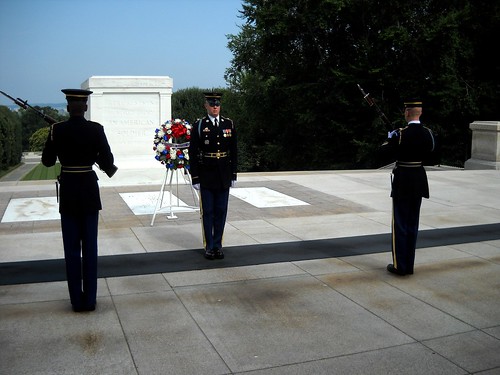
"The Green Field of France", by Eric Bogle
Well, how do you do, young Willie McBride,
Do you mind if I sit down here by your graveside?
And rest for awhile 'neath the warm summer sun,
I've been walking all day, and I'm nearly done.
I see by your gravestone you were only 19
When you joined the great fallen in 1916,
I hope you died quick and I hope you died clean
Or, Willie McBride, was it slow and obscene?
Did they Beat the drum slowly, did they play the fife lowly?
Did they sound the death-march as they lowered you down?
Did the band play The Last Post in chorus?
Did the pipes play the Flowers of the Forest?
Did you leave a wife or a sweetheart behind
In some faithful heart is your memory enshrined?
And, though you died back in 1916,
To that faithful heart are you forever 19?
Or are you a stranger without even a name,
Enshrined then, forever, behind a glass pane,
In an old photograph, torn and tattered and stained,
And faded to yellow in a brown leather frame?
Did they Beat the drum slowly, did they play the fife lowly?
Did they sound the death-march as they lowered you down?
Did the band play The Last Post in chorus?
Did the pipes play the Flowers of the Forest?
The sun's shining down on these green fields of France;
The warm wind blows gently, and the red poppies dance.
The trenches have vanished long under the plow;
No gas and no barbed wire, no guns firing now.
But here in this graveyard that's still No Man's Land
The countless white crosses in stand mute in the sand
To man's blind indifference to his fellow man,
And a whole generation who were butchered and damned.
Did they Beat the drum slowly, did they play the fife lowly?
Did they sound the death-march as they lowered you down?
Did the band play The Last Post in chorus?
Did the pipes play the Flowers of the Forest?
And I can't help but wonder, no Willie McBride,
Do all those who lie here know why they died?
Did they really believe when they answered the call,
Did they really believe that this war would end wars?
Well the sorrow, the suffering, the glory, the pain
The killing and dying, was all done in vain,
For young Willie McBride, it all happened again,
And again, and again, and again, and again.
Did they Beat the drum slowly, did they play the fife lowly?
Did they sound the death-march as they lowered you down?
Did the band play The Last Post in chorus?
Did the pipes play the Flowers of the Forest?
Fifteen years ago I wrote the following on Memorial Day, and I wanted to revisit it. It's about the Vietnam Veteran whose name I remember, despite the fact that I had no relation to him and clearly never knew him, because he was killed four years before I was born.
Memorial Day, for all its solemnity, has for me always been something of a distant holiday, because no one close to me has ever fallen in war, and in fact I have to look pretty far for relatives who have even served in wartime. Both of my grandfathers fought in World War I, but both had been dead for years when I was born. I know that an uncle of mine served during World War II, but I also know that he saw no action (not to belittle his service, but Memorial Day is generally set aside to remember those who paid the "last full price of devotion"). My father-in-law served in Viet Nam, but my own father did not (he had college deferments for the first half of the war, and was above draft age during the second). So there is little in my family history to personalize Memorial Day; for me, it really is a day to remember "all the men and women who have died in service to the United States".
One personal remembrance, though, does creep up for me each Memorial Day. It has nothing at all to do with my family; in fact, I have no connection with the young man in question.
When I was in grade school, during the fall and spring, when the weather was nice, we would have gym class outdoors, at the athletic field. On good days we'd play softball or flag football or soccer; on not-so-good days we'd run around the quarter-mile track. But the walk to the athletic field involved crossing the street in front of the school and walking a tenth of a mile or so down the street, past the town cemetery. I remember that at the corner of the cemetery we passed, behind the wrought-iron fence, the grave of a man named Larry Havers was visible. His stone was decorated with a photograph of him, in military uniform. I don't recall what branch in which he served, nor do I recall his date-of-birth as given on the stone, but I do recall the year of his death: 1967. I even think the stone specified the specific battle in which he was killed in action, but I'm not sure about that, either.
That's what I remember each Memorial Day: the grave of a man I never knew, who died four years before I was born in a place across the world to which I doubt I'll ever go. And in the absence of anyone from my own family, Mr. Havers's name will probably be the one I look for if I ever visit that memorial in Washington. I hope his family wouldn't mind.
I looked online and found these images, first of Mr. Havers's obituary and then of Mr. Havers himself. The things you remember. I wonder what kind of man he was. He has been gone for more than half a century. His name is not forgotten.


Mr. Havers's service information can be found on the Virtual Vietnam Wall here. He was born 14 October 1946 and died 29 October 1967, in Thua Thien.
Know, all who see these lines,
That this man, by his appetite for honor,
By his steadfastness,
By his love for his country,
By his courage,
Was one of the miracles of the God.
-- Guy Gavriel Kay
Well, how do you do, young Willie McBride,
Do you mind if I sit down here by your graveside?
And rest for awhile 'neath the warm summer sun,
I've been walking all day, and I'm nearly done.
I see by your gravestone you were only 19
When you joined the great fallen in 1916,
I hope you died quick and I hope you died clean
Or, Willie McBride, was it slow and obscene?
Did they Beat the drum slowly, did they play the fife lowly?
Did they sound the death-march as they lowered you down?
Did the band play The Last Post in chorus?
Did the pipes play the Flowers of the Forest?
Did you leave a wife or a sweetheart behind
In some faithful heart is your memory enshrined?
And, though you died back in 1916,
To that faithful heart are you forever 19?
Or are you a stranger without even a name,
Enshrined then, forever, behind a glass pane,
In an old photograph, torn and tattered and stained,
And faded to yellow in a brown leather frame?
Did they Beat the drum slowly, did they play the fife lowly?
Did they sound the death-march as they lowered you down?
Did the band play The Last Post in chorus?
Did the pipes play the Flowers of the Forest?
The sun's shining down on these green fields of France;
The warm wind blows gently, and the red poppies dance.
The trenches have vanished long under the plow;
No gas and no barbed wire, no guns firing now.
But here in this graveyard that's still No Man's Land
The countless white crosses in stand mute in the sand
To man's blind indifference to his fellow man,
And a whole generation who were butchered and damned.
Did they Beat the drum slowly, did they play the fife lowly?
Did they sound the death-march as they lowered you down?
Did the band play The Last Post in chorus?
Did the pipes play the Flowers of the Forest?
And I can't help but wonder, no Willie McBride,
Do all those who lie here know why they died?
Did they really believe when they answered the call,
Did they really believe that this war would end wars?
Well the sorrow, the suffering, the glory, the pain
The killing and dying, was all done in vain,
For young Willie McBride, it all happened again,
And again, and again, and again, and again.
Did they Beat the drum slowly, did they play the fife lowly?
Did they sound the death-march as they lowered you down?
Did the band play The Last Post in chorus?
Did the pipes play the Flowers of the Forest?
Thursday, May 21, 2020
Something for Thursday
Today is the 40th anniversary of the release of Star Wars Episode V: The Empire Strikes Back! I have a longer piece in the works for The Geekiverse, but for now, here is John Williams leading a pretty good music group in one of the most famous themes he has ever composed: the "Imperial March" from that very film.
And the music group? None other than the Vienna Philharmonic Orchestra!
And the music group? None other than the Vienna Philharmonic Orchestra!
Tuesday, May 19, 2020
Tone Poem Tuesday
In honor of yesterday's 40th anniversary of the major eruption of Mt. St. Helens, a musical work devoted to that very mountain. Alan Hovhaness was an American composer of Armenian descent, and he was very prolific, eventually producing over 500 numbered works in his almost 90 years (and in reality more than that, as when he was a young man he purposely destroyed his entire output to that point in an effort to start again). In 1982 he composed a symphony, his fiftieth, that was inspired by Mt. St. Helens and the 1980 eruption that destroyed its Alpine grandeur and reduced it to a moonscape of rubble. Hovhaness lived in Seattle at the time, so he was about as close to the mountain as I was in Hillsboro (he might have actually been farther away). The piece is in three movements, which Hovhaness described as follows:
The first two movements are evocative of the mountain itself and of Spirit Lake, while the third is most clearly a depiction of the violent cacophony of the May 18 eruption. I don't tend to hear specific things in program music when I listen to it, even if supplied with a program by the composer, but it's not hard to pick up on Hovhaness's mysticism and is willingness to depict that mysticism through interesting orchestral effects. I haven't heard a lot of Hovhaness, and in general he's the kind of composer whose music I find more interesting than emotionally affecting, but this piece is certainly interesting and it does musically depict a sort of naturalistic majesty.
Here is the Symphony No. 50, Mt. St. Helens, by Alan Hovhaness.
When Mount St. Helens erupted on the morning of May 18, 1980, the sonic boom struck our south windows. Ashes did not come here at that time but covered land to the east all across the State of Washington into Montana. Ashes continued to travel all around the world, landing lightly on our house a week later, after their journey all around our planet. In my Mount St. Helens Symphony I have tried to suggest a musical tribute to the sublime grandeur and beauty of Mount St. Helens and the surrounding majestic Cascade Mountains.
The first two movements are evocative of the mountain itself and of Spirit Lake, while the third is most clearly a depiction of the violent cacophony of the May 18 eruption. I don't tend to hear specific things in program music when I listen to it, even if supplied with a program by the composer, but it's not hard to pick up on Hovhaness's mysticism and is willingness to depict that mysticism through interesting orchestral effects. I haven't heard a lot of Hovhaness, and in general he's the kind of composer whose music I find more interesting than emotionally affecting, but this piece is certainly interesting and it does musically depict a sort of naturalistic majesty.
Here is the Symphony No. 50, Mt. St. Helens, by Alan Hovhaness.
Subscribe to:
Posts (Atom)