
The personal blog of author Kelly Sedinger, chronicling the adventures of one overalls-clad wanderer.
Thursday, September 26, 2019
"Oh, just one more thing," said Inspector Colombo....
The people in this photo celebrate birthdays today. Well, I'm not sure if George Gershwin is actually celebrating, but I hope he is. Happy birthday to him, Jim Caviezel, Olivia Newton John, and that fourth guy.

Something for Thursday
Tomorrow The Wife and I set out for our annual trip to the Finger Lakes region, for adventure and food and books and crafts and all sorts of niftiness! In that vein, here's some adventure music by James Horner. I need to watch this movie again someday....
Tuesday, September 24, 2019
Tone Poem Tuesday
It's always been interesting to me that so few great and enduring works of classical music have been inspired by the Arthurian legends (or "the Matter of Britain"). There's some crossover in the operas of Richard Wagner, mostly in his use of the Grail in Lohengrin and Parsifal, but that's really about it, outside of the work of today's composer, French Romantic Ernest Chausson. I suppose this can be possibly explained by the fact that nationalism in art also arose during the Romantic period, so when composers were most inspired by legend and myth they also tended to be inspired by their own nation's legends and myths. This, coupled with the fact that very few of the "great" composers of the Romantic era came from Britain, may explain the paucity of Arthurian operas and symphonies and tone poems.
Except for this Frenchman, Ernest Chaussons, who wrote a tone poem and an opera directly inspired by the Arthurian legends. Chausson was a "bridge" figure, connecting the earlier era of French romanticism with the emergent forms of Impressionism that followed the Romantics. Chausson was primarily influenced by Wagner and by Cesar Franck, and even though his output was small, his music is highly individual and deeply felt. In this way--and in his untimely death--Chausson almost seems like a French counterpart to Alexander Borodin.
The tone poem Viviane is inspired by the love affair between Merlin the wizard and the maiden Viviane, which ends tragically in the eternal imprisonment of Merlin inside a cave of crystal. The work is lush and mostly introspective, but with passages of rapturous passion before concluding on a sad note. One can definitely hear in this work the drama of a Wagner but also the atmospheric introspection of the impressionists to come.
Here is Viviane by Ernest Chausson.
Except for this Frenchman, Ernest Chaussons, who wrote a tone poem and an opera directly inspired by the Arthurian legends. Chausson was a "bridge" figure, connecting the earlier era of French romanticism with the emergent forms of Impressionism that followed the Romantics. Chausson was primarily influenced by Wagner and by Cesar Franck, and even though his output was small, his music is highly individual and deeply felt. In this way--and in his untimely death--Chausson almost seems like a French counterpart to Alexander Borodin.
The tone poem Viviane is inspired by the love affair between Merlin the wizard and the maiden Viviane, which ends tragically in the eternal imprisonment of Merlin inside a cave of crystal. The work is lush and mostly introspective, but with passages of rapturous passion before concluding on a sad note. One can definitely hear in this work the drama of a Wagner but also the atmospheric introspection of the impressionists to come.
Here is Viviane by Ernest Chausson.
Friday, September 20, 2019
Something for Thursday (Friday edition)
So, they're talking about a remake of The Princess Bride. This is, of course, a bullshit idea that needs to be lured into a quiet and dark alley someplace and strangled until dead.
But that gives me an excuse to post (a day late, sorry) a bit of music from The Princess Bride! Enjoy!
But that gives me an excuse to post (a day late, sorry) a bit of music from The Princess Bride! Enjoy!
Tuesday, September 17, 2019
Tone Poem Tuesday
The operas of Giacchino Rossini aren't performed very much today, but they were once all the rage, and the overtures to those operas have remained mainstays of orchestral music even while the operas themselves have lapsed into some neglect. Rossini's overtures sparkle with energy, adventure, and lyrical wit, and a few have managed through use in other areas of popular culture managed to become even more well-known now than they were in the composer's own time. Think of William Tell's final section, reused later as the theme for The Lone Ranger, or of the amazing use a Looney Tunes cartoon made of The Barber of Seville.
Today we have a different overture: L'italiana in Algeri, or The Italian Girl in Algiers. The overture starts off quietly before a surprising smash erupts from the orchestra, and then as the overture progresses the tunes and rhythms become more and more dancelike as the overture propels toward its close. As always, the overture is full of Rossini's sparkle and delight.
Enjoy!
Today we have a different overture: L'italiana in Algeri, or The Italian Girl in Algiers. The overture starts off quietly before a surprising smash erupts from the orchestra, and then as the overture progresses the tunes and rhythms become more and more dancelike as the overture propels toward its close. As always, the overture is full of Rossini's sparkle and delight.
Enjoy!
Thursday, September 12, 2019
Something for Thursday (Happy Birthday Hans Zimmer edition)
Today is the birthday of film composer Hans Zimmer! Zimmer tends to be a rather controversial figure in movie music fandom circles (mainly for the way his style of sound has been influential to the point of making a lot of recent film music rather homogeneous), and he's written a lot of stuff that leaves me cold. But he has also written a lot of frankly wonderful music that deserves to be celebrated. Here are a few selections of his work that I enjoy!
Wednesday, September 11, 2019
Eighteen
Eighteen years. I wonder what we have learned, if anything; how we've grown, if at all; if we've changed in the ways we needed to change.
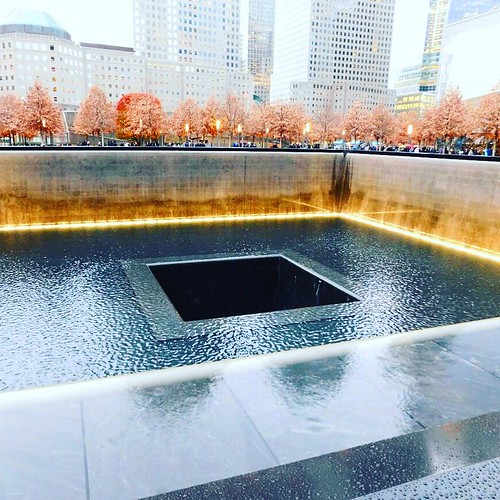
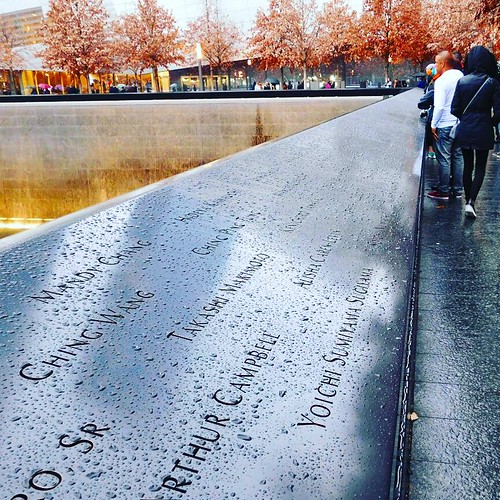
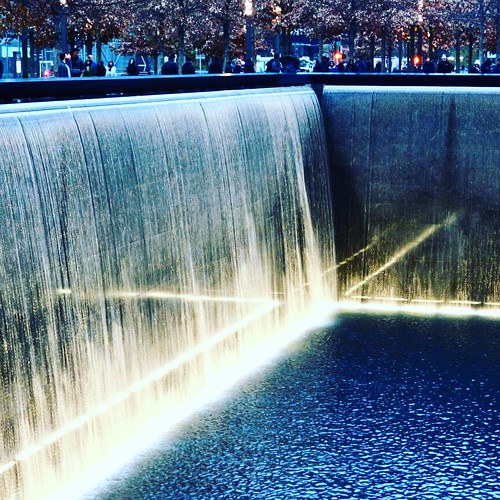
I wrote this story not long after the events of 9-11-01. It is not the story I would write today. How could it be? I was on the cusp of turning thirty, and at that point the scope of an attack of that magnitude was nearly impossible to process.
Finally, music. I was unable to listen to any music at all for several days after the attacks, until I finally put on this recording of Elegy, a wind ensemble composition by Mark Camphouse. It is one of the most haunting, meditative, and ultimately affirming works of music I know. I offer it not quite in remembrance or observance of 9/11/01, but rather as a meditation on the sadness of that day and as a balm for its passage.
I wrote this story not long after the events of 9-11-01. It is not the story I would write today. How could it be? I was on the cusp of turning thirty, and at that point the scope of an attack of that magnitude was nearly impossible to process.
The City of Dead Works
There is never any rest for me, the Ferryman of the Dead.
I pole my barge across the black waters and up to the pier. So many wait this time, many more than usual. I wonder what has happened, what event has sent me this many. "Come aboard," I say. "I will take your coin for passage." One by one they file past me, each handing to me the coin that they never knew they had. It is the coin which determines where they shall be taken to rest, its metal shaped and determined by life. The coins of these dead are gold, every one of them purest gold. Six thousand come aboard my barge, and each has passage for the farthest and greatest of destinations. In that moment I know that something truly dark has happened; the gold coins are always forged in moments of darkness. I am the Ferryman. I can give them no answers to what lies behind their haunted, questioning eyes. I can only take them on this, the last of all journeys.
When they are all aboard I take up the pole and push away from the pier. The barge always feels the same, no matter how many stand upon its decks. Whether six or six thousand, it is all the same to me. I guide us out onto the River Styx. Some of the people look worried, but there is no need for fear. This river can do them no harm. They are already dead.
This is to be a long journey, I know – it always is, to this destination. As I guide the barge through the black waters, I look on the faces of those who have come to me. As different as these people all look, they all have the same expressions of shock, disbelief, and withering sadness. Here is a man of business, talking into a cell phone. He is trying to call someone, anyone, who will tell him that it’s all a dream, that it didn’t happen, that he didn’t die in a blast of fire, smoke, glass and steel. There is a mother who is explaining to her daughter that they won’t be going to Disneyland after all. And there, a group of firemen stand together, realizing that soon they will meet all their brothers-in-arms who have gone into the infernos before them. So many now – colleagues once in business and now colleagues in death, people who have never before met but now have the gravest thing in common. As the current takes hold, I look back at the pier. There are more gathering there. There are always more. They will wait. Time does not exist for the dead.
"Please," a young man says as he turns to me, "I have to go home to my daughters."
"You are going home now," I reply. "To the home where all eventually return." Two black rocks slide past on either side, the rocks that mark the passage of the circling Styx.
"This can’t be," a woman cries out. "My mother needs me."
"She will be with you soon enough."
"When?" Her voice pleads, and yet there is no solace that is mine to give.
"I cannot say," I reply. "The Ferryman has no hand in Fate."
The tears come then, tears from the six thousand that run over the gunwales and into the river which has been fed by tears for centuries. All tears are born in the River Styx.
"Where will you take us?" someone asks.
"To the place you are promised," I answer. I recall the words of a poet: Will there be beds for all who seek? Yea, beds for all who come.
One our left we approach the Hills of the Damned, an endless stretch of shattered lands which reach away into the blackness. The waters echo with the cries of all those who have been taken to the Hills for the agony they have brought on the living. I consider the bag of six thousand gold coins, and I realize that I will have to journey to the Hills this day. There will be a person, perhaps more, who will pay me with a coin of black tin; but not on this journey. As the hills recede behind us, the unending cries of the damned become fainter and fainter until they are drowned out by the lapping of the waters upon the sides of the boat and the marker stones that we pass. The six thousand fall silent, each realizing that it is not a dream. I would offer solace, but as ever I cannot. I am the Ferryman.
We come around a particularly dark bend, and before us lies a very wide expanse of water, as if the Styx has become an ocean – which in some sense it probably has. And beyond that expanse are the thousands of twinkling lights that I have come to know so well. One man, a fireman, sees them too. "What is that?" he asks.
"It is the City of Dead Works," I reply. The lights of the city glow on the horizon, and every one of the six thousand turns toward them as the Styx impels us onward. As we come ever closer to the city, the glittering lights reflect off the black water.
"I don’t understand," someone else says. "The City of Dead Works?"
"Aye," I reply. "Behold!"
From behind us, golden light: the Sun of the Dead is rising as it always does when the dead come near the City. Above us the firmament is turning purple, then blue; soon the light of the Sun will illuminate the City of Dead Works. As the sky lightens, the true scope of that city becomes plain: it stretches away into the land, farther than any eye could see. Not even the highest-soaring raven, cavorting in the breezes and zephyrs of the dead, could take it all in. It is bigger by far than any one city ever built by the hand of men, because it encompasses some part of all of them. Perhaps it is bigger than all of the cities ever built. Now the sun’s first rays come up behind us, and the first buildings can be seen down by the water.
"That one looks Egyptian," a woman says.
"The Great Library of Alexandria," I tell her. "Once the greatest repository of learning the world had ever seen, now only a memory to the living and a reality only to the dead."
A man points to a building high upon a rock. I nod.
"The Temple of Solomon," I say.
"There are ships in the harbor," says another. Thus for him I name the ships: Arizona, Indianapolis, Lusitania, Bismarck, Wilhelm Gustloff, Cap Arcona. And many, many others. I scan over the impossibly vast city and spot Dresden, as it was; and beside it the cities of Hiroshima and Nagasaki. And how many smaller villages, tucked into the hills beyond the City? None can say. The Sun of the Dead shines upon those hills now, and the great stone statues in the likeness of Siddhartha Gautama.
"I don’t understand," a young man says. "Why this City? Why here?"
I only shake my head as we continue to float by the City. I do not point out the fairly small, nondescript office building that sits near the water. It is not a particularly remarkable building; nor was it, really, until the fuse was lit. The six thousand almost don’t recognize it.
Almost.
Not one word is uttered as we slide past the Alfred Murrah Federal Building. Then we turn away from the City of Dead Works, and head again down the waters of the Styx toward distant hills and the place where these people will join their brethren.
"Who lives in that city?" It is a priest in a fireman’s coat.
"No one lives there," I tell him. "The City of Dead Works is not for people. It is for the buildings and the ships. It is for the books and the music, the sculptures and the paintings which are gone forever. It is for everything destroyed by craven people in the name of foolish wars, for everything judged forfeit in the face of transitory desires."
The Styx takes us into the Golden Hills. Soon we will be there, and the six thousand will go where they belong. And then the Styx will complete its circle, taking me back to the pier where more dead await.
"We will be there soon," I say. "Soon we will be at the Elysian Fields, where all heroes go – for that is what you all are. It is what you have bought with your lives, with the shaping of your coins into gold." No one replies. We near the last bend now, and before us lie the Elysian Fields, where peace reigns and where heroes dwell; where all is light and voices are always raised in song. The Sun of the Dead shines warmly on Elysium.
But they do not see it. They, the six thousand, all gaze back behind us upon the City of Dead Works. It will soon be behind us forever as we round the last bend of the River Styx into Elysium. I know they all need one last look upon that City, and I do not grudge them that. For myself, I do not look back; the eyes of the Ferryman are ever forward. But I know. I know that the City of Dead Works is different now. I know that it has changed. I know that the people who come with me now to Elysium, the dead around me, look back on the two soaring towers of steel that now rise above the City where there had been no towers before.
I know these things.
I am the Ferryman of the Dead.
Finally, music. I was unable to listen to any music at all for several days after the attacks, until I finally put on this recording of Elegy, a wind ensemble composition by Mark Camphouse. It is one of the most haunting, meditative, and ultimately affirming works of music I know. I offer it not quite in remembrance or observance of 9/11/01, but rather as a meditation on the sadness of that day and as a balm for its passage.
Tuesday, September 10, 2019
Tone Poem Tuesday
Time for some film music! One thing that a lot of movie music fans discover is how often it turns out that they love a particular filmscore while disliking the film for which it was written. This is an example of mine. The 80s urban fantasy flick Highlander is a cult fave for many, but I have never much liked it at all. Not even the inherent coolness of Sean Connery or Clancy Brown are sufficient to make the movie interesting to me (if you haven't seen it, it's about immortal beings who are fated to battle one another through the ages until only one remains). The movie is shot with flare and the action sequences are cool, but the script is...well, it's mostly ponderous and dull.
Not so, however, is Michael Kamen's score, which soars and swoops and gives the entire film a gravitas that it honestly doesn't earn by virtue of its story. This is a suite that someone edited together from Kamen's work for the film, and it highlights the best parts of Kamen's work. Enjoy!
Not so, however, is Michael Kamen's score, which soars and swoops and gives the entire film a gravitas that it honestly doesn't earn by virtue of its story. This is a suite that someone edited together from Kamen's work for the film, and it highlights the best parts of Kamen's work. Enjoy!
Monday, September 09, 2019
Recent Adventures
After a hectic (and sick!) couple of weeks at Casa Jaquandor, things are starting to finally settle out a bit! Work at The Store has been going through a crazy patch, but that's starting to die down at last, and the cold that walloped me week before last is almost entirely a memory now, so maybe I can get a bit focused again. And just in time, too, as my favorite time of year is fast approaching! We're talking Autumn, the time of big pots of chili and cool crispness in the air and apples and our annual trip to Ithaca and, of course, overalls!
Anyway, here's some photographic goodness from the last ten days or so.


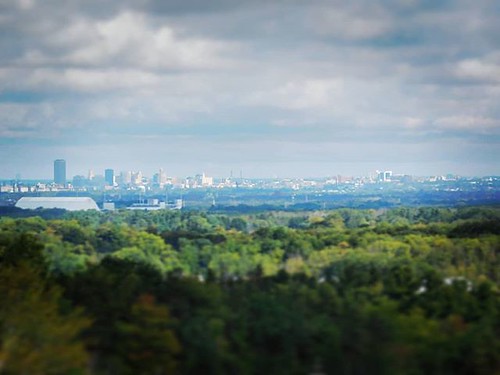



Anyway, here's some photographic goodness from the last ten days or so.
Thursday, September 05, 2019
Something for Thursday
A wonderfully ethereal rendition of one of my favorite classic romance songs, "A Nightingale Sang in Berkeley Square".
Wednesday, September 04, 2019
Tapping the Microphone

Oh look, somebody left a blog here.
Yes, folks, it's been the usual set of reasons for low posting here: focus on getting edits done on a book, plus some very busy days at work owing to an important event we're hosting next week (I worked 46.5 hours last week, with one day going 13 hours), plus an irritating late-summer cold that started off mild but then mustered itself into Serious Pain In The Ass territory for the entire week. And oh, the week I was sick was also the week I worked 46.5 hours, so even though I have since had a three-day-weekend and seen the workload drop off to more manageable levels, in a lot of ways I'm still recovering.
The digging out continues...but here's a small list of things I've published recently over on The Geekiverse over the last few months:
Twenty Years of The Phantom Menace
The Real Ranking of the STAR WARS movies
The Best Fictional Clubs, Bars, and Restaurants
Apollo at 50
Farewell, MAD Magazine
Reviews: On a Sunbeam, Tillie Walden
The Secret History of Wonder Woman, Jill Lepore
Runaway Max: A STRANGER THINGS Novel, Brenna Yovanoff
I really do hope to return to regular posting here, folks. The last few weeks did not cooperate....
Friday, August 16, 2019
Bad Joke Friday

This is a real sign, by the way! It belongs to Ipswich Lumber and Hardware in Ipswich, South Dakota.
Thursday, August 15, 2019
Something for Thursday
I've never been a big Fleetwood Mac fan. I have nothing against them, and I tend to like their songs, but for one reason or another I've never really heard much of them beyond their biggest hits, like "Don't Stop Thinkin' About Tomorrow." It's weird how some big names just manage to never quite penetrate through to really being on the radar, isn't it?
But lately during our evening reading and hanging-out time at home, The Wife has been playing a "Classic Hits" station on Pandora, and there's been more Fleetwood Mac on that station, so I've been hearing more of them...and I've realized just how good some of their songs really are, such as this one. I've heard this a lot over the years but it's never really hit my sweet spot until now, when I've decided that it's one of the most beautiful rock songs ever.
Here is "Landslide" by Fleetwood Mac.
But lately during our evening reading and hanging-out time at home, The Wife has been playing a "Classic Hits" station on Pandora, and there's been more Fleetwood Mac on that station, so I've been hearing more of them...and I've realized just how good some of their songs really are, such as this one. I've heard this a lot over the years but it's never really hit my sweet spot until now, when I've decided that it's one of the most beautiful rock songs ever.
Here is "Landslide" by Fleetwood Mac.
Tuesday, August 13, 2019
Tone Poem Tuesday
As a composer, Leonard Bernstein is almost certainly best known for having written the score to the classic musical West Side Story (a remake of which is now being shot by Steven Spielberg, interestingly enough--at this point just about the only thing Spielberg hasn't done is a musical). As iconic as much of Bernstein's score to West Side Story is, and as memorable as some of its numbers are, as a musical it definitely displays notions that Bernstein had been considering for a number of years prior to writing it. Much of Bernstein's life was spent in search of a true American vernacular in concert hall music, and one can sense a bit of chafing in his three symphonies regarding the symphony's genesis not in American musical traditions but from European (and particularly German) ones.
Bernstein's belief in a developing American musical vernacular wasn't limited to the symphony hall, either; he believed it was coming in theater as well. A chapter of Bernstein's book The Joy of Music briefly traces the development of musical comedy in America up to the point where George Gershwin arrived on the scene, and another chapter from the same book has Bernstein mourning the titanic loss to American music that Gershwin died so early when it seemed as if he was about to move into the most profound part of his career, after Porgy and Bess. For Bernstein, American musical comedy arose from the European operatic tradition just as American symphonic music had, with German singspiels and French operettas providing the templates.
So with West Side Story, Bernstein was trying to move the needle in the direction that Gershwin had been pushing at the time of his death. Did he succeed? I don't know, but perhaps it is easier to see the direction the musical theater took, away from individual songs and into more complete works. Hence today's featured piece, the Symphonic Dances from West Side Story, is comprised of a number of extracts from the show, arranged together to form the backbone of a ballet that could, in twenty-five minutes or so, roughly sketch out the action of the three-hour show. Bernstein didn't just stitch together a collection of numbers and call it a piece. The Dances are very much their own work with their own formal demands and their own sense of drama. The themes are not arranged in the exact sequence that they appear in the show, either; Bernstein was less about a "greatest hits" type of thing (obviously, perhaps, given that "I Feel Pretty" and "Tonight," to name just two of the show's most popular numbers, are not reference in the Dances) than about the creation of a single work that exists on its own. This he does, quite marvelously.
Here are the Symphonic Dances from West Side Story by Leonard Bernstein. In this performance, recorded at the BBC Proms in 2007, Gustavo Dudamel conducts the Simon Bolivar Youth Orchestra of Venezuela. This match of conductor and orchestra is responsible for some utterly amazing musicmaking, by the way.
Bernstein's belief in a developing American musical vernacular wasn't limited to the symphony hall, either; he believed it was coming in theater as well. A chapter of Bernstein's book The Joy of Music briefly traces the development of musical comedy in America up to the point where George Gershwin arrived on the scene, and another chapter from the same book has Bernstein mourning the titanic loss to American music that Gershwin died so early when it seemed as if he was about to move into the most profound part of his career, after Porgy and Bess. For Bernstein, American musical comedy arose from the European operatic tradition just as American symphonic music had, with German singspiels and French operettas providing the templates.
So with West Side Story, Bernstein was trying to move the needle in the direction that Gershwin had been pushing at the time of his death. Did he succeed? I don't know, but perhaps it is easier to see the direction the musical theater took, away from individual songs and into more complete works. Hence today's featured piece, the Symphonic Dances from West Side Story, is comprised of a number of extracts from the show, arranged together to form the backbone of a ballet that could, in twenty-five minutes or so, roughly sketch out the action of the three-hour show. Bernstein didn't just stitch together a collection of numbers and call it a piece. The Dances are very much their own work with their own formal demands and their own sense of drama. The themes are not arranged in the exact sequence that they appear in the show, either; Bernstein was less about a "greatest hits" type of thing (obviously, perhaps, given that "I Feel Pretty" and "Tonight," to name just two of the show's most popular numbers, are not reference in the Dances) than about the creation of a single work that exists on its own. This he does, quite marvelously.
Here are the Symphonic Dances from West Side Story by Leonard Bernstein. In this performance, recorded at the BBC Proms in 2007, Gustavo Dudamel conducts the Simon Bolivar Youth Orchestra of Venezuela. This match of conductor and orchestra is responsible for some utterly amazing musicmaking, by the way.
Monday, August 12, 2019
Scenes from the Faire
A couple weekends ago, The Wife and I attended the Sterling Renaissance Festival. Here's a bit of photographic rundown of this year's edition of the Fair.


(Her Majesty, the Queen)

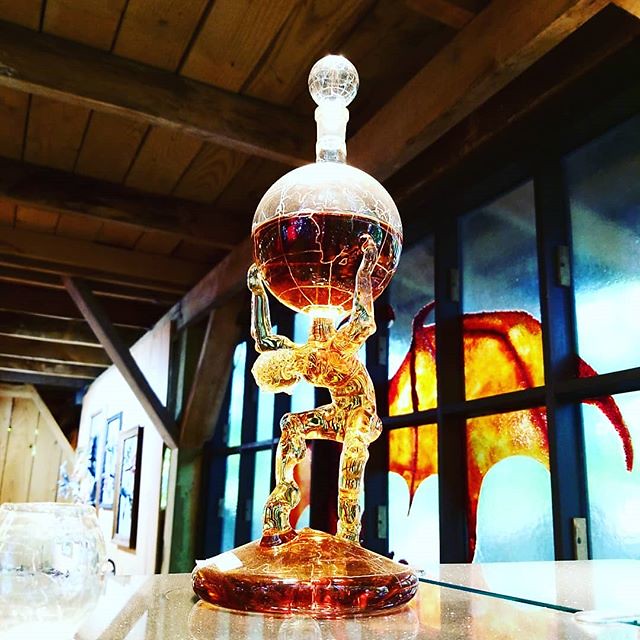

(Her Majesty, the Queen, with Royal suitor.)

(This fellow read uproarious poetry of a bawdy nature.)

(Milady in Blue, as always. I have a headcanon involving her, secret lovers, rendezvous in wind-swept caves and on bridges on forest paths, races to catch the last ship from Calais for Dover, secret dispatches to a spy in England, poisoned daggers, and a pistol with one shot hidden in the folds of Milady's blue gown.)

(A mere several hours later, and the Royal suitor does not seem quite so close to Her Majesty the Queen as he was before. Perhaps he is already falling out of favor and will awaken on the morrow to find himself in a stone cell in Her Majesty's tower.)
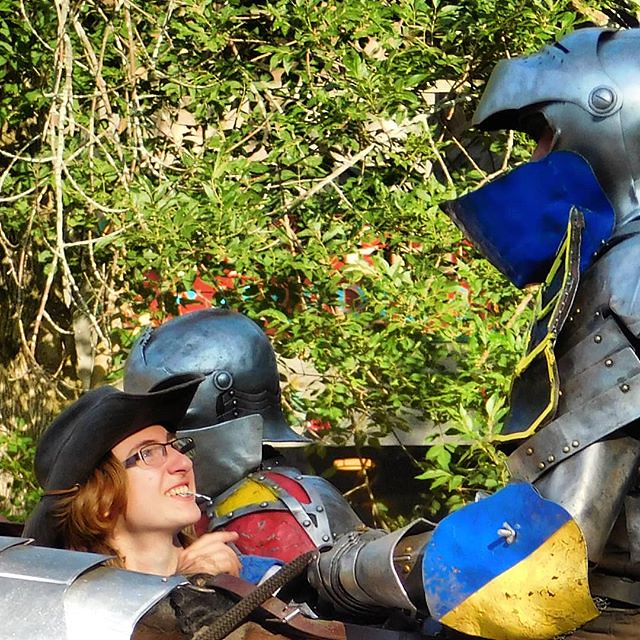
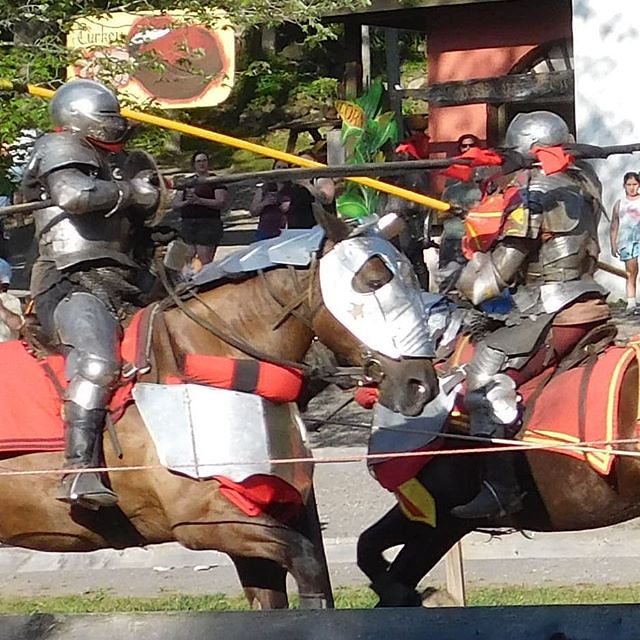
(Her Majesty, the Queen)
(Her Majesty, the Queen, with Royal suitor.)
(This fellow read uproarious poetry of a bawdy nature.)
(Milady in Blue, as always. I have a headcanon involving her, secret lovers, rendezvous in wind-swept caves and on bridges on forest paths, races to catch the last ship from Calais for Dover, secret dispatches to a spy in England, poisoned daggers, and a pistol with one shot hidden in the folds of Milady's blue gown.)
(A mere several hours later, and the Royal suitor does not seem quite so close to Her Majesty the Queen as he was before. Perhaps he is already falling out of favor and will awaken on the morrow to find himself in a stone cell in Her Majesty's tower.)
Thursday, August 01, 2019
Tuesday, July 23, 2019
Tone Poem Tuesday
Gustav Holst is known almost exclusively these days for The Planets and his two Suites for Military Band, but he wrote a great deal of fine and interesting music beyond his couple of war-horses. Today's selection is one of those pieces, a tone poem called Indra. Holst had an abiding interest in the mysticism of the Far East and of the Subcontinent, which manifests in this piece. Indra depicts in music the story of the Hindu god Indra, deity of rain and storm. The legend has Indra battling a dragon who has caused a drought to afflict the land, but in victory Indra manages to restore the rain to the fields. Holst's piece is full of exotic color, even if the melodic material has no specific claim to Indian nativity at all. At the end one can almost feel the exuberant joy as the rains begin again.
Here is Indra by Gustav Holst.
Here is Indra by Gustav Holst.
Monday, July 22, 2019
Memories of Lester
Lester, one of our two cats, died last week.
He started to seem a bit not-quite-himself last weekend, and we kept an eye on him. Then on Monday morning we couldn't find him anywhere in the house. He eventually turned up in the cabinet under the kitchen sink, which for him was extremely odd. Some cats are keenly interested in cabinets and will become quite adept at opening them, while others will not, and when cats--especially older cats--suddenly start nesting in places that have never apparently interested them before, it's generally not a good sign. So we took him to the vet on Monday, where they kept him in an attempt to help his breathing (which had become labored) and get fluids into him.
Lester got a little better over that day, but then he started relapsing, and we received a phone call from the vet at 4:00am that he was doing significantly worse. When The Wife returned that call, the phrase "it's time to make some decisions" was uttered. We went to the vet's office at 5:00am Tuesday morning, prepared to have Lester ushered into death as painlessly as possible...but somehow, improbably, he waited until we got there, and then he twitched a single time and was gone.
Lester lived with us for thirteen and a half years, along with his brother Julio, who remains. When we adopted them, they were roughly a year old, but we never had any way of knowing exactly. These two cats turned up one morning outside my parents' back door on a cold winter morning. I suppose they were left there by someone who decided they were too much to handle, as my parents were well known in their small-town social circle as enthusiastic cat lovers. My mother has told me often of waking up to a cat howling and scratching at that back door, and when she proceeded to open the back garage door (which opened to the same part of the house's exterior), in came a big gray cat who was quickly followed by an almost-as-big black cat.
My parents were at a bit of a loss as to how to deal with this sudden arrival of two cats. They already had , I think, five cats, all indoor cats, all Persians, and they weren't prepared to suddenly have to deal with these two big lummox barn cats-without-a-barn. Even more, my mother was shortly to undergo surgery, which would leave her unable to really deal with these two energetic yo-yos properly.
Thus we stepped up and took possession of them. By this time my mother had named the big gray one Lester, and the black one Julio. We only had a single cat at the time (Comet), so now we were up to three. We had to play dumb about this because our apartment complex specifically only allowed a single cat. (Suck it, Quakertowne Apartments!)
Lester and Julio's first days with us were rocky. In their first eight hours they broke two drinking glasses, got into a lot of stuff, and were generally quite naughty. They also ganged up on poor Comet, and finally one morning they came very near to getting the boot. But calmer heads prevailed, and we kept them.
Over the years, Lester and Julio would be almost joined at the hip, to a degree that was sometimes kind of gross to behold. (They would often wash each other simultaneously, down there.) But they developed personalities of their own as well. Lester was a big goof who would chew on plastic bags his entire life and who would, for a time, come crying to me at night if he decided that it was time to go to bed and I hadn't come yet. Both cats adapted fairly quickly to the new house when we moved in. Adapting to the presence of dogs? That was more of a struggle, but eventually Lester developed a strange kind of "sibling rivalry" with Cane. Until Carla arrived, the cats and Cane shared a common water dish, and one time Cane saw Lester going to get a drink and ran over to slurp up all the water in the dish, just to piss Lester off. Of course, within half an hour Cane had to pee very urgently, so that plan kind of backfired a bit.
Lester and Julio are the only cats I've ever known who were literally litter-mates, so we often wondered what might happen when one inevitably died before the other. So far Julio seems to be his normal self, but we're keeping an eye on him and we're giving him dollops of yogurt more than just once a day now. Will we ever get another cat? Undoubtedly we will. Except for the time I spent in college in Iowa, I have never lived outside of the presence of cats and I see no reason to start doing so now. Of course it will be a challenge to figure out now that we have dogs in the mix, but eventually I think we'll want another cat.
But there certainly won't be another Lester.
He was a good cat, even when he wasn't.


Saturday, July 20, 2019
Apollo at Fifty

Sam Seaborn: There are a lot of hungry people in the world, Mal, and none of them are hungry ‘cause we went to the moon. None of them are colder and certainly none of them are dumber ‘cause we went to the moon.
Mallory O’Brian: And we went to the moon. Do we really have to go to Mars?
Sam Seaborn: Yes.
Mallory O’Brian: Why?
Sam Seaborn: ‘Cause it’s next. ‘Cause we came out of the cave, and we looked over the hill and we saw fire; and we crossed the ocean and we pioneered the west, and we took to the sky. The history of man is hung on a timeline of exploration and this is what’s next.
--from "Galileo Five", season two of The West Wing, written by Aaron Sorkin
Anniversaries are a good thing, even if they're leavened with the weight of years of thwarted expectations and deferred dreams, as the First Lunar Landing's is: Why have we never gone back? Why are we stuck in low-Earth orbit? Was it all just politics and none of it the call of the stars?
But such anniversaries are a bit of a balm in times such as these, when humanity seems bound and determined to roll back on itself like some kind of distended, drunken serpent consuming its own tail in a weird and awful version of an ouroboros. We can look back on the Apollo missions as a reminder of the kinds of things humanity can do when the primary motive isn't necessarily profit.
I was born in September 1971, which means that I have never lived in a world where the Moon was not a place where humans have gone. I hope that I live to see a day when the Moon is no longer the only place other than Earth that we've gone.


From Pale Blue Dot by Carl Sagan:
It's a sultry night in July. You've fallen asleep in the armchair. Abruptly, you startle awake, disoriented. The television set is on, but not the sound. You strain to understand what you're seeing. Two ghostly white figures in coveralls and helmets are softly dancing under a pitch-black sky. They make strange little skipping motions, which propel them upward amid barely perceptible clouds of dust. But something is wrong. They take too long to come down. Encumbered as they are, they seem to be flying -- a little. You rub your eyes, but the dreamlike tableau persists.
Of all the events surrounding Apollo 11's landing on the Moon on July 20, 1969, my most vivid recollection is its unreal quality. Neil Armstrong and Buzz Aldrin shuffled along the gray, dusty lunar surface, the Earth looming large in their sky, while Michael Collins, now the Moon's own moon, orbited above them in lonely vigil. Yes, it was an astonishing technical achievement and a triumph for the United States. Yes, as Armstrong said as he first alighted, this was a historic step for the human species. But if you turned off the byplay between Mission Control and the Sea of Tranquility, with its deliberately mundane and routine chatter, you could glimpse that we humans had entered the realm of myth and legend.
We knew the Moon from our earliest days. It was there when our ancestors descended from the trees into the savannahs, when we learned to walk upright, when we first devised stone tools, when we domesticated fire, when we invented agriculture and built cities and set out to subdue the Earth. Folklore and popular songs celebrate a mysterious connection between the Moon and love. The word "month" and the second day of the week are both named after the Moon. Its waxing and waning -- from crescent to full to crescent to new -- was widely understood as a celestial metaphor of death and rebirth. It was connected with the ovulation cycle of women, which has nearly the same period -- as the word "menstruation" (Latin mensis = month, from the word "to measure") reminds us. Those who sleep in moonlight go mad; the connection is preserved in the English word "lunatic". In the old Persian story, a vizier renowned for his wisdom is asked which is more useful, the Sun or the Moon. "The Moon," he answers, "because the Sun shines in daytime, when it's light out anyway." Especially when we lived out-of-doors, it was a major -- if oddly tangible -- presence in our lives.
The Moon was a metaphor for the unattainable: "You might as well ask for the Moon," they used to say. Or "You can no more do that than fly to the Moon." For most of our history, we had no idea what it was. A spirit? A god? A thing? It didn't look like something big far away, but more like something small nearby -- something the size of a plate, maybe, hanging in the sky a little above our heads. Ancient Greek philosophers debated the propositon "that the Moon is exactly as large as it looks" (betraying a hopeless confusion between linear and angular size). Walking on the Moon would somehow have seemed a screwball idea; it made more sense to imagine somehow climbing up into the sky on a ladder or on the back of a giant bird, grabbing the Moon, and bringing it down to Earth. Nobody ever succeeded, although there were myths aplenty about heroes who had tried.
Not until a few centuries ago did the idea of the Moon as a place, a quarter-million miles away, gain wide currency. And in that brief flicker of time, we've gone from the earliest steps in understanding the Moon's nature to walking and joy-riding on its surface. We calculated how objects move in space; liquefied oxygen from the air; invented big rockets, telemetry, reliable electronics, inertial guidance, and much else. Then we sailed out into the sky.
...
The Moon is no longer unattainable. A dozen humans, all Americans, have made those odd bouncing motions they called "moonwalks" on the crunchy, cratered, ancient gray lava -- beginning on that July day in 1969. But since 1972, no one from any nation has ventured back. Indeed, none of us has gone anywhere since the glory days of Apollo except into low Earth orbit -- like a toddler who takes a few tentative steps outward and then, breathless, retreats to the safety of his mother's skirts.
Once upon a time, we soared into the Solar System. For a few years. Then we hurried back. Why? What happened? What was Apollo really about?
...
For me, the most ironic token of that moment in history is the plaque signed by President Richard M. Nixon that Apollo 11 took to the Moon. It reads: "We came in peace for all mankind." As the United States was dropping 7.5 megatons of conventional explosives on small nations in Southeast Asia, we congratulated ourselves on our humanity: We would harm no one on a lifeless rock. That plaque is there still, attached to the base of the Apollo 11 Lunar Module, on the airless desolation of the Sea of Tranquility. If no one disturbs it, it will still be readable millions of years from now.
Six more missions followed Apollo 11, all but one of which successfully landed on the lunar surface. Apollo 17 was the first to carry a scientist. As soon as he got there, the program was canceled. The first scientist and the last human to land on the Moon were the same person. The program had already served its purpose that July night in 1969. The half-dozen subsequent missions were just momentum.
Apollo was not mainly about science. It was not even mainly about space. Apollo was about ideological confrontation and nuclear war -- often described by such euphemisms as world "leadership" and national "prestige". Nevertheless, good space science was done. We now know much more about the composition, age, and history of the Moon and the origin of the lunar landforms. We have made progress in understanding where the Moon came from. Some of us have used lunar cratering statistics to better understand the Earth at the time of the origin of life. But more important than any of this, Apollo provided an aegis, an umbrella under which brilliantly engineered robot spacecraft were dispatched throughout the Solar System, making that preliminary reconnaissance of dozens of worlds. The offspring of Apollo have now reached the planetary frontiers.
If not for Apollo -- and, therefore, if not for the political purpose it served -- I doubt whether the historic American expeditions of exploration and discovery throughout the Solar System would have occurred. The Mariners, Vikings, Pioneers, Voyagers, and Galileo are among the gifts of Apollo. Magellan and Cassini are more distant descendants. Something similar is true for the pioneering Soviet efforts in Solar System exploration, including the first soft landings of robot spacecraft -- Luna 9, Mars 3, Venera 8 -- on other worlds.
Apollo conveyed a confidence, energy, and breadth of vision that did capture the imagination of the world. That too was part of its purpose. It inspired an optimism about technology, an enthusiasm for the future. If we could fly to the Moon, as so many have asked, what else were we capable of? Even those who opposed the policies and actions of the United States -- even those who thought the worst of us -- acknowledged the genius and heroism of the Apollo program. With Apollo, the United States touched greatness.
When you pack your bags for a big trip, you never know what's in store for you. The Apollo astronauts on their way to and from the Moon photographed their home planet. It was a natural thing to do, but it had consequences that few foresaw. For the first time, the inhabitants of Earth could see their world from above -- the whole Earth, the Earth in color, the Earth as exquisite spinning white and blue ball set against the vast darkness of space. Those images helped awaken our slumbering planetary consciousness. They provide incontestable evidence that we all share the same vulnerable planet. They remind us of what is important and what is not. They were the harbingers of Voyager's pale blue dot.
We may have found that perspective just in time, just as our technology threatens the habitability of our world. Whatever the reason we first mustered the Apollo program, however mired it was in Cold War nationalism and the instruments of death, the inescapable recognition of the unity and fragility of the Earth is its clear and luminous dividend, the unexpected final gift of Apollo. What began in deadly competition has helped us to see that global cooperation is the essential precondition for our survival.
Travel is broadening.
It's time to hit the road again.
Someday we'll look up with wonder again. Someday we'll go. I firmly believe that.


Footage of Walter Cronkite's live broadcast of the lunar landing. Note his happy amazement at what he gets to report, at the 1:58 mark. He takes off his glasses, shakes his head, and smiles at the person next to him. I can't help contrasting that with another moment when, while reporting on air, he had to remove his glasses and shake his head with disbelief, less than six years prior to this moment.
And I know it's not the right mission, but for the movie Apollo 13, James Horner managed to really catch some of the unbridled optimism of the entire Apollo era.
Seriously, humans: when are we going back, and when are we going farther?

Saturday, July 13, 2019
NOW where the hell have I been???
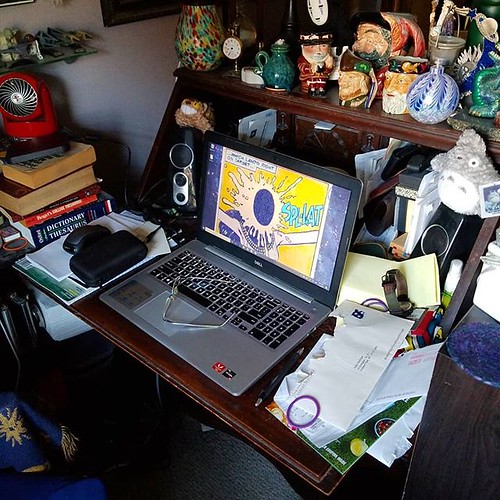
Yup, that was another unplanned hiatus, folks. This time it was technological in nature: my computer failed spectacularly eight days ago, to the tune of doing a factory reset on the machine (basically, returning it to "Just out of the box" status), after a diagnostic tool told me that my hard drive was failing. This was irritating news after owning this machine for just nine months, so after I got it up and running again with the factory reset, I took it to the Geek Squad for examination and consultation before I risked putting all my stuff back on it and moving on. Luckily, as I am exceedingly religious about backing up my stuff, the only annoying data loss I experienced was a few downloaded teevee shows I was still waiting to watch; these I can grab again or even stream if I need to.
I did learn something, though: apparently Dropbox, which I use as my secondary cloud-based backup, is a massive hog of hard drive resources! And my practice up to now has been to have it running in the background at all times, which means that I'm basically maxing out my poor hard drive each time I use my computer. Ouch. I'm still using Dropbox, but now I'll only be launching it once a week to sync newly-saved files, and then it'll be shut down again. After that it took several days of leaving my machine on, plugged in, and connected to the fast WiFi at work to re-download all my stuff from Dropbox and from Google Drive, and to reinstall some of the software I use. Now I'm pretty much back to normal except that I have not re-downloaded Scrivener yet. I am holding off because the folks behind Scrivener are insisting that August 30 will be the drop-dead date by which Scrivener 3 for Windows will finally be released. I'm skeptical on this point (the ongoing delay of Scrivener 3 for Windows after the program's release for Mac almost two years ago is a sore point with me), but I'm willing to wait, especially since at this point I'm not planning to do any drafting work until fall. Scrivener is the program where I do all of my drafting when it comes to fiction, so I can wait to get it back. (Unless they miss another deadline, in which case I may say "To hell with it" and go back to using LibreOffice for everything.
Anyway, that's the reason for the complete radio silence on the blog front. As of today, though, things seem back to normal (I hope!), so...onward and upward! Zap! Pow!!
I did learn something, though: apparently Dropbox, which I use as my secondary cloud-based backup, is a massive hog of hard drive resources! And my practice up to now has been to have it running in the background at all times, which means that I'm basically maxing out my poor hard drive each time I use my computer. Ouch. I'm still using Dropbox, but now I'll only be launching it once a week to sync newly-saved files, and then it'll be shut down again. After that it took several days of leaving my machine on, plugged in, and connected to the fast WiFi at work to re-download all my stuff from Dropbox and from Google Drive, and to reinstall some of the software I use. Now I'm pretty much back to normal except that I have not re-downloaded Scrivener yet. I am holding off because the folks behind Scrivener are insisting that August 30 will be the drop-dead date by which Scrivener 3 for Windows will finally be released. I'm skeptical on this point (the ongoing delay of Scrivener 3 for Windows after the program's release for Mac almost two years ago is a sore point with me), but I'm willing to wait, especially since at this point I'm not planning to do any drafting work until fall. Scrivener is the program where I do all of my drafting when it comes to fiction, so I can wait to get it back. (Unless they miss another deadline, in which case I may say "To hell with it" and go back to using LibreOffice for everything.
Anyway, that's the reason for the complete radio silence on the blog front. As of today, though, things seem back to normal (I hope!), so...onward and upward! Zap! Pow!!
Subscribe to:
Posts (Atom)